What Is Green Beauty? Your Clear 2026 Guide
What Is Green Beauty? Your Clear 2026 Guide
TL;DR:
- Green beauty emphasizes environmental sustainability through ethical sourcing, eco-friendly manufacturing, and responsible packaging. It differs from clean and natural skincare by prioritizing planetary health over ingredient safety and origin. Genuine products often carry third-party certifications like Ecocert and Leaping Bunny, ensuring real commitment beyond marketing.
Green beauty is defined as the holistic practice of creating and using beauty products that prioritize environmental sustainability, ethical sourcing, and minimal impact across the entire product lifecycle. It goes well beyond what is green beauty at the surface level. While many people use “green beauty” and “clean beauty” interchangeably, they are distinct concepts with different priorities. Green beauty rests on four core pillars: sustainable ingredients, ethical sourcing, eco-friendly manufacturing, and responsible packaging. Brands like Garnier have built entire product lines around these principles, and certifications such as Ecocert and Leaping Bunny now serve as the industry’s most recognized benchmarks for genuine environmental commitment.
How does green beauty differ from clean and natural skincare?
The three terms sound similar. They are not the same.
Clean beauty focuses on ingredient safety for the person using the product. It asks: “Is this formula safe for my body?” Green beauty asks a different question: “Is this product safe for the planet?” That shift in priority changes everything from how ingredients are harvested to how the bottle is disposed of.
Natural skincare sits in its own category. Natural skincare means ingredients come from nature, but that origin does not guarantee safety or sustainability. Poison ivy is natural. So is lead. The “natural” label tells you where an ingredient came from, not whether it was harvested responsibly or whether the formula is free of irritants.
Here is how the three categories compare side by side:
| Feature | Green Beauty | Clean Beauty | Natural Skincare |
|---|---|---|---|
| Primary focus | Environmental sustainability | Ingredient safety for humans | Ingredients sourced from nature |
| Packaging standards | Recyclable or biodegradable required | Not a core requirement | Not a core requirement |
| Cruelty-free standard | Typically required | Often included, not always | Not guaranteed |
| Synthetic ingredients | Avoided where possible | Allowed if deemed safe | Generally avoided |
| Certification examples | Ecocert, Leaping Bunny | EWG Verified | USDA Organic |
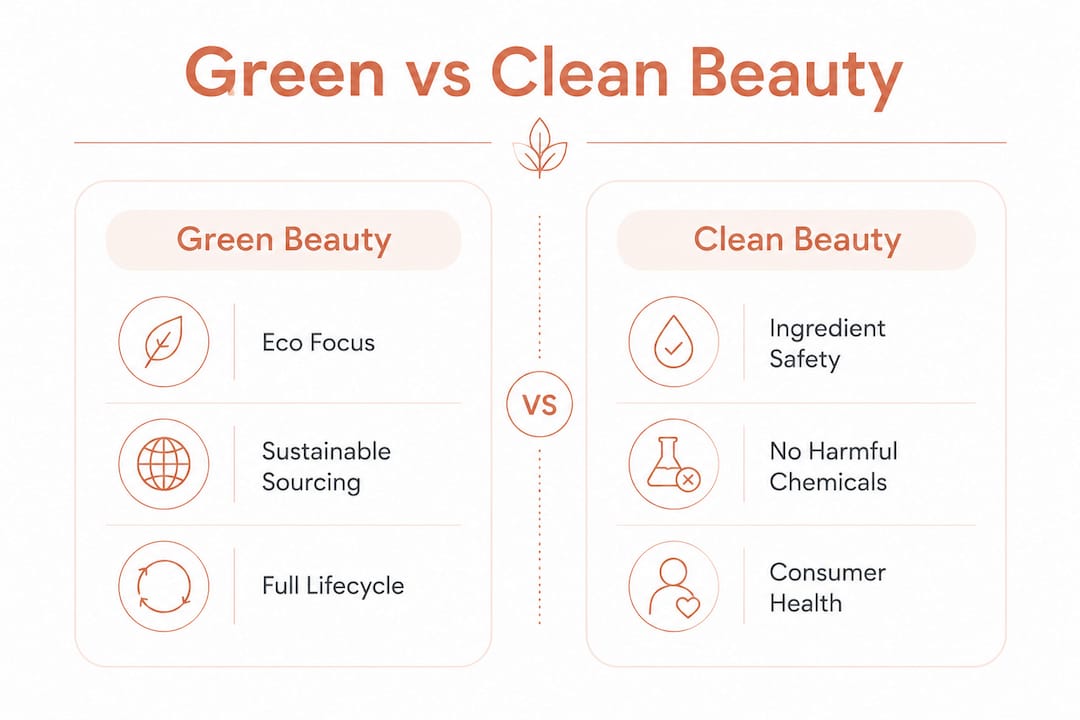
Many brands combine green and clean beauty elements to offer products that are safe for both people and the planet. That dual approach is increasingly what consumers are seeking out.
Pro Tip: When comparing products, check for both an ingredient safety certification like EWG Verified and an environmental certification like Ecocert. A product carrying both is genuinely addressing human health and planetary health at the same time.
What are the core principles of green beauty products?
Green beauty is a holistic approach that covers the full lifecycle of a product, from the farm where ingredients are grown to the bin where the packaging ends up. Understanding its principles helps you spot the real thing versus a well-designed label.
The core principles of green beauty include:
- Sustainably sourced ingredients. Botanical extracts, plant oils, and minerals are harvested using methods that protect ecosystems and do not deplete natural resources.
- Ethical sourcing and fair-trade practices. Workers involved in ingredient production receive fair wages and safe working conditions. This is where green beauty and social responsibility intersect.
- Eco-friendly manufacturing. Production processes minimize water use, reduce carbon emissions, and limit chemical waste entering waterways.
- Sustainable packaging. Recyclable or biodegradable packaging is a non-negotiable feature of genuinely green products. Refillable formats take this further.
- Transparency and traceability. Green beauty brands publish their ingredient sourcing, manufacturing partners, and environmental commitments. Opacity is a red flag.
- Cruelty-free testing. Ethical practices in green beauty include cruelty-free testing and support for sustainable community livelihoods, which builds consumer trust.
One principle that surprises many first-time green beauty shoppers: a product can use entirely synthetic ingredients and still qualify as green, provided those ingredients are produced with low environmental impact and the packaging is sustainable. The focus is on planetary outcomes, not ingredient origin.
Pro Tip: Look for brands that publish a full ingredient sourcing map or an annual sustainability report. That level of transparency is rare and signals genuine commitment, not just marketing.

What are the benefits of green beauty for skin and the planet?
Green beauty delivers advantages on two fronts: personal health and environmental health. These benefits reinforce each other.
On the personal side, green beauty promotes reduced exposure to potentially harmful chemicals, including synthetic fragrances, phthalates, parabens, and petrochemicals. Fewer synthetic irritants in your daily routine means a lower cumulative chemical load on your skin and endocrine system over time. For people with sensitive skin or hormonal concerns, this matters.
On the environmental side, the benefits are significant:
- Reduced water pollution from biodegradable formulas that break down safely
- Lower carbon footprint from local ingredient sourcing and cleaner manufacturing
- Less plastic waste through recyclable, refillable, or compostable packaging
- Protection of biodiversity through sustainable harvesting that does not strip ecosystems
- Support for farming communities through fair-trade sourcing agreements
Green beauty’s broader priority is ecosystem health and the long-term sustainability of natural resources, not just the safety of a single product for a single user.
The synergy here is real. When you choose a product formulated with sustainably harvested rosehip oil in a glass bottle with a refillable pump, you are simultaneously reducing your chemical exposure, supporting ethical farming, and keeping plastic out of landfill. That is the compounding logic of green beauty. Each choice is small. The collective impact is not.
How can you spot genuine green beauty and avoid greenwashing?
Greenwashing is the practice of using vague environmental claims to market products that do not meet genuine sustainability standards. It is widespread in the beauty industry. Knowing how to identify the real thing protects both your money and the planet.
Follow these steps to evaluate any green beauty product:
- Check for third-party certifications. Certifications like Ecocert and Leaping Bunny verify ingredient sourcing, environmental impact, and cruelty-free status. These are audited by independent bodies, not self-declared.
- Read the full ingredient list. A brand claiming to be “all natural” while listing synthetic preservatives and petrochemical derivatives is not being transparent.
- Examine the packaging. Brands using refillable or biodegradable packaging demonstrate commitment beyond marketing copy. Look for recycling symbols, post-consumer recycled content labels, or compostable material certifications.
- Research the brand’s supply chain. Genuine green beauty brands disclose where their ingredients come from. If a brand cannot tell you where its shea butter or jojoba oil originates, that is a gap worth noting.
- Be skeptical of vague language. Terms like “eco-friendly,” “green,” and “natural” have no regulated legal definition in the United States. They mean whatever a brand decides they mean unless backed by a recognized certification.
Trusted third-party certifications to look for include Ecocert, COSMOS Organic, Leaping Bunny, B Corp, and the Environmental Working Group’s EWG Verified seal. Each covers different aspects of sustainability and safety, so a product carrying multiple certifications offers stronger assurance.
Pro Tip: The EWG’s Skin Deep database lets you search any product by name and see a full ingredient safety breakdown. Use it alongside packaging research for a complete picture.
How to build green beauty into your daily skincare routine
Adopting eco-friendly skincare does not require replacing every product at once. A phased approach is more practical and less wasteful.
Start with the products you use most frequently. Your cleanser and moisturizer touch your skin twice a day. Switching these two to sustainably formulated options creates the highest daily impact. From there, you can work through your routine product by product as items run out, rather than discarding what you already own.
Key habits that support a green beauty routine:
- Match products to your skin type. A green beauty moisturizer formulated for oily skin will not perform well on dry skin. Effectiveness matters. A product you stop using because it does not work is waste, not sustainability.
- Use the minimum effective amount. Most people apply two to three times more product than needed. Using less extends product life, reduces packaging turnover, and saves money.
- Store products correctly. Heat and light degrade natural formulas faster than synthetic ones. Keeping products in a cool, dark place extends their shelf life and reduces premature waste.
- Choose concentrated or multi-use formats. A single facial oil that cleanses, treats, and moisturizes replaces three separate products and three separate packages.
For a structured approach, Yukaface’s guide to sustainable skincare routines walks through each step with specific product recommendations aligned to green beauty principles. Pairing product choices with mindful skincare practices reinforces the habit long-term.
Consumers increasingly demand transparency and ethical practices from brands. That shift in demand is what drives brands to genuinely integrate green beauty principles rather than just claim them.
Key takeaways
Green beauty is defined by environmental responsibility across the full product lifecycle, not just by what ingredients a formula contains.
| Point | Details |
|---|---|
| Green beauty definition | It covers sustainable sourcing, ethical production, and eco-friendly packaging together. |
| Green vs. clean beauty | Clean beauty prioritizes human safety; green beauty prioritizes planetary health. |
| Certifications matter | Ecocert, Leaping Bunny, and EWG Verified are the most credible third-party standards. |
| Greenwashing is common | Vague terms like “natural” and “eco-friendly” have no legal definition in the U.S. |
| Routine adoption | Start with high-frequency products and phase in green alternatives as items run out. |
Green beauty is growing. here is what i actually think about that.
I have been watching the green beauty category expand for years, and the growth is real. So is the noise around it.
The part that concerns me is how quickly “green” became a marketing color rather than a standard. Brands add a leaf to their logo, swap one ingredient, and call the line sustainable. Consumers who are genuinely trying to make better choices get misled. That is not a small problem. It erodes trust in the entire category.
What gives me confidence is the certification infrastructure. Ecocert has been auditing cosmetic products since 1991. Leaping Bunny has maintained a cruelty-free standard with genuine supply chain verification for decades. These organizations exist precisely because self-declaration is not enough. When a brand earns one of these certifications, it has gone through an external audit. That is meaningful.
The other shift I find genuinely encouraging is the move toward ingredient traceability. A few years ago, asking a brand where its rosehip oil came from would get you a vague answer about “sustainable suppliers.” Now, brands like Yukaface publish sourcing commitments and formulate with botanical research behind every ingredient. That is the direction the industry needs to move in, and it is moving there faster than most people realize.
My honest advice: stop trying to find the perfect green beauty product and start building a shorter, more intentional routine. Fewer products, better sourced, used correctly. That is where the real environmental and skin health benefit lives. You can explore ethical skincare choices to understand what genuine brand commitment looks like in practice.
— Kelly
Explore vegan and sustainable skincare with Yukaface
Yukaface builds every product around botanical research, vegan formulas, and a commitment to environmental responsibility. If you are ready to put green beauty principles into practice, the vegan skincare guide is the clearest starting point. It covers ingredient choices, product categories, and how to build a routine that works for your skin type without compromising on sustainability.
For daily routine support, the morning skincare routine guide pairs sustainably sourced products with practical application steps. Yukaface also covers sustainable skin hydration for those focused on long-term skin health through natural ingredients. Every resource is built on the same principle: nature-backed formulas, honest sourcing, and skincare that contributes to a healthier planet.
FAQ
What is the green beauty definition in simple terms?
Green beauty refers to beauty products and practices that prioritize environmental sustainability across the full product lifecycle, including ingredient sourcing, manufacturing, and packaging. It focuses on planetary health rather than ingredient safety alone.
How is green beauty different from clean beauty?
Clean beauty focuses on ingredient safety for the consumer, avoiding potentially harmful chemicals like parabens and phthalates. Green beauty focuses on environmental impact, including sustainable sourcing, eco-friendly production, and responsible packaging.
What certifications confirm a product is genuinely green?
Ecocert, Leaping Bunny, COSMOS Organic, B Corp, and EWG Verified are the most credible third-party certifications for green beauty products. Each covers different aspects of sustainability, ingredient sourcing, and cruelty-free status.
What does greenwashing mean in the beauty industry?
Greenwashing is when a brand uses vague environmental claims like “natural” or “eco-friendly” without third-party verification to market products that do not meet genuine sustainability standards.
Can a product with synthetic ingredients still be considered green beauty?
Yes. A product can use synthetic ingredients and still qualify as green if those ingredients are produced with low environmental impact and the packaging is sustainable or recyclable. Green beauty is defined by environmental outcomes, not ingredient origin.