
Ethical skincare explained: make consciously beautiful choices
TL;DR:
Many skincare labels like “cruelty-free” lack legal standards, creating consumer confusion. Ethical skincare involves commitments to animal welfare, environmental responsibility, and fair sourcing, but claims require verification through recognized third-party certifications. Progressive choices and ongoing scrutiny help consumers support truly ethical brands without expecting perfection.
Words like “cruelty-free,” “natural,” and “ethical” appear on nearly every skincare shelf today. But cruelty-free lacks legal standards, meaning brands can use the term freely without meeting any verified criteria. That gap between marketing language and actual practice creates real confusion for shoppers who want to make better choices. This guide breaks down what ethical skincare genuinely means, how to read and verify label claims, what environmental benchmarks actually look like, and how to build a routine that reflects your values without overthinking every purchase.
What does ethical skincare really mean?
Ethical skincare is not a single standard. It is a set of overlapping values that a brand chooses to commit to across its entire operation. Those values typically cover three core pillars: animal welfare, environmental responsibility, and fair sourcing. A product can score well on one pillar and poorly on another, which is why the term “ethical” requires more scrutiny than a quick label scan.
Core pillars of ethical skincare:
Cruelty-free: No animal testing at any stage of production or ingredient sourcing
Environmental consciousness: Reduced carbon emissions, responsible packaging, and sustainable ingredient sourcing
Transparency: Clear disclosure of ingredient lists, supply chains, and manufacturing practices
Ingredient safety: Avoiding known harmful chemicals and prioritizing skin-compatible botanicals
Fair labor: Ensuring workers across the supply chain are paid fairly and work in safe conditions
Vegan formulation: No animal-derived ingredients used in the product itself
Understanding modern ageless beauty also means recognizing that these pillars are not separate issues. They connect. A brand that treats animals well but exploits workers in ingredient sourcing is not fully ethical by most consumer definitions.
Third-party ecolabels and independent audits set the environmental performance standards that determine whether a cosmetic product can carry a certified eco-label, covering everything from raw material sourcing to packaging and chemical toxicity.
Now, here is a distinction worth making clearly. “Natural” does not mean “ethical.” A product can contain naturally derived ingredients and still be tested on animals, come in non-recyclable packaging, and rely on exploitative supply chains. Similarly, “organic” refers only to how ingredients are grown, not to the brand’s broader practices. “Vegan” confirms no animal-derived ingredients, but says nothing about testing policies. “Ethical” attempts to address all of these areas at once, which is why it is the most demanding and the least consistently applied label of the group. Looking at how K-beauty ethics have evolved offers a useful real-world example of how beauty culture and ethical standards intersect in complex ways.
How to decode cruelty-free and ethical labels
Knowing what ethical skincare means is one thing. Verifying it when you are standing in front of a product display or scrolling through an online store is another challenge entirely. The good news is that the tools to verify claims exist. The challenge is knowing which ones to trust.
The phrase “cruelty-free” is widely used but carries no standardized legal meaning. A brand can print it on packaging without ever submitting to an independent audit. This makes third-party certifications essential for any shopper who wants genuine assurance rather than a marketing promise.
How to verify a brand’s ethical claims: a step-by-step checklist
Look for a recognized certification logo (Leaping Bunny, Nordic Swan, COSMOS, Fair Trade) and confirm it is current on the certifying body’s website
Check the brand’s website for a full ingredient list and sourcing transparency page
Search the brand’s name alongside “animal testing policy” or “supply chain” to find independent reviews
Review packaging for recycling information, recycled content percentages, or refill options
Look for a parent company disclosure. Some brands carry certifications while being owned by parent companies that do test on animals in certain markets
Check whether the brand sells in mainland China, where animal testing has historically been required for imported cosmetics, though regulations have evolved
Pro Tip: The phrase “not tested on animals” can refer only to the finished product, not the individual ingredients. A truly cruelty-free brand ensures its ingredient suppliers also do not conduct animal tests. Ask brands directly about their supplier policy if this matters to you. Brands with nothing to hide will tell you. Also worth exploring: how vegan men’s skincare is growing as a category and what that means for broader market accountability.
Applying these verification steps takes an extra five minutes per product. Over time, you build a mental shortlist of brands you trust, and the research becomes much faster. Seasonal shopping, like following summer skincare tips, becomes a natural opportunity to reassess your routine and phase in more verified options.
Environmental impact and benchmarks in skincare production
Label claims cover only part of the ethical picture. A brand’s actual environmental footprint involves decisions made long before a product reaches your bathroom shelf. Those decisions include where and how ingredients are grown, how products are manufactured, what packaging materials are used, and how items are shipped.
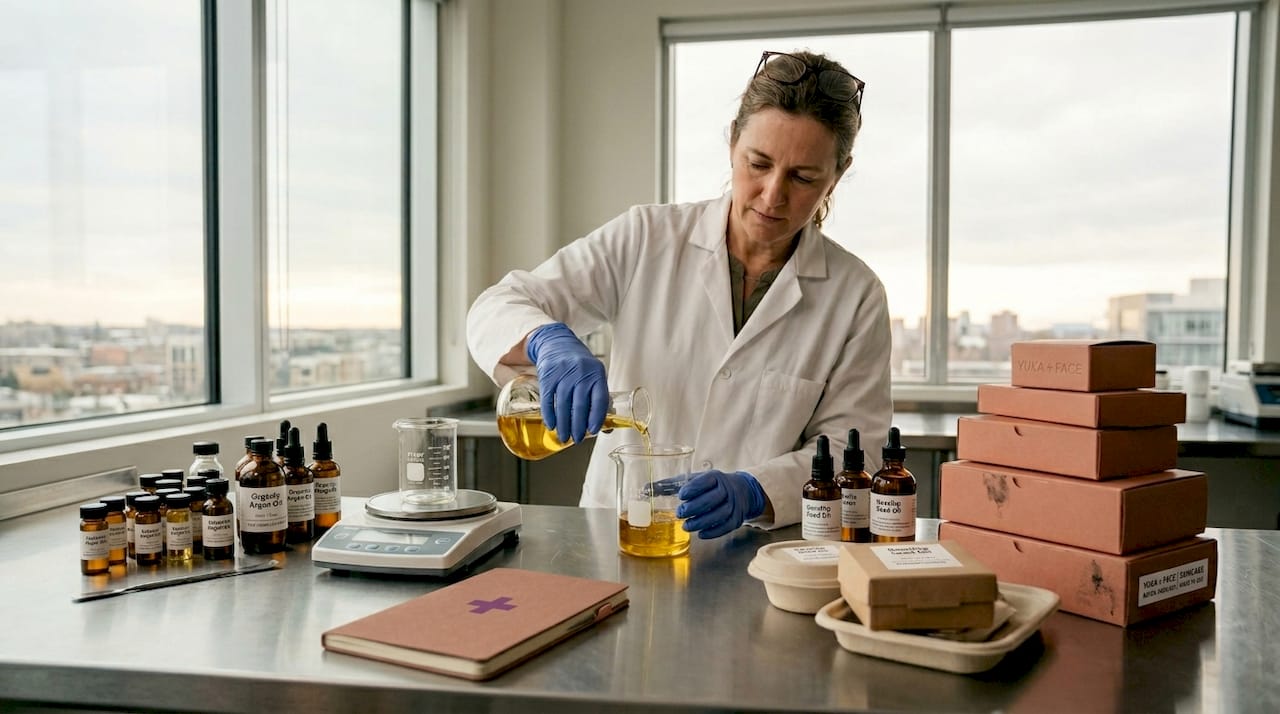
Environmental assessments in cosmetics typically examine four key areas: carbon emissions from production and transport, chemical toxicity and its impact on ecosystems, packaging material origin and recyclability, and sustainable sourcing of raw botanical ingredients. The ethical beauty e-commerce impact sector has grown significantly as consumers push brands to address all four areas, not just one or two.
Life cycle assessment, or LCA, is the scientific method used to measure these impacts end to end. It accounts for everything from farming the raw ingredient to manufacturing, packaging, transport, consumer use, and disposal. LCA data shows that the median carbon footprint for a single container of body cream is 2.5 kg CO2e. That figure gives shoppers a real comparison point when evaluating brands that claim environmental leadership.
Environmental parameter comparison in cosmetics production
Environmental parameterLow impact exampleHigh impact exampleCarbon emissionsLocally sourced, cold-process productionLong supply chain, energy-intensive manufacturingPackaging materialRecycled glass or compostable cartonsMulti-layer plastic with no recycling pathwayRaw material sourcingCertified sustainable botanicalsNon-renewable petrochemical derivativesChemical toxicityBiodegradable, reef-safe formulationsSynthetic preservatives with aquatic toxicityWater useWaterless or concentrated formulasHigh-water-content products with no offset
Nordic Swan’s cosmetic standards evaluate toxicity to aquatic organisms, packaging material composition, biodegradability of ingredients, and raw material sourcing, making it one of the most thorough environmental benchmarks available for cosmetics.
Practical questions to ask about any skincare product’s environmental credentials:
Is the packaging made from recycled, recyclable, or compostable materials?
Does the brand offer a refill or return program for empty containers?
Are the key botanical ingredients sourced from certified sustainable farms?
Does the brand publish an annual sustainability report or carbon disclosure?
Are preservatives and active ingredients biodegradable and free from aquatic toxins?
Understanding vegan skincare timing also connects to environmental impact. Products formulated without animal derivatives often have a lower upstream carbon footprint, since plant-based ingredient cultivation generally produces fewer emissions than animal agriculture at scale.
Everyday steps for a more ethical beauty routine
Making ethical skincare choices does not require replacing everything at once. In fact, buying new products to replace “less ethical” ones that still have plenty of use left is itself a form of waste. The most practical approach is to start where you are and make better decisions incrementally.
Five practical swaps and habits for a more ethical skincare routine:
Finish what you have, then upgrade. Use existing products fully before replacing them with verified ethical alternatives. Waste reduction is part of ethical consumption.
Choose products with refillable or recyclable packaging. Even small packaging shifts add up across hundreds of purchases over years.
Switch to a multi-use product. A moisturizing face oil that works for skin, cuticles, and hair replaces three separate single-use products.
Buy from brands with published ingredient sourcing policies. Transparency is a basic standard, not a bonus feature.
Avoid single-use formats. Sheet masks wrapped in individual plastic, single-use wipes, and travel-size plastics generate disproportionate waste relative to their product volume.
Exploring a guide to vegan skincare is a natural starting point for shoppers who want to understand ingredient-level choices before scaling up to broader ethical audits of brands. Once you are comfortable reading ingredient lists and identifying certified brands, the choices become second nature.
Pro Tip: Single-use cotton pads are a surprisingly large source of routine waste. Switching to reusable cotton rounds or a soft facial cloth eliminates hundreds of single-use items per year with zero compromise to your cleansing results. This one swap alone saves roughly 365 cotton pads annually, and the fabric alternatives last years with proper care. A mindful skincare routine naturally incorporates these low-waste habits as ongoing practice rather than one-time changes.
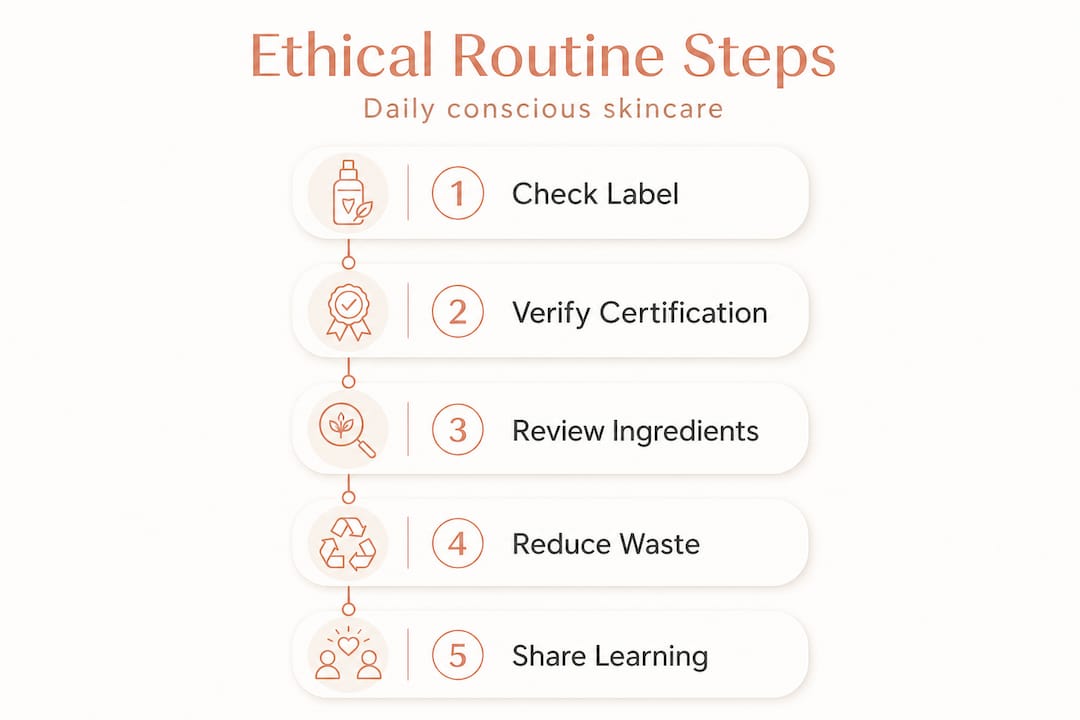
Community engagement also matters. Sharing what you learn with others, asking brands questions publicly on social media, and supporting retailers who prioritize certified ethical products all contribute to market-wide accountability. Ethical beauty is a collective practice, not just a solo purchasing decision.
Why true ethical skincare is about progress, not perfection
Here is the uncomfortable reality: no product is perfectly ethical. Every item in your skincare routine has some environmental footprint, some supply chain complexity, and some unresolved trade-off. Expecting perfection from products or from yourself as a consumer is not a useful standard. It leads either to paralysis or to skepticism that results in no change at all.
The more honest framing is progress. Every time you choose a certified cruelty-free product over an untested one, that choice matters. Every time you pick recyclable packaging over single-use plastic, that matters too. These decisions accumulate. They also send commercial signals to brands that consumer expectations are shifting.
Third-party verification is the most reliable tool available, but it also has limits. Certifications reflect a brand’s status at a specific point in time and require renewal. A brand can hold a Leaping Bunny certification and still have unresolved issues in other areas like labor practices or carbon disclosure. Because “cruelty-free” lacks legal standardization, even certified brands require ongoing scrutiny rather than permanent trust.
The brands worth supporting long term are the ones that continue to improve transparently, that admit where they fall short, and that invest in better standards year over year. Reading beyond skin deep perspectives helps calibrate that longer view, moving from product-level decisions to brand-level relationships built on evidence and accountability.
Perfect ethical consumption is not achievable. Consistent, informed, and improving ethical consumption is. That distinction changes the experience from stressful to sustainable.
Explore more ethical, mindful skincare with Yuka+Face
Ready to move from understanding to action? Yuka+Face offers a range of 100% natural, vegan, and cruelty-free products formulated for all skin types, built on botanical research and transparent ingredient sourcing. Every formula reflects a commitment to environmental responsibility and holistic skin health.
Start with the vegan skincare guide to learn how plant-based formulas work for different skin types and concerns. For daily application, the morning skincare routine resource offers a structured, practical framework for building consistent ethical habits into everyday life. Yuka+Face exists at the intersection of scientific formulation and nature-led values. Explore the full journal and product range to find the right starting point.
Frequently asked questions
Is cruelty-free the same as vegan in skincare?
No. Cruelty-free refers to no animal testing at any production stage, while vegan means the formula contains no animal-derived ingredients. A product can be one without being the other.
What certifications should I look for in ethical skincare products?
Look for Leaping Bunny for cruelty-free assurance and Nordic Swan for environmental performance. These ecolabels set measurable benchmarks that brands must meet and maintain through independent auditing.
How can I reduce my skincare routine’s environmental footprint?
Choose products with minimal or recyclable packaging, select concentrated or waterless formats, and buy only what you will use. LCA research shows that production and packaging choices are the two largest drivers of a skincare product’s carbon impact.
Why is “cruelty-free” still confusing for shoppers?
Because “cruelty-free” has no legal definition, any brand can use it without verification or audit. Independent third-party certification is the only reliable way to confirm the claim is backed by consistent, documented practice.