
Natural Skincare Tips That Actually Work in 2026
Natural Skincare Tips That Actually Work in 2026
TL;DR:
- Effective natural skincare begins with protecting your skin barrier through gentle cleansing, moisturizing, and daily broad-spectrum SPF. Using natural oils supports hydration, while gentle exfoliation one to two times weekly prevents barrier damage and maintains healthy skin. Prioritizing barrier health and sun protection ensures that natural remedies can truly benefit your skin without causing harm.
Most people searching for natural skincare tips end up more confused than when they started. The advice is everywhere, it often contradicts itself, and a surprisingly large chunk of it is dangerous. Viral trends push banana peels as brighteners and lavender oil as sun protection. Neither works. What does work is a grounded, ingredient-aware approach to skincare that treats your skin barrier as something worth protecting, not experimenting on. This guide cuts through the noise with practical, expert-backed tips on holistic skincare — the kind that gets results without wrecking your skin in the process.
Table of Contents
- Key Takeaways
- 1. Build on the right natural skincare tips framework first
- 2. Use natural oils for hydration and barrier support
- 3. Exfoliate gently with natural ingredients
- 4. Apply aloe vera and turmeric the right way
- 5. Time your moisturizer correctly
- 6. Recognize and avoid common irritants
- 7. Never skip sunscreen in favor of natural alternatives
- 8. Debunk common viral natural remedies
- 9. Customize your routine by skin type
- 10. Adjust your routine with the seasons
- My take on the myths and realities of natural skincare
- Explore natural skincare with Yukaface
- FAQ
Key Takeaways
| Point | Details |
|---|---|
| Protect your skin barrier first | Gentle cleansing and prompt moisturizing preserve the barrier before you add any active ingredients. |
| Sunscreen is non-negotiable | No natural ingredient replaces broad-spectrum SPF 30+ sunscreen; skip it and other efforts are undermined. |
| Natural oils support hydration | Argan and avocado oils reinforce moisture and barrier function when used correctly for your skin type. |
| Exfoliate gently, not often | Natural exfoliants like oatmeal or kaolin work best at one to two times per week to avoid irritation. |
| Match your routine to your skin type | Tailoring natural remedies to dry, oily, or sensitive skin prevents flare-ups and improves results. |
1. Build on the right natural skincare tips framework first
Before you add any ingredient to your routine, you need a working foundation. What is holistic skincare, exactly? The term refers to an approach that treats skin health as part of overall well-being, rather than a series of isolated fixes. It connects topical care with lifestyle factors like hydration, sleep, and stress. That philosophy is sound. But even the most holistic skincare guide must be grounded in basics that protect your skin from real damage.
Here is what that foundation looks like:
- Gentle cleansing. Use a mild, fragrance-free cleanser that removes debris without stripping natural oils. Antibacterial cleansers and heavily fragranced washes disrupt the skin barrier and trigger dryness or irritation.
- Consistent moisturizing. Apply moisturizer while your skin is still damp after cleansing. This step locks in water rather than just sitting on top of dry skin.
- Broad-spectrum sun protection. SPF 30 filters about 97% of UVB rays when applied correctly. Apply it 15 minutes before going outside and reapply every two hours.
- No over-exfoliation. Scrubbing too frequently breaks down the protective barrier, leaving skin raw and reactive.
Pro Tip: Build this three-step routine for two to four weeks before introducing any actives or specialty ingredients. If you skip this step, you will not be able to tell what is helping and what is causing a reaction.
2. Use natural oils for hydration and barrier support
Natural oils are among the most studied and genuinely effective options in a plant-based skincare routine. Argan and avocado oils reduce dryness and support the skin’s moisture barrier without clogging pores in most skin types. Argan oil is light enough for daily use and works well on both dry patches and combination zones. Avocado oil is richer and better suited for dry or mature skin.
The key is using oils as the final layer of your routine, not the first. Oils seal in the hydration from your moisturizer. Apply them over a damp base for maximum effect. You can read more about how facial oils support your barrier in practice.
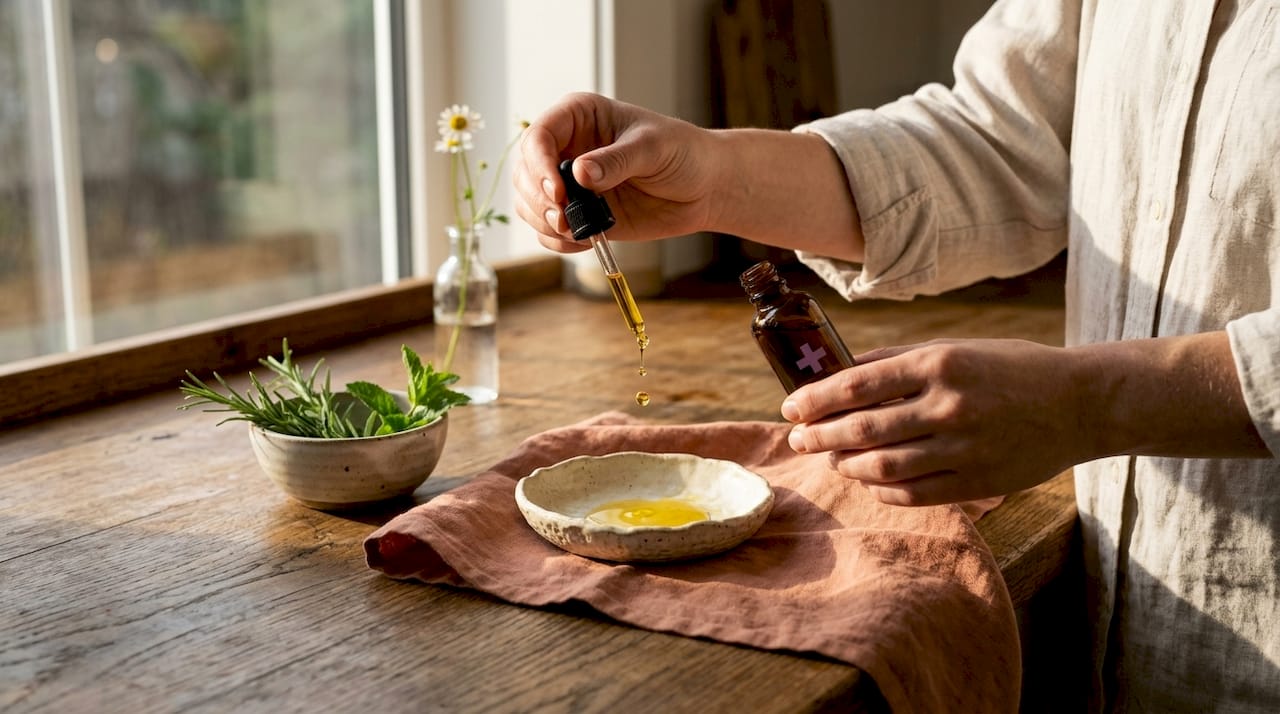
Avoid using oils with known comedogenic ratings on acne-prone areas. Coconut oil, often marketed as a cure-all, ranks high on the comedogenicity scale and causes breakouts in many people. Jojoba and squalane are safer options for those with oily or blemish-prone skin.
3. Exfoliate gently with natural ingredients
Natural exfoliants like oatmeal or kaolin used one to two times per week remove dead skin cells without the micro-tearing that comes from harsh physical scrubs. Kaolin clay draws out impurities while keeping the skin calm. Colloidal oatmeal soothes inflammation at the same time it polishes.
The most common exfoliation mistake is frequency, not product choice. Daily exfoliation, even with gentle natural formulas, depletes the skin’s protective acid mantle. The result looks like sensitivity or dryness, but it is actually self-inflicted barrier damage. Once a week is a good starting point for sensitive skin. Twice a week works for normal to oily types.
Pro Tip: After exfoliating, apply your moisturizer within 60 seconds while skin is still slightly damp. Freshly exfoliated skin absorbs hydrating ingredients more readily.
4. Apply aloe vera and turmeric the right way
Aloe vera is one of the best-supported natural anti-inflammatory ingredients available. It calms redness, soothes sunburned or reactive skin, and provides lightweight hydration without greasiness. Pure aloe gel applied directly from the plant or from a preservative-minimal product works well for most skin types. It is a reliable choice for skincare for sensitive skin because it rarely triggers reactions.
Turmeric is effective in small amounts as an anti-inflammatory agent. However, it stains skin yellow at high concentrations and can irritate if used undiluted. Mix a small pinch into a face mask base rather than applying it neat. Honey and milk masks with a trace of turmeric work well for dry, dull skin because honey is humectant-rich and milk provides lactic acid for gentle resurfacing.
The rule with natural anti-inflammatories is the same as with any active: use the right amount, not the maximum amount.
5. Time your moisturizer correctly
This tip gets underestimated constantly. Applying moisturizer to dry skin after you have toweled off is less effective than applying it to damp skin within two minutes of cleansing. Ceramides and hyaluronic acid work best in this window. Ceramides replenish the lipid layer; hyaluronic acid pulls water into the skin from the surrounding moisture it can trap before drying begins.
The same timing principle applies after showering. Pat your skin partially dry and apply your moisturizer immediately. This single habit change can significantly improve hydration results without changing any product in your routine.
6. Recognize and avoid common irritants
Many people following natural or holistic skincare routines still experience breakouts, redness, or persistent dryness. Often the culprit is not what they are missing. It is what they are using. Common irritants hiding in otherwise natural products include:
- Fragrance (natural or synthetic). Even plant-derived fragrances like citrus extracts or rose can trigger contact dermatitis in sensitive skin.
- Essential oils at high concentrations. Peppermint, eucalyptus, and cinnamon oil are widely used in natural beauty remedies but frequently cause sensitivity.
- Alcohol-based toners. These strip the skin’s acid mantle and create a cycle of excess oil production in oily skin types.
- Harsh physical scrubs. Walnut shell powder and sugar scrubs with coarse particles cause micro-tears that invite bacteria.
Simplify before you diagnose. If your skin is reactive, strip your routine back to cleanser, moisturizer, and sunscreen. Reintroduce one product at a time.
7. Never skip sunscreen in favor of natural alternatives
This point is direct because the stakes are real. There is no natural ingredient that filters UV radiation the way sunscreen does. Lavender oil, raspberry seed oil, and zinc-infused butters are frequently cited online as natural SPF options. None of them offer reliable, tested UV protection. Lavender oil, specifically, can increase photosensitivity and raise the risk of UV-induced skin damage.
Sun safety is the non-negotiable foundation of any effective natural skincare plan. SPF 30 versus SPF 50 is a smaller difference than most people think. SPF 30 filters around 97% of UVB; SPF 50 filters around 98%. What matters far more is consistent daily use and reapplication every two hours when you are outdoors.
Mineral sunscreens using zinc oxide or titanium dioxide are the most compatible with a plant-based routine because they sit on top of the skin rather than absorbing into it.
8. Debunk common viral natural remedies
The comparison below covers some of the most widely circulated natural remedies alongside what the evidence actually supports.
| Ingredient | Claimed benefit | Reality |
|---|---|---|
| Banana peel | Brightening, tightening | Limited scientific support; may cause irritation or allergic reaction |
| Lavender oil as SPF | Sun protection | No UV filtering ability; increases photosensitivity |
| Lemon juice | Brightening dark spots | Highly acidic; disrupts skin pH and causes burns |
| Honey mask | Hydration and glow | Genuinely humectant; effective and generally safe |
| Aloe vera | Soothing and anti-inflammatory | Well-supported; safe for most skin types |
| Oatmeal scrub | Gentle exfoliation | Effective at 1 to 2 times per week; calming |
“The best natural skincare routines build on gentle cleansing, moisturizing, and diligent sun protection before adding actives. Skipping this baseline makes it impossible to know whether a reaction is from a new product or existing barrier damage.” — Ochsner Health
Vitamin C and niacinamide are not “natural” in the DIY skincare sense, but both are found in whole foods and are among the most well-studied brightening and barrier-supportive actives available. They are worth adding to a nature-aligned routine over trendy food-based remedies.
9. Customize your routine by skin type
Top holistic skincare solutions work best when matched to your actual skin type, not just the trend of the month. Here is a practical breakdown:
- Dry skin. Use richer oils like avocado or marula. Add a weekly honey and milk mask. Moisturize immediately after cleansing to seal hydration. Avoid clay masks more than once every two weeks.
- Oily skin. Lightweight oils like jojoba or squalane will not clog pores. Use kaolin clay once a week to regulate sebum. Avoid skipping moisturizer. Dehydrated oily skin overproduces oil to compensate.
- Combination skin. Aloe vera and cucumber balance hydration across dry and oily zones. Layer lightweight products and target heavier treatments only on dry patches.
- Sensitive skin. Fragrance-free everything. Stick to oatmeal, aloe, and ceramide-based products. Introduce one new ingredient at a time with at least one week between introductions.
For a step-by-step holistic skincare guide tailored to your specific skin profile, Yukaface offers detailed guidance on personalizing your routine.
10. Adjust your routine with the seasons
Your skin in July is not the same as your skin in November. Seasonal adjustments are part of any practical holistic skincare guide. In summer, lighter textures, higher SPF reapplication frequency, and cooling ingredients like cucumber and green tea address heat and sun exposure. In fall and winter, the focus shifts to barrier repair with richer moisturizers, facial oils, and reduced exfoliation frequency.
A morning skin care routine that includes SPF performs differently in summer than in winter light conditions. Make it a habit to reassess your product lineup at the change of each season, at minimum.
My take on the myths and realities of natural skincare
I have spent years reading the research on plant-based ingredients, and the thing that frustrates me most is how rarely the conversation includes an honest assessment of where natural remedies fall short.
In my experience, most people who struggle with natural skincare are not failing because they picked the wrong oil or mixed the wrong mask. They are failing because they never built a stable baseline first. I have seen people layer active botanicals onto a compromised skin barrier and then blame the aloe vera when their skin reacts. The problem was always the barrier, not the ingredient.
What I have learned is that the order of operations matters more than the ingredient list. Get the barrier healthy first. That means gentle cleansing, consistent moisturizing on damp skin, and sunscreen without exception. Once that foundation is solid, natural actives can actually do something useful.
The sunscreen point is the one I feel most strongly about. I understand the appeal of avoiding synthetic chemicals. But the science here is not ambiguous. No plant extract filters UV radiation reliably. Treating sunscreen as optional in a “natural” routine is not holistic care. It is a gap in protection that will show up in your skin over time.
Start simple. Stay consistent. Add complexity only when the basics are working. That is what actually makes natural skincare tips worth following.
— Kelly
Explore natural skincare with Yukaface

Yukaface builds every product around 100% natural, vegan, and cruelty-free formulations designed to support skin health at every stage. The principles in this article — barrier care, gentle ingredients, and SPF integration — are built into the brand’s approach from the ground up. Whether you are starting fresh or refining a routine you already have, the vegan skincare guide covers product selection in detail. For daily structure, the morning routine resource maps out a practical, SPF-inclusive plan using natural ingredients. Start there and build outward.
FAQ
What are the most effective natural skincare tips for beginners?
Start with gentle cleansing, moisturizing on damp skin, and broad-spectrum SPF 30+ sunscreen daily. These three steps protect your skin barrier and form the foundation every other natural remedy depends on.
Can natural oils replace a moisturizer?
No. Natural oils like argan or jojoba seal in moisture but do not deliver hydration on their own. Use a water-based moisturizer first, then apply oil on top to lock it in.
Is there a natural alternative to sunscreen?
No natural ingredient reliably replaces sunscreen. Lavender oil and other plant-based oils claimed to have SPF can actually increase UV sensitivity and raise skin damage risk. Mineral sunscreens with zinc oxide are the most nature-compatible option.
How often should you exfoliate with natural products?
Use natural exfoliants like oatmeal or kaolin one to two times per week. More frequent exfoliation disrupts the skin’s natural balance and causes irritation, especially on dry or sensitive skin.
What does holistic skincare mean in practice?
Holistic skincare treats skin health as connected to overall well-being, including sleep, diet, stress, and topical care. In practice, it means using gentle, plant-based products consistently while also addressing lifestyle factors that affect skin from the inside.