
How to create a natural skincare routine for healthier skin
Healthy, glowing skin doesn’t require a cabinet full of synthetic chemicals or a 15-step routine that takes 45 minutes. Many people want clearer, more radiant skin but feel overwhelmed by the sheer number of products, ingredients, and conflicting advice available. Natural skincare is simpler than it looks. With the right knowledge about your skin type, a handful of plant-powered ingredients, and consistent daily habits, you can build a routine that genuinely works. This guide covers every step, from assessing your skin to choosing vegan, cruelty-free products that deliver real results.
Assessing your skin and natural skincare needs
Before selecting any products, you need to understand what your skin actually needs. Skin type is the foundation of any effective routine, and getting it wrong means wasting time and money on products that don’t perform.
The four main skin types and what they need:
Oily skin: Produces excess sebum, prone to shine and breakouts. Needs lightweight, non-comedogenic formulas.
Dry skin: Lacks moisture and lipids, often feels tight or flaky. Needs rich, nourishing creams and oil layering.
Sensitive skin: Reacts easily to ingredients, fragrances, or environmental triggers. Needs minimal, soothing formulas.
Combination skin: Oily in the T-zone, dry or normal elsewhere. Needs balanced, adaptable products.
There’s also an important distinction many people miss: oily skin can still be dehydrated. Dehydration is a lack of water, not oil. If your skin feels tight but looks shiny, you likely have oily, dehydrated skin that needs a lightweight gel cleanser and a mattifying toner, not a heavy cream. Dry skin types benefit more from cream cleansers and oil layering to lock in moisture.
Sensitive skin requires the most careful approach. Avoid exfoliants initially and reach for calming ingredients like aloe vera and chamomile instead. Once your skin barrier is stable, you can introduce enzyme exfoliants one to three times per week. Enzymes are gentler than physical scrubs and less irritating than acids, making them the preferred choice for natural routines.
Common issues to assess before building your routine:
Persistent redness or flushing
Visible pores or congestion
Dullness or uneven skin tone
Fine lines or loss of firmness
Seasonal dryness or oiliness
Understanding these issues helps you prioritize which steps and ingredients to focus on. Learning about basic skincare products is a practical first step before investing in anything new.
Pro Tip: Do a bare-face test. Wash your face with a gentle cleanser, pat dry, and wait 30 minutes without applying anything. If your skin feels tight, you’re dry. If it looks shiny all over, you’re oily. Shiny only in the T-zone means combination.

Starting with three to five steps is more effective than building a complex routine from day one. Overloading your skin with too many new products at once makes it impossible to identify what’s working and what isn’t. Simplicity is a feature, not a limitation. For a structured starting point, building a skincare routine from the ground up is a useful reference.
Skin typeCleanser typeTonerMoisturizerExfoliantOilyLightweight gelMattifyingOil-free gel2-3x/weekDryCream or milkHydrating essenceRich cream + facial oil1x/weekSensitiveFragrance-free milkAloe-basedBarrier repair creamAvoid initiallyCombinationBalancing gelBalancing tonerLightweight lotion1-2x/week
Essential steps for a natural skincare routine
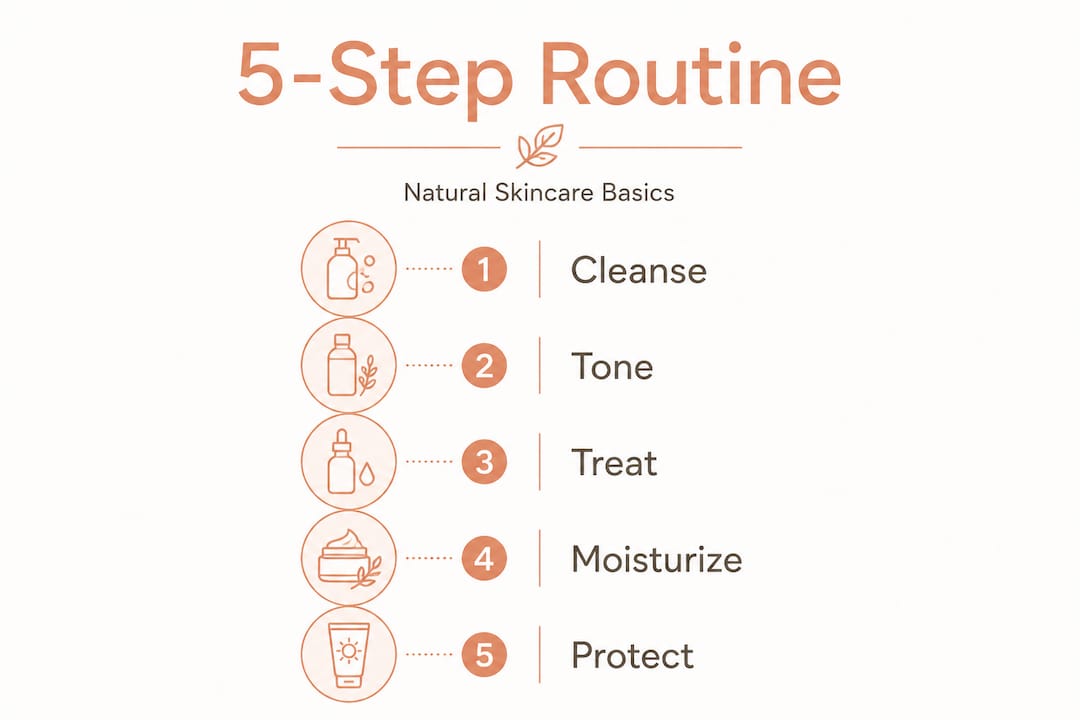
With your skin type identified, the next step is building a daily routine that fits your lifestyle. A natural skincare routine doesn’t need to be complicated. Simplicity over complexity is the principle that delivers results: three to five steps consistently outperform ten-step routines, and results typically appear within four to twelve weeks of consistent practice.
The four essential steps:
Cleanse. Remove dirt, excess oil, and environmental pollutants without stripping the skin barrier. Use a gentle, plant-based cleanser morning and night.
Treat. Apply a targeted serum or essence to address specific concerns like hydration, redness, or dullness. This step is where plant actives do their most focused work.
Moisturize. Seal in hydration and support the skin barrier with a moisturizer suited to your skin type. Apply while skin is still slightly damp for better absorption.
Protect. In the morning, apply a broad-spectrum SPF. Sun protection is the single most evidence-backed step for preventing premature aging.
Morning routine order:
Gentle cleanser
Hydrating toner or essence
Serum (vitamin C, green tea, or niacinamide)
Moisturizer
Mineral SPF 30 or higher
Evening routine order:
Cleanse (double cleanse if wearing SPF or makeup)
Treatment serum or facial oil
Rich moisturizer or night cream
Vegan and cruelty-free products are central to a natural routine that aligns with ethical values. However, greenwashing is a real concern in the beauty industry. Many brands use terms like “natural” or “clean” without any certification to back them up. Vegan natural avoids greenwashing by prioritizing third-party certifications over marketing claims. Look for seals from recognized bodies like The Vegan Society, Leaping Bunny, or COSMOS Organic.
Bakuchiol is worth noting here. It’s a plant-derived alternative to retinol that delivers comparable anti-aging results without the irritation, redness, or sun sensitivity that retinol often causes. For anyone with sensitive skin or a preference for fully natural formulas, bakuchiol is a strong choice. A detailed vegan skincare guide covers these ingredient distinctions in depth.
“Consistency is the most underrated skincare ingredient. A simple routine you follow every day will always outperform a complex one you abandon after two weeks.”
For daily inspiration and step-by-step guidance, morning routine steps offers practical, actionable advice.
StepEssential or optionalFrequencyNatural ingredient optionsCleanseEssentialTwice dailyAloe vera, chamomile, oat extractTone/essenceOptionalOnce or twice dailyRose water, green tea, witch hazelSerumOptionalOnce dailyBakuchiol, vitamin C, niacinamideMoisturizeEssentialTwice dailyShea butter, jojoba oil, hyaluronic acidSPFEssential (AM)Every morningZinc oxide, titanium dioxideExfoliateOptional1-3x/weekPapaya enzyme, lactic acid, AHA
Choosing and using plant-powered ingredients
The right ingredients make the difference between a routine that feels good and one that actually changes your skin. Plant-powered actives have a strong evidence base, and knowing which ones to use for your specific concerns removes the guesswork.
Top natural actives and their benefits:
Aloe vera: Soothes redness and inflammation, delivers lightweight hydration, and supports barrier repair. Particularly effective for sensitive and post-sun skin.
Green tea extract (EGCG): A potent antioxidant that neutralizes free radicals, reduces oxidative stress, and improves skin tone and texture. Studies show green tea EGCG and aloe reduce inflammation and improve hydration and elasticity at a measurable level.
Bakuchiol: Plant-derived from the babchi plant. Stimulates collagen production and reduces fine lines without the irritation associated with synthetic retinol. A thorough bakuchiol vs retinol comparison outlines the key differences.
Chamomile: Rich in bisabolol and apigenin, chamomile calms reactive skin, reduces redness, and supports overnight repair.
Rosehip seed oil: High in vitamin A and essential fatty acids, rosehip oil improves skin tone, fades hyperpigmentation, and boosts elasticity.
Niacinamide (vitamin B3): Reduces pore appearance, controls sebum, and strengthens the skin barrier. Works well alongside most other actives.
Aloe vera and green tea serums can boost skin hydration by up to 40% with consistent use. That’s a significant result from ingredients that are widely available, affordable, and gentle enough for daily use on most skin types.
When introducing new ingredients, a patch test is essential. Apply a small amount to the inner arm or behind the ear and wait 24 to 48 hours before applying to the face. This is especially important for anyone with sensitive or reactive skin. Add only one new product at a time, spaced at least one to two weeks apart. This way, if a reaction occurs, the cause is clear.
The benefits of green tea extract in daily skincare are well-documented and worth exploring further if antioxidant protection is a priority for your routine.
Certifications matter for ingredient integrity. “Natural” has no legal definition in most markets, which means a product can contain mostly synthetic ingredients and still use the term on its label. Look for COSMOS, NATRUE, or Soil Association certification to verify that plant-based claims are genuine.
Troubleshooting and adapting your natural routine
Even a well-planned routine needs adjustment. Skin changes with the seasons, with age, and in response to stress, diet, and environment. Knowing how to troubleshoot common issues keeps your routine effective long-term.
Common reactions and what they mean:
Purging: Small breakouts in the first two to four weeks after introducing an active like bakuchiol or an exfoliant. This is normal. Purging clears congestion already under the skin and typically resolves on its own.
Irritation: Redness, stinging, or itching that appears after using a new product. This is different from purging and signals that a product isn’t suitable. Stop use immediately.
Dryness or tightness: Often caused by over-cleansing, using a formula too harsh for your skin type, or skipping moisturizer. Switch to a gentler cleanser and add a hydrating toner.
No visible results: Natural products work gently and gradually. If you’ve been consistent for less than six weeks, continue. If there’s no change after twelve weeks, reassess the products.
Steps for adapting your routine:
Identify the issue clearly. Is it a new product, a seasonal change, or a lifestyle factor?
Remove one product at a time, not the whole routine. Wait one week between changes.
Reintroduce removed products one at a time to confirm the cause.
For sensitive skin concerns, switch to aloe or chamomile-based formulas and avoid exfoliants until the skin barrier is stable.
Consider mineral SPF (zinc oxide) if chemical sunscreens are causing irritation.
Consult a dermatologist if reactions persist beyond two weeks or if you notice significant changes in your skin.
Seasonal changes often require routine adjustments. Summer heat and humidity call for lighter formulas, while winter demands richer moisturizers and more frequent oil application. Summer skincare tips and vegan men’s skincare advice offer targeted guidance for specific seasonal and demographic needs.
Pro Tip: Keep a simple skincare journal. Note the products you use, any reactions, and how your skin looks and feels each week. Changing only one product at a time and tracking the results gives you accurate data to work with, rather than guessing.
Our take: Why less is more in natural skincare
The skincare industry has a financial incentive to keep routines complicated. New trends, new actives, and new product launches create a cycle of purchasing that rarely leads to better skin. The evidence points in the opposite direction.
Consistent, simple routines of three to five steps outperform ten-step protocols in real-world use, primarily because people actually follow them. Results take four to twelve weeks. Natural ingredients work gently and gradually, not overnight. Anyone promising a dramatic transformation in seven days is selling something that likely relies on short-term effects rather than genuine skin health.
There’s also a broader conversation worth having about what “natural” actually means. Some traditional natural ingredients, like tallow, show effectiveness in clinical settings but are not vegan. The natural skincare space contains real diversity of opinion. What matters is evidence-backed vegan skincare that aligns with both scientific data and personal values. More clinical trials are needed to fully validate every plant-based claim, and intellectual honesty about that gap is important.
What we believe at YukaFace is straightforward. A vegan skincare philosophy built on transparency, quality ingredients, and consistent practice is more valuable than chasing every new trend. Choose fewer products. Choose better ingredients. Stick with them long enough to see real change.
Ready to elevate your natural routine?
If you’re ready to put your new routine into practice, YukaFace has assembled the best resources to support your next steps. Our full complete vegan skincare guide covers ingredient selection, product categories, and ethical sourcing in detail. For daily structure, morning routine inspiration walks through each step with product recommendations suited to all skin types.

Skin changes across seasons and life stages, and our seasonal skincare advice helps you adapt your routine without starting from scratch. Every YukaFace product is 100% natural, vegan, and cruelty-free, formulated with plant actives that are backed by botanical research. No greenwashing. No unnecessary complexity. Just effective, transparent skincare.
Frequently asked questions
How long before I see results from a natural skincare routine?
Most people see visible improvements in 4 to 12 weeks with consistent daily use. Natural ingredients work gradually and gently, so patience and consistency are essential.
What is the simplest effective natural skincare routine?
A cleanser, moisturizer, and SPF are the three essential steps for most skin types. Gentle treatments like serums or toners can be added once the basics are established.
Are all natural ingredients safe for sensitive skin?
Not all naturals are suitable for sensitive skin. Sensitive skin should avoid harsh exfoliants initially and start with soothing ingredients like aloe vera or chamomile before introducing actives.
How can I tell if a skincare product is truly vegan and cruelty-free?
Look for third-party certification seals rather than trusting label claims alone. Certifications over claims from bodies like The Vegan Society or Leaping Bunny confirm genuine vegan and cruelty-free status.
Do plant-based actives really work for skin health?
Yes. Research shows that plant extracts like EGCG and aloe reduce oxidative stress and inflammation while improving hydration and elasticity with consistent use.