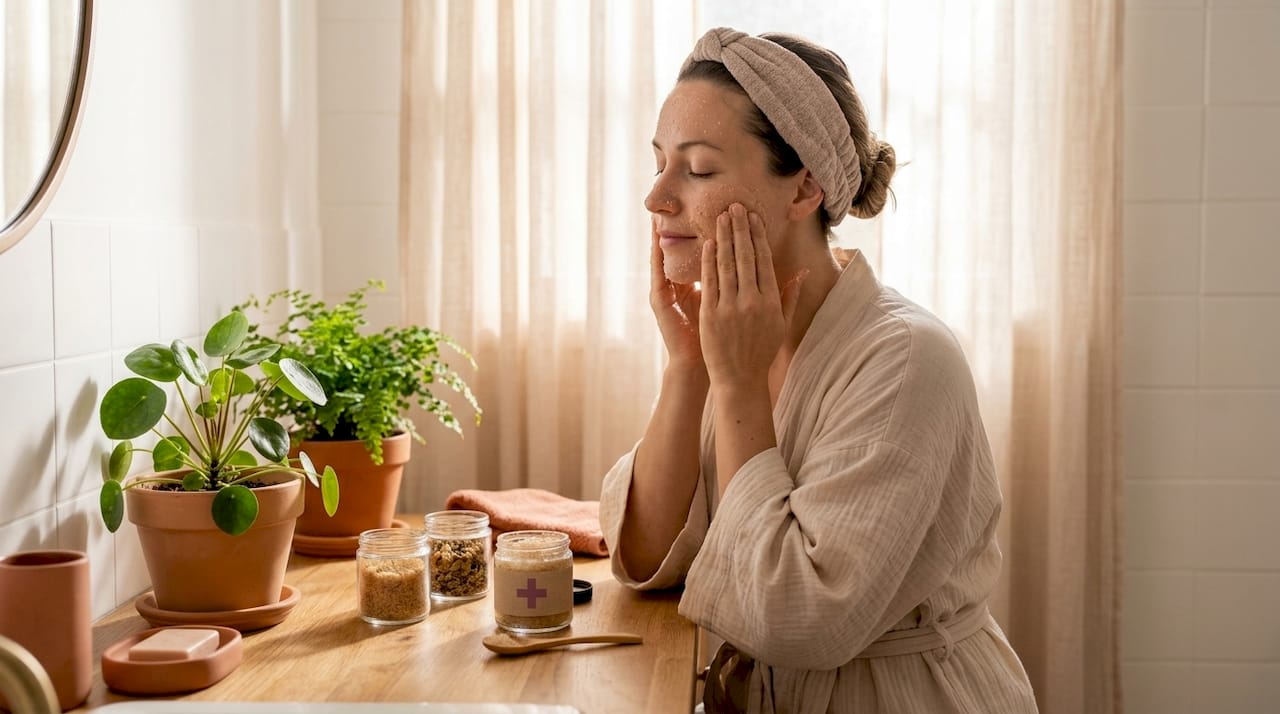
Natural exfoliants for face: Eco-friendly picks for radiant skin
TL;DR:
Choosing a natural face exfoliant requires considering ingredient type, particle shape, and environmental impact to protect skin health. Gentle physical options like jojoba beads and enzymatic acids such as papain or bromelain offer effective, non-irritating exfoliation suited to various skin types. Prioritizing barrier preservation, sustainable sourcing, and appropriate frequency ensures long-term skincare resilience and safety.
Choosing a face exfoliant sounds straightforward until you realize how many “natural” options exist and how differently they affect skin. Natural face exfoliants range from physical scrubs like sugar and rice powder to enzymatic options like papain from papaya and bromelain from pineapple, plus natural AHAs such as lactic acid and glycolic acid. For eco-conscious skincare enthusiasts, the challenge is finding options that are genuinely gentle, sustainably sourced, cruelty-free, and effective. This guide cuts through the noise, covering top ingredients, safety considerations, and how to match the right exfoliant to your skin.
How to choose a natural exfoliant for your face
With so many options available, the first step is knowing what questions to ask before selecting a product. Not all natural exfoliants are created equal, and choosing poorly can cause real skin damage.
Physical vs chemical exfoliants
Physical exfoliants use abrasive particles to manually lift dead skin cells. Chemical exfoliants use acids or enzymes to dissolve the bonds holding those cells together. Neither type is automatically superior. The right choice depends on your skin type, sensitivity level, and frequency of use.
A key insight: the origin of an ingredient matters less than its particle shape and size. A rounded, soluble physical particle like jojoba beads (the kind we use at Yuka+Face) can be far gentler than a jagged natural particle like crushed walnut shells. Chemical exfoliants often provide more uniform, controlled results with less friction trauma to the skin.
Eco-impact and biodegradability
Sustainability matters in exfoliant selection. Many conventional scrubs contain synthetic microbeads that pollute waterways and harm aquatic life. Natural physical exfoliants like sugar, oatmeal, and jojoba beads are fully biodegradable and do not carry that environmental risk. When evaluating any product, look for ingredients that break down naturally and come from responsibly sourced plants. Pairing your skincare choices with eco-friendly nail care and other green beauty habits reinforces a consistent, values-driven routine.

Cruelty-free sourcing
Natural ingredients can still involve animal testing or exploitation. Prioritize brands that are certified cruelty-free and vegan, and check that even enzymatic or acid-based ingredients are derived from plant sources rather than animal byproducts.
Ingredients to avoid
Some popular DIY options have no place in a safe skincare routine. Baking soda is widely rejected by dermatologists because its high alkalinity disrupts the skin’s natural pH, leading to dryness, irritation, and long-term barrier damage. Walnut shell powder, though natural, has jagged edges that can cause micro-tears even on healthy skin.
Sugar (fine grain): gentle, soluble, broadly suitable
Oatmeal: soothing, low abrasion, ideal for sensitive skin
Jojoba beads: round, uniform, biodegradable
Rice powder: mild, good for everyday use
Walnut shell: too harsh, causes micro-tears
Baking soda: expert-rejected, pH-disrupting
Pro Tip: Before buying a scrub, check the ingredient list for particle shape descriptions. Spherical or soluble particles are almost always safer than hard, angular granules regardless of their natural origin.
Building a starter skincare routine around well-chosen exfoliants protects your skin barrier and sets a strong foundation for every other step in your routine.
Top natural exfoliants: Ingredient spotlight
Now that you know how to evaluate, here are the leading natural exfoliant ingredients and what each one actually does.
Physical exfoliants
Physical exfoliant options include sugar, jojoba beads, oatmeal, rice powder, and walnut shells, each working through manual friction to remove dead corneocytes from the skin surface.
Sugar: Dissolves on contact with moisture, making it self-limiting and reducing the risk of over-exfoliation. Works for most skin types. Avoid large, coarse sugar crystals on the face.
Jojoba beads: Perfectly spherical and derived from the jojoba plant. Spherical particles like these are gentle because they roll rather than scratch, making them one of the safest physical options available.
Oatmeal: Colloidal oatmeal is technically both a physical and soothing agent. It reduces redness while gently lifting dead skin, and it is especially useful for skin prone to eczema or rosacea.
Rice powder: Fine-milled rice powder offers mild exfoliation with a brightening effect. Popular in traditional Japanese skincare and well-tolerated by most skin types.
Walnut shell: Despite being natural and widely marketed, jagged walnut shell particles cause microtears in the skin, increase water loss through the barrier (a process called transepidermal water loss, or TEWL), and can worsen existing irritation.
Chemical and enzymatic exfoliants
“Chemical exfoliants often outperform physical ones for uniform results precisely because they work on a molecular level rather than relying on friction. Particle shape and size matter more than whether something is labeled natural.”
Papain (papaya enzyme): Digests dead keratin proteins on the skin surface without abrasion. Excellent for fruit enzyme exfoliation routines and well-suited to normal and combination skin.
Bromelain (pineapple enzyme): Similar action to papain, with slightly more potency. Both enzymes are vegan, plant-derived, and biodegradable.
Lactic acid: An AHA derived from fermented plant sugars or milk alternatives. It exfoliates while also attracting moisture to the skin, making it one of the gentler acid options.
Glycolic acid: Derived from sugarcane, glycolic acid is the smallest AHA molecule, allowing it to penetrate more deeply. More effective for texture and tone, but requires careful use on sensitive skin.
Citric, malic, and tartaric acids: Found in citrus fruits, apples, and grapes respectively. These milder AHAs are often used at lower concentrations in toners and serums.
For a deeper look at how peptides in organic skincare complement exfoliation, combining these approaches can improve skin texture and elasticity together.
Comparing popular natural exfoliants: Benefits and cautions
Once you know the ingredients, comparing them side by side reveals which is best for your unique skin needs.
Chemical exfoliation works by loosening the bonds between dead skin cells, known as desmosomal bonds, allowing them to shed more evenly. Lactic acid hydrates while it exfoliates; glycolic acid penetrates the deepest of all AHAs. Enzymes digest surface proteins without any friction at all.
IngredientTypeBest skin typeEco-friendlyKey riskSugarPhysicalNormal, oilyYesCoarse grains cause irritationJojoba beadsPhysicalAll typesYesMinimalOatmealPhysicalSensitive, dryYesMinimalRice powderPhysicalNormal, combinationYesMinimalWalnut shellPhysicalNone recommendedYesMicro-tears, barrier damagePapain (papaya)EnzymaticNormal, combinationYesAllergy risk (latex sensitivity)Bromelain (pineapple)EnzymaticNormal, combinationYesAllergy riskLactic acidChemical AHASensitive, dryYesMild sting on broken skinGlycolic acidChemical AHAOily, acne-proneYesPhotosensitivity, over-exfoliation
AHA concentrations of 3 to 8 percent are generally effective for improving skin texture and radiance without causing significant irritation. Anything above 10 percent moves into clinical-grade territory and requires careful monitoring.
For those managing oily or congested skin, hydrating strategies for oily skin work well alongside regular exfoliation to keep the skin balanced without stripping it. If you are comparing exfoliant-adjacent actives, reading about bakuchiol vs retinol provides useful context on how plant-based actives fit into a holistic skincare routine.
Those dealing with enlarged pores or sensitivity can find targeted advice on reducing pores and sensitivity to pair with their exfoliation routine.
Pro Tip: Start with the lowest effective concentration and use only once or twice weekly. Increase frequency only when your skin shows no signs of redness, tightness, or flaking.
Situational tips: Matching natural exfoliants to your skin type
With comparisons done, here is how to personalize your exfoliation for your skin’s specific needs.
Different skin types respond very differently to the same exfoliant. Applying the wrong one, too often, can set your routine back significantly. Frequency of 1 to 3 times per week is the broadly recommended range, with sensitive or dry skin staying at the lower end and oilier skin types potentially tolerating the higher end.
Recommendations by skin type
Sensitive skin: Use lactic acid at low concentrations (3 to 5 percent) or colloidal oatmeal. Avoid all physical scrubs with angular particles. Stick to once weekly and monitor closely for any redness or tightening.
Dry skin: Lactic acid is the best fit. It exfoliates and hydrates simultaneously. Jojoba beads are a gentle physical option. Avoid glycolic acid at higher strengths, as it can increase water loss temporarily.
Oily or acne-prone skin: Sugar scrubs and salicylic acid (a BHA with natural analogs) work well. AHAs for texture and radiance at 5 to 8 percent can address post-acne marks effectively. Avoid heavy oil-based scrubs.
Combination skin: Enzymatic exfoliants like papain or bromelain are ideal. They work evenly across both oily and drier zones without aggravating either. Use a light touch in the T-zone.
Inflamed or barrier-damaged skin: Avoid all physical exfoliants during active inflammation. Even the gentlest scrub can worsen micro-damage. Pause exfoliation entirely and restore the barrier first with hydrating, non-active products.
Key dos and don’ts
Do apply exfoliants to clean, damp skin for even distribution.
Do follow with a hydrating serum or moisturizer immediately after.
Don’t use physical and chemical exfoliants in the same routine on the same day.
Don’t use any exfoliant around the eye area, where skin is thinnest.
Do apply SPF every morning after using an AHA the night before, as acids increase photosensitivity.
For guidance on hydration for oily skin, combining proper water intake with smart exfoliation can noticeably balance sebum production over time. A structured morning routine also ensures exfoliation fits safely within a broader regimen rather than working against it.
Pro Tip: Keep a simple skin journal for two weeks when introducing a new exfoliant. Note texture, hydration level, and any reactions after each use. This feedback loop helps you adjust frequency and product type faster than guessing.
The uncomfortable truth: What most natural exfoliant guides miss
Most guides focus almost entirely on listing ingredients without addressing the harder question: what does “natural” actually guarantee?
The answer is: not much. Particle shape and ingredient origin are separate considerations, and the latter tells you very little about skin safety. A walnut shell is entirely natural. It is also one of the most damaging physical exfoliants you can use on facial skin. Meanwhile, a lab-synthesized round particle can be far gentler and produce zero environmental harm. The “natural equals safe” assumption is one of the most persistent myths in skincare, and it is costing people their skin barrier.
Eco-friendly and skin-friendly are also not the same thing. Biodegradability is important for the planet, but it does not tell you how an ingredient interacts with your skin microbiome or barrier function. Both dimensions matter and need to be evaluated separately.
The most undervalued concept in exfoliation is barrier health. Chasing quick radiance with frequent scrubbing or high-acid products prioritizes a short-term glow over the long-term resilience of your skin. A compromised barrier lets irritants in, moisture out, and makes every subsequent skincare product less effective. Restraint is the skill here. Exfoliate less often than you think you need to, especially in the beginning.
Holistic skincare does not stop at topical products. Nutrition, sleep quality, hydration, and stress levels all affect how quickly skin turns over naturally. Pollution and UV exposure slow that turnover, which is why exfoliation is necessary but not sufficient on its own. Building holistic skincare around these broader lifestyle factors produces more durable results than any single ingredient can deliver.
Eco-friendly skincare routines: Next steps with Yuka+Face
Ready to apply what you have learned? The Yuka+Face journal offers curated, expert-informed guides on every aspect of natural skincare.

Start with the vegan skincare guide for a full breakdown of plant-based ingredient choices that align with cruelty-free values. Explore the ageless beauty philosophy to understand how Yuka+Face approaches aging as a natural, supported process rather than something to fight. For day-to-day support, mindful skincare tips connect routine-building with overall wellbeing. All resources are grounded in botanical research, eco-conscious formulation, and practical skin science. Vegan. Natural. For every skin type.
Frequently asked questions
Are physical or chemical natural exfoliants better for sensitive skin?
Gentle chemical exfoliants like lactic acid and low-abrasion physical options like jojoba beads or oatmeal are best for sensitive skin; avoid harsh particles or frequent use.
How often should you use a natural face exfoliant?
Most skin types tolerate 1 to 3 times per week, depending on product strength and individual sensitivity; sensitive skin should stay at once weekly.
Is baking soda a safe natural exfoliant for the face?
No. Baking soda disrupts skin pH and is widely rejected by dermatologists; it causes dryness and irritation even with short-term use.
What percentage of AHAs is safe and effective for exfoliation?
AHA concentrations of 3 to 8 percent are effective for improving texture and reducing pigmentation without causing significant irritation in most skin types.
Which exfoliants are best for oily or acne-prone skin?
Salicylic acid and sugar are well-suited to oily or acne-prone skin; avoid harsh physical exfoliants during active breakouts to prevent further barrier disruption.