
How to Detox Your Skin: Natural Methods That Work
TL;DR:
Your skin naturally sheds dead cells and regulates oils, so “detox” products do little to speed this process.
Supporting your skin’s barrier through simplified routines, gentle exfoliation, and lifestyle habits enhances clarity and health.
Focus on internal factors like hydration, diet, sleep, and stress management, as they significantly influence skin appearance.
Your skin is already doing the work. It sheds dead cells, regulates oil, and renews itself on a roughly 28-day cycle. So when you see a product promising to “detox” your skin, what does that actually mean? Learning how to detox your skin isn’t about removing toxins through a serum. It’s about supporting what your skin already does naturally. This guide covers what skin detoxification actually is, which habits help or hurt, and how a few simple shifts in routine and lifestyle can give you a clearer, healthier complexion.
Table of Contents
How to detox your skin: what the science actually says
The phrase “skin detox” sells a lot of products. But skin cannot truly detox the way your liver or kidneys do. Your skin’s job is barrier protection and temperature regulation. Its natural renewal cycle, approximately 28 days for most adults, handles the shedding of dead cells and excess oil without any product intervention.
What actually affects your skin’s clarity and appearance comes down to two categories: external and internal factors.
External factors that damage skin health:
UV radiation (the single largest driver of premature skin aging)
Pollution and environmental particles that clog pores and generate free radicals
Product overload: using too many actives at once strips the barrier and triggers inflammation
Harsh cleansers that disrupt the skin’s natural pH
Internal factors that influence skin clarity:
Hydration levels
Diet quality and inflammation from processed foods
Sleep and stress hormones (cortisol spikes increase oil production and inflammation)
Smoking and alcohol consumption
Your skin barrier is the thin layer of lipids and proteins that keeps moisture in and irritants out. When it’s healthy, your skin looks plump, even-toned, and resilient. When it’s compromised, you get dryness, redness, and breakouts. Supporting that barrier is the actual goal of any skin “detox.”
Preparing your skin: the barrier reset
Before you add anything to your routine, take something away. Most people seeking a skin detox actually need to simplify first. Pausing harsh actives for even one week can measurably improve hydration and reduce redness by giving the barrier time to rebuild.
Here is what a 7-day barrier reset looks like:
Remove: Retinol, AHAs, BHAs, vitamin C in high concentrations, physical scrubs, and any product you apply “just in case”
Keep: One gentle, sulfate-free cleanser. One fragrance-free moisturizer with ceramides or hyaluronic acid. Broad-spectrum SPF 30 or higher every morning.
Observe: Note which symptoms improve. Tightness, flaking, and redness are signs of barrier damage, not detox.
Signs your barrier is compromised rather than detoxing:
Stinging when you apply water-based products
Sudden increase in breakouts after adding a new active
Persistent dryness despite moisturizing
Skin that looks dull and feels rough at the same time
That last combination is a reliable signal. Dull and rough together almost always points to a disrupted barrier, not skin that needs more exfoliation. You can find more on repairing skin naturally to understand which ingredients actively support recovery during this phase.
Pro Tip: When reintroducing actives after a reset, add one product at a time, using it every third day for two weeks before increasing frequency. This prevents recurrent barrier damage and helps you identify exactly what your skin tolerates.
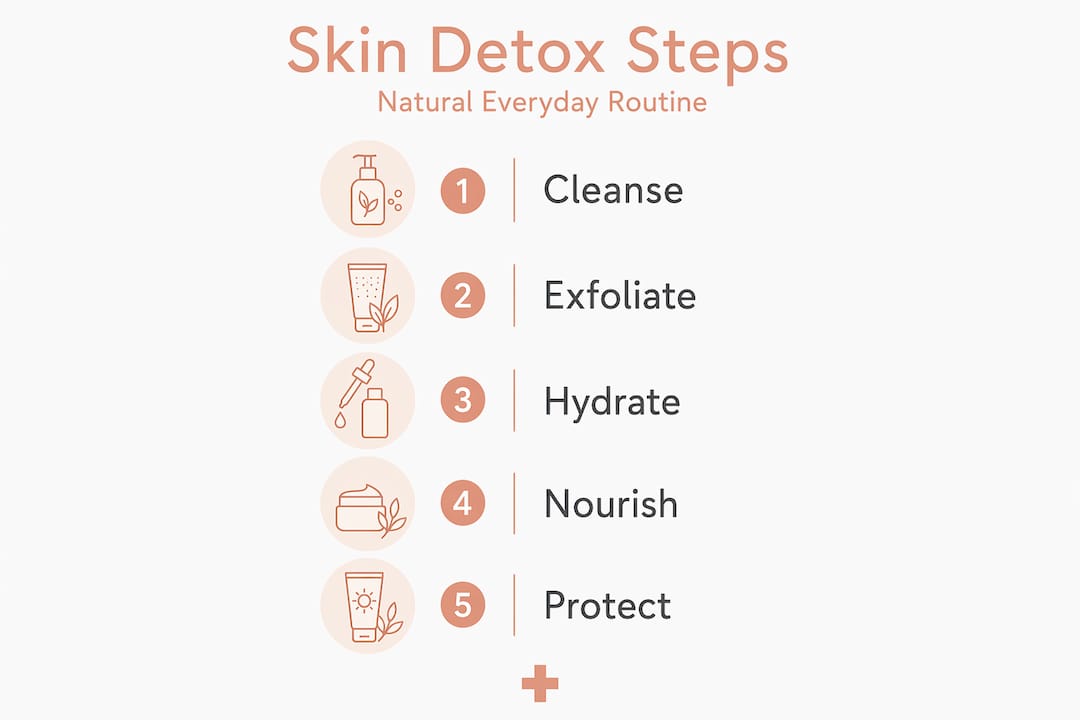
Natural skin detox methods: cleanse, exfoliate, protect
Once your barrier is stable, you can build a detoxifying skincare routine that genuinely supports skin renewal. These are the methods that work.
Double cleanse at night. Gentle double cleansing starts with an oil-based cleanser to dissolve sunscreen, makeup, and sebum, followed by a water-based cleanser to clear residue. This prep step dramatically improves what your subsequent products can do. Skipping it means your moisturizer is sitting on top of the day’s buildup.
Exfoliate once or twice a week. Gentle exfoliation aligns with your skin’s natural 28-day turnover cycle. You are not accelerating detox. You are removing the outer layer of dead cells that can dull your complexion. Enzyme-based exfoliants (like papaya or pineapple enzymes) and low-concentration lactic acid are gentler starting points than glycolic acid or physical scrubs.
Apply sunscreen every single day. Daily sunscreen is the single most evidence-backed step you can take for skin health. UV exposure drives collagen breakdown, hyperpigmentation, and long-term barrier compromise. No serum undoes sun damage. No detox routine works without this step in place.
Use antioxidant-rich products. Vitamin C, niacinamide, and green tea extract neutralize free radicals from pollution and UV. These are as close to a real “detox” as topical skincare gets. Apply in the morning before sunscreen.
Choose the right moisturizer. Ceramides, peptides, and hyaluronic acid support barrier function. They hold moisture in and give skin the raw materials it needs to repair itself overnight. This is where checking barrier-supporting ingredients becomes practical rather than theoretical.
Here is a quick comparison of natural exfoliation options:
Exfoliant TypeBest ForFrequencyCaution LevelEnzyme exfoliantsSensitive, dry skin1-2x weeklyLowLactic acid (5-10%)Normal to dry skin1-2x weeklyLow to moderateGlycolic acid (8-10%)Oily, resilient skin1x weeklyModeratePhysical scrubsNot recommendedAvoidHigh
Pro Tip: If you want to incorporate retinol or bakuchiol for cell renewal post-detox, start with bakuchiol. It delivers similar renewal benefits with significantly less irritation risk, making it a smarter entry point for most skin types.
Supporting skin detox from the inside
Topical routines address the surface. But skin health is built from the inside. A natural skin detox without lifestyle changes will always produce limited results.

Hydration. Drinking water replenishes skin, supporting softness and barrier function. Eight glasses daily is a general benchmark. What matters more is consistency. Chronically dehydrated skin looks flat and shows fine lines earlier than well-hydrated skin.
Anti-inflammatory diet. A diet rich in antioxidants from whole fruits, vegetables, and whole grains supports your body’s natural detox pathways. The liver, kidneys, and digestive tract handle actual toxin clearance. Your job is to support those systems with nutrition, not bypass them with supplements or juice cleanses.
Foods to prioritize:
Berries, leafy greens, and citrus (high antioxidant content)
Fatty fish and flaxseed (omega-3s reduce skin inflammation)
Whole grains and legumes (fiber supports gut health, which influences skin)
Nuts and seeds (zinc and vitamin E support skin repair)
Lifestyle factors that directly affect your complexion:
Smoking and alcohol cause dryness, wrinkles, redness, and impaired skin healing. Reducing or eliminating them produces visible results within weeks.
Poor sleep raises cortisol, which increases oil production and slows overnight skin repair. Seven to nine hours is a non-negotiable skin health habit.
Regular moderate exercise improves circulation, delivering oxygen and nutrients to skin cells. It also manages stress, which in turn reduces cortisol-driven inflammation.
Stress management through whatever works for you, whether that is walking, breathwork, or limiting screen time before sleep, directly reduces inflammatory markers that affect skin clarity.
For skin-specific approaches to building these habits across different skin types, the skin confidence guide covers practical strategies for calming reactive or stressed skin.
Common detox mistakes to avoid
The most damaging skin detox routines are the ones that do too much. Knowing what not to do is as useful as any step-by-step method.
Mistakes that set skin back:
Over-exfoliating in hopes of “unclogging” skin faster. Exfoliating daily strips the barrier and increases sensitivity and breakouts.
Mixing multiple actives (retinol plus acids plus vitamin C in high concentration) without checking compatibility.
Mistaking irritation for a “purge.” Burning, redness, and flaking are signs of barrier damage, not detox. Real skin purging from retinoids looks like small, contained breakouts in areas where you normally break out, and it resolves within four to six weeks.
Chasing trends: charcoal masks, clay peel-offs, and DIY acid treatments often cause more irritation than benefit.
Skin “purging” vs. irritation: Purging = small breakouts in typical zones, lasting 4-6 weeks after starting a proven active like retinol. Irritation = burning, redness, flaking anywhere on the face after introducing any new product. When in doubt, stop and simplify.
Pro Tip: Patch test every new product on your inner arm or behind your ear for 24-48 hours before applying to your face. This simple step saves weeks of barrier recovery.
My take on skin detox culture
I’ve spent years watching “skin detox” trend across every platform, and most of what gets sold under that label has nothing to do with how skin actually works. Brands promise deep toxin removal. Influencers show before-and-afters from a single clay mask. None of it holds up.
What I’ve seen work, consistently, is the opposite of the dramatic approach. Simplify the routine. Fix the barrier. Let the skin rest. The most dramatic improvements I’ve observed come from people who stopped doing things rather than started them. Dropping the daily acid toner, removing the three-step actives stack, cutting back to basics for two weeks, and the skin just recovers.
I’ve also noticed that sleep and stress management produce faster visible results than most topical products. People underestimate this. Two weeks of decent sleep and reduced alcohol shows up on the face. Two weeks of adding a new serum usually doesn’t.
The other thing worth saying plainly: marketing around skin detox misleads people into believing their skin is failing them and needs rescuing. It doesn’t. Your skin is competent. Your job is not to detox it. Your job is to stop sabotaging it and give it the steady support it needs to do what it already knows how to do.
Patience and consistency beat intensity every time. That’s the actual strategy.
— Kelly
Gentle skin care from Yukaface

Yukaface builds every product around barrier support and botanical ingredients. No harsh synthetics. No unnecessary actives stacked together. Just clean, vegan formulations designed to work with skin rather than against it. The morning skincare routine guide covers exactly how to structure a gentle daily routine that keeps your barrier healthy year-round. For readers exploring ingredient-conscious choices, the vegan skincare guide walks through how plant-based formulations support natural skin renewal without the irritation risk. Start simple. Build from there.
FAQ
What is skin detoxification?
Skin detoxification refers to supporting the skin’s natural renewal process, including cell shedding and barrier maintenance, rather than removing toxins. The skin cannot detox in a medical sense; that work is done by the liver and kidneys.
How long does a skin detox take?
A 7-day barrier reset can produce noticeable improvements in hydration and reduced redness. Full skin renewal takes approximately 28 days, so consistent habits over four weeks deliver the most visible results.
What are the best natural skin detox methods?
The most effective methods include gentle double cleansing, weekly exfoliation with enzyme or lactic acid products, daily SPF use, and an anti-inflammatory diet with adequate water intake.
Can diet really detox your skin?
Diet supports your body’s internal detox organs, which in turn affects skin clarity. Foods rich in antioxidants, omega-3 fatty acids, and fiber reduce inflammation that shows up as breakouts, dullness, and uneven tone.
How do you know if your skin is irritated rather than purging?
Irritation presents as burning, widespread redness, or flaking across the face after adding a new product. Purging from retinoids shows as small breakouts in usual acne zones and resolves within four to six weeks.