
What Is Conscious Beauty? Your 2026 Skincare Guide
What Is Conscious Beauty? Your 2026 Skincare Guide
TL;DR:
- Conscious beauty involves a full-lifecycle approach to skincare that emphasizes ingredient safety, ethical sourcing, and environmental responsibility. It is broader than clean beauty by requiring transparency about sourcing, social impact, and product performance at every stage. Consumers can practice it through informed choices such as using refillable packaging, verifying brand certifications, and avoiding greenwashing.
Conscious beauty is defined as a comprehensive approach to skincare and cosmetics that integrates ingredient safety, ethical sourcing, environmental responsibility, and social impact across the full product lifecycle. It goes further than clean beauty by treating every stage of a product’s existence as a factor in its value. Brands like Croda Beauty and certification bodies like Ecocert have shaped the conscious beauty definition as one that respects skin microbiota, social fairness, and eco-friendly sourcing simultaneously. Yukaface operates within this philosophy, building its entire product range around vegan, cruelty-free, and botanically sourced formulas.
What is conscious beauty, and how does it differ from clean beauty?
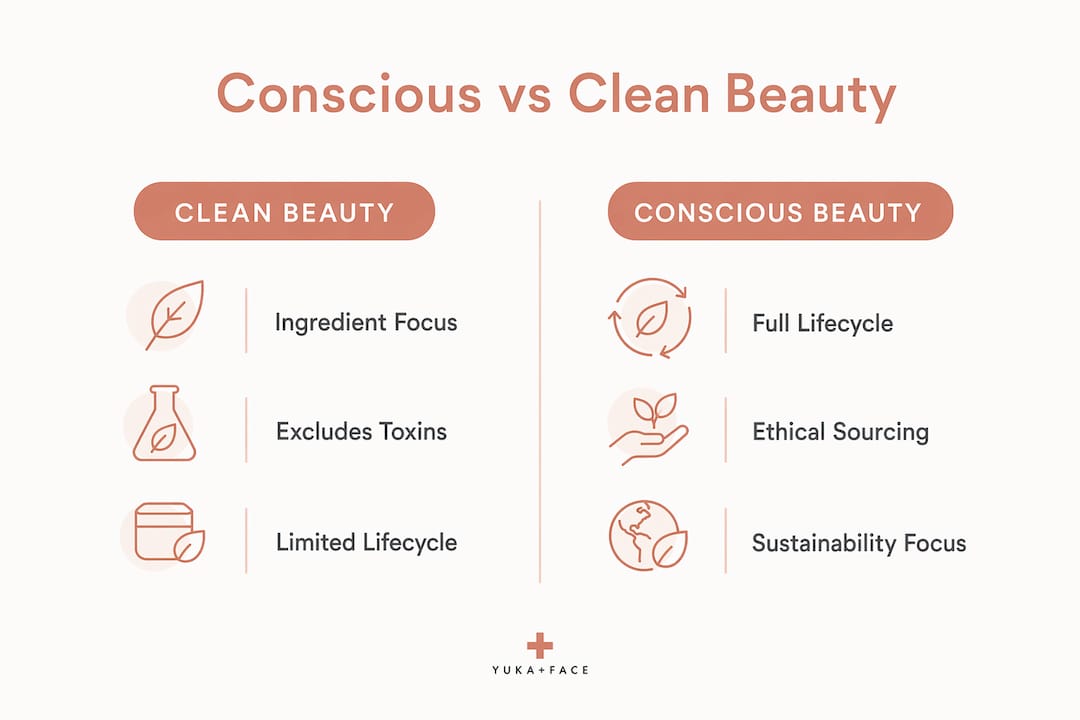
Clean beauty and conscious beauty are related but not the same. Clean beauty focuses on excluding specific ingredients considered harmful, such as parabens, sulfates, or synthetic fragrances. Conscious beauty takes a broader view. It asks not just what is left out of a formula, but how every ingredient was sourced, how workers were treated, how the packaging will be disposed of, and whether the product actually performs.

The table below shows the key distinctions between the most common beauty movements:
| Movement | Primary focus | Lifecycle scope | Ethics included |
|---|---|---|---|
| Clean beauty | Ingredient exclusion | Formulation only | Rarely |
| Green beauty | Natural or plant-based ingredients | Partial | Sometimes |
| Sustainable beauty | Environmental impact | Broad | Sometimes |
| Conscious beauty | Safety, ethics, performance, and lifecycle | Full | Always |
Sustainable beauty practices in 2026 integrate a systems-based approach from ingredient sourcing to end-of-life disposal. That means reformulating products for lower environmental impact and embedding sustainability into every stage of development, not just the label. Conscious beauty is the umbrella that holds all of this together.
The marketing shift matters too. Genuine conscious brands rely on evidence-based messaging rather than fear-based ingredient warnings. Telling consumers that a product is “free from” a long list of chemicals is a clean beauty tactic. Conscious beauty brands explain what they put in and why, backed by science and sourcing transparency.
What are the core principles of conscious beauty?
Conscious beauty rests on five interconnected principles. Each one addresses a different layer of impact, from what touches your skin to what happens after you throw the bottle away.
- Ingredient safety and efficacy. Conscious beauty selects actives that are both proven to work and safe for long-term use. Efficacy is non-negotiable. A product that is ethically sourced but does nothing for your skin is not conscious beauty.
- Ethical sourcing. Ingredients must be traceable. Fair trade practices, animal welfare standards, and supply chain transparency are baseline requirements. Cruelty-free status is a minimum, not a differentiator.
- Environmental sustainability. True sustainability is embedded from initial formulation to packaging end-of-life. This includes choosing biodegradable ingredients, reducing water use in formulas, and selecting packaging with a clear recycling or refill pathway.
- Social impact. Labor practices at every point in the supply chain count. Conscious brands audit their suppliers and disclose their findings.
- Brand transparency. Credible brands disclose which ethical pillars they prioritize and provide supporting evidence. Vague claims like “eco-friendly” or “natural” without documentation are red flags.
Pro Tip: When evaluating a brand, look for third-party certifications from organizations like Ecocert, Leaping Bunny, or B Corp. These bodies require documented proof, not just marketing claims.
Greenwashing remains the biggest obstacle in this space. A brand that uses one recycled material in its packaging while sourcing ingredients from exploitative supply chains is not a conscious beauty brand. The principles above must work together, not in isolation.
How to practice conscious beauty in your daily skincare routine
Adopting conscious beauty does not require replacing everything at once. Gradual, informed swaps have a real impact over time.
- Switch to reusable tools. Replace single-use cotton rounds with washable bamboo or cloth alternatives. Planet-positive habits like this reduce waste without changing your routine’s effectiveness.
- Choose refillable formats. Many conscious beauty brands now offer refillable packaging for toners, serums, and moisturizers. Refillable systems lower carbon footprints and reduce the volume of plastic entering waste streams.
- Select waterless or concentrated formulas. Waterless formulations use fewer resources to produce and ship. Concentrated products mean smaller packaging and fewer trips to the store.
- Verify packaging recyclability. Many pumps, palettes, and small tubes cannot be processed by standard kerbside recycling. Look for brand take-back programs or use specialized recycling maps to find drop-off points.
- Evaluate brand transparency before buying. Check whether a brand publishes its ingredient sourcing, manufacturing standards, and certifications. A brand that hides its supply chain is worth questioning.
- Be cautious with DIY skincare. DIY emulsions without professional tools carry real risks of bacterial growth and skin irritation. Professionally formulated products with transparent sourcing are often the safer and more sustainable option.
Pro Tip: Before discarding any beauty packaging, visit the brand’s website and search for a take-back or recycling program. Many brands, including those in the conscious beauty space, offer free mail-in options for hard-to-recycle components.
A sustainable skincare routine does not need to be complicated. Start with one swap, build the habit, then add the next. Consistency matters more than perfection.
What are the benefits and challenges of conscious beauty?
Conscious beauty delivers real benefits for skin, environment, and society. It also comes with genuine challenges that are worth understanding before you commit.
Benefits:
- Skin safety. Products built on proven, traceable ingredients carry lower risk of irritation, sensitization, or long-term harm. Knowing what is in your formula and where it came from reduces guesswork.
- Environmental conservation. Choosing waterless formulas, refillable packaging, and biodegradable ingredients reduces the beauty industry’s overall footprint. Each individual choice adds up at scale.
- Ethical impact. Purchasing from brands with verified fair labor practices and cruelty-free standards sends a direct market signal. Consumer spending shapes industry behavior.
- Long-term skin health. Conscious skincare often emphasizes supporting the skin’s natural barrier and microbiota rather than stripping or overloading it. That approach pays off over years, not just days.
Challenges:
- Cost. Ethically sourced ingredients and certified packaging cost more to produce. Conscious beauty products often carry a higher price point than conventional alternatives.
- Information overload. The volume of certifications, claims, and labels can be difficult to parse. Not every “natural” or “green” label reflects genuine conscious beauty standards.
- Greenwashing. Some brands use conscious beauty language without the substance to back it up. Transparency about brand values and supply chain practices is the clearest way to separate credible brands from opportunistic ones.
Realistic expectations matter. Conscious beauty is a direction, not a destination. Gradual changes, informed choices, and a willingness to ask questions of brands are the practical tools available to any consumer.
Key Takeaways
Conscious beauty is the most complete framework available for evaluating skincare products, requiring ingredient safety, ethical sourcing, environmental accountability, and brand transparency to work together.
| Point | Details |
|---|---|
| Conscious vs. clean beauty | Conscious beauty covers full lifecycle impact; clean beauty focuses only on ingredient exclusion. |
| Five core principles | Safety, efficacy, ethical sourcing, environmental sustainability, and brand transparency define conscious beauty. |
| Practical starting point | Swap single-use tools for reusable alternatives and verify brand certifications before purchasing. |
| Greenwashing risk | Look for third-party certifications and published supply chain data to confirm a brand’s claims. |
| DIY caution | Professionally formulated products with transparent sourcing are safer and more sustainable than untested DIY emulsions. |
Why conscious beauty has moved past the buzzword stage
I have watched conscious beauty shift from a marketing term into something with real structural weight. Five years ago, a brand could slap “natural” on a label and call it done. That no longer works with informed consumers who know to ask for sourcing documentation, third-party audits, and end-of-life packaging plans.
What strikes me most is the move away from fear. The old playbook was to list every ingredient a product did not contain, implying that competitors were dangerous. The better brands today lead with what they put in and why it works. That shift, from fear-based to evidence-based marketing, is the clearest sign that conscious beauty has matured.
The next frontier is consumer education. Most people still do not know that the pump on their favorite serum bottle is likely not recyclable through standard kerbside collection. Brands that close that gap, by offering take-back programs and publishing clear disposal guides, will earn lasting loyalty. The ones that stay quiet will face growing scrutiny.
Conscious beauty is not about being perfect. It is about making better-informed choices, one product at a time, and holding brands accountable for the claims they make.
— Kelly
Yukaface and conscious skincare: where to go next
Yukaface builds its entire product philosophy around the principles covered in this article. Every formula is vegan, cruelty-free, and developed using botanical research alongside scientific expertise.
For readers ready to put conscious beauty into practice, the Yukaface vegan skincare guide covers ingredient sourcing, formula standards, and what to look for when choosing products that align with ethical values. The mindfulness skincare routine guide connects intentional daily practice with the broader principles of conscious beauty. Both resources are free and built for readers at any stage of their skincare knowledge. Yukaface also publishes ongoing guidance through the Yukaface blog, covering topics from ingredient transparency to sustainable routine building.
FAQ
What is the conscious beauty definition in simple terms?
Conscious beauty is a full-lifecycle approach to skincare and cosmetics that covers ingredient safety, ethical sourcing, environmental impact, and social responsibility. It goes beyond clean beauty by requiring performance and transparency alongside ethics.
How does conscious beauty differ from clean beauty?
Clean beauty focuses on excluding specific harmful ingredients. Conscious beauty includes that standard and adds ethical sourcing, environmental sustainability, and social impact as equal requirements.
What does conscious beauty mean for packaging?
Conscious beauty requires that packaging be evaluated for recyclability or refillability. Many standard components like pumps and small tubes are not recyclable through kerbside systems, so credible brands offer take-back programs or use packaging designed for circularity.
How can you identify a genuine conscious beauty brand?
Look for third-party certifications from bodies like Ecocert or Leaping Bunny, published ingredient sourcing information, and clear disposal guidance for packaging. Brands that rely on vague claims without documentation are not meeting conscious beauty standards.
Is DIY skincare a conscious beauty practice?
Not reliably. DIY skincare without professional formulation, pH testing, and preservation carries risks of bacterial contamination and skin irritation. Professionally formulated products with transparent sourcing are the more consistent choice for conscious beauty consumers.