
What Is Skin Rejuvenation: Treatments, Benefits, and Results
TL;DR:
Skin rejuvenation involves deep, science-backed procedures that stimulate the skin’s own repair systems for lasting improvements. It targets structural proteins like collagen and elastin, requiring qualified providers and realistic expectations of months for visible results. Daily skincare routines, including sun protection and barrier support, are essential for maintaining long-term skin health and treatment benefits.
Skin rejuvenation is not a single product or a one-time appointment. It is a science-backed process of restoring and improving the skin at a structural level, addressing everything from fine lines and uneven texture to pigmentation and loss of firmness. Many people assume that a good moisturizer or a serum counts as rejuvenation. It does not. True skin rejuvenation treatments work deeper, stimulating the skin’s own repair systems to produce measurable, lasting change. This guide breaks down what the process actually involves, which techniques work and why, what to realistically expect, and how your daily routine determines whether results last.
Table of Contents
What skin rejuvenation actually means
Skin rejuvenation is defined clinically as any professional or medical-grade procedure that improves skin quality by stimulating collagen and elastin production at a cellular and structural level. The goals are specific: better texture, more even tone, increased firmness, reduced scarring, and improved luminosity.
This is what separates rejuvenation from standard skincare. A good cleanser or toner supports skin health. A rejuvenation treatment actively triggers biological repair. The difference matters when you are setting expectations, choosing a provider, or deciding where to spend your money.
Your skin’s structural integrity depends on two proteins:
Collagen provides firmness and plumpness. Production naturally declines starting in your mid-20s, accelerating with sun exposure and environmental stress.
Elastin gives skin its ability to snap back. Once elastin fibers break down from aging or UV damage, they do not regenerate easily without clinical intervention.
Rejuvenation treatments work by deliberately creating controlled injury or stimulation at the skin’s deeper layers, prompting the body to rebuild collagen and elastin in response. The result is skin that genuinely functions better, not just skin that looks temporarily smoother.
There is also an important distinction between professional and home skincare worth understanding. Over-the-counter products mostly work at the surface. Clinical treatments penetrate to the dermis, where structural change happens. Both have a role, but they are not interchangeable when real correction is the goal.
Common skin rejuvenation treatments and how they work
The range of skin rejuvenation techniques available today is wider than most people realize. Each one works through a different mechanism, targets different concerns, and suits different skin types. Here is a breakdown of the major categories:
TreatmentMechanismBest ForTypical DowntimeAblative laserRemoves outer skin layersDeep wrinkles, scars7 to 14 daysNon-ablative laserHeats dermis without removalTone, mild laxity0 to 2 daysFractional laserTreats micro-columns of skinTexture, pigment, scars3 to 7 daysIPLTargets pigment and vesselsSun damage, rednessMinimalMicroneedlingCreates micro-injuriesPores, texture, fine lines1 to 3 daysRF microneedlingCombines needles and radio frequencyLaxity, deep texture2 to 4 daysChemical peelExfoliates with acidsPigmentation, dullnessVaries by depthInjectables and fillersRelaxes muscles or restores volumeWrinkles, volume lossMinimalPRP therapyUses platelet growth factorsTone, texture, hairMinimal
Laser therapies remain among the most studied skin rejuvenation treatments. Fractional laser technology works by treating microscopic columns of skin while leaving surrounding tissue intact, which accelerates healing and reduces risk compared to fully ablative approaches. It can be calibrated for different skin types, making it accessible to a broader range of patients.
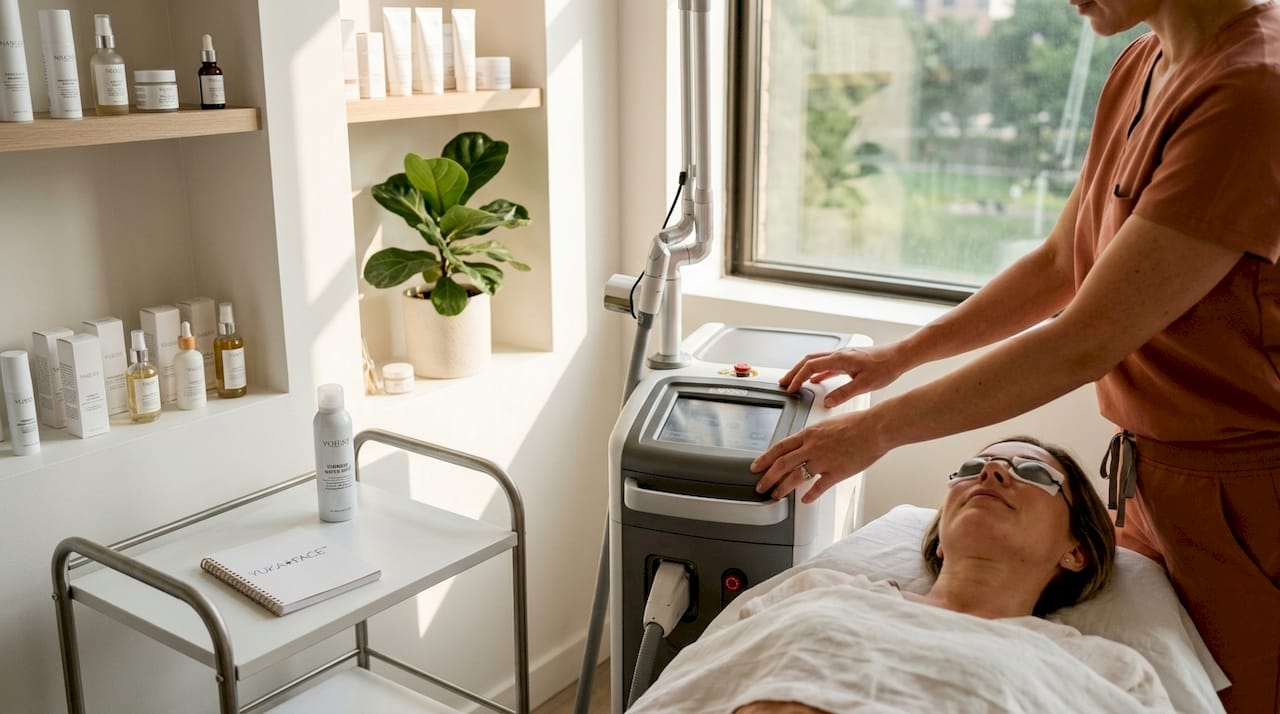
Chemical peels use acid concentrations to exfoliate at varying depths. Chemical peel agents range from alpha-hydroxy acids (AHAs) and beta-hydroxy acids (BHAs) for superficial peels to trichloroacetic acid (TCA) for medium-depth work. Deeper peels produce more significant corrections but require longer recovery periods, sometimes two to three weeks.
Injectables and fillers address a different dimension of aging. Botulinum toxin and dermal fillers work by relaxing the muscles that create dynamic wrinkles and restoring volume in areas where fat and bone have diminished with age. These are often combined with collagen-stimulating procedures for a more complete result.
One key point that experienced clinicians consistently make: no single treatment is best for every person. Treatment selection must be matched to your skin concerns, your skin tone, and your life. Combining modalities, such as a fractional laser session followed by a maintenance chemical peel, often delivers better long-term results than relying on one approach.
Safety, risks, and downtime
Understanding recovery time by treatment helps you plan realistically. Non-ablative lasers carry minimal downtime, usually zero to two days of redness. Ablative lasers require seven to fourteen days of genuine healing. Deep chemical peels can mean two to three weeks of peeling and sensitivity. These are not minor inconveniences. They are biological processes that cannot be rushed.
Provider qualifications are not negotiable. The FDA has issued safety alerts specifically about radiofrequency microneedling, warning that burns and permanent scarring can result from devices operated by untrained providers. The same concern applies across all clinical skin rejuvenation treatments. Before booking, confirm that your provider is licensed, trained on the specific device or technique, and following sterilization protocols.
Skin type is another variable that directly affects safety. Patients with deeper skin tones on the Fitzpatrick scale face a higher risk of post-inflammatory hyperpigmentation from laser treatments and certain chemical peels. FDA guidance on Fitzpatrick skin classification confirms that not all cleared devices are equally safe for every skin type. A competent provider will always assess this before recommending a protocol.
Key safety questions to ask before any treatment:
Is the provider licensed and specifically trained on this device or technique?
Has my skin type been assessed and accounted for in the treatment plan?
What are the realistic risks for my specific concerns and skin tone?
What aftercare is required, and what results are realistic on my timeline?
Pro Tip: Book a consultation with at least two providers before committing to any clinical treatment. Compare their assessments. If both providers give you the same recommendation and risk explanation, that is a strong sign the plan is sound.
Integrating rejuvenation with daily skincare
Clinical treatments trigger the repair process. Your daily skincare routine determines how well that process completes and how long results last. This is where many people underinvest, and where the most predictable improvements are left on the table.
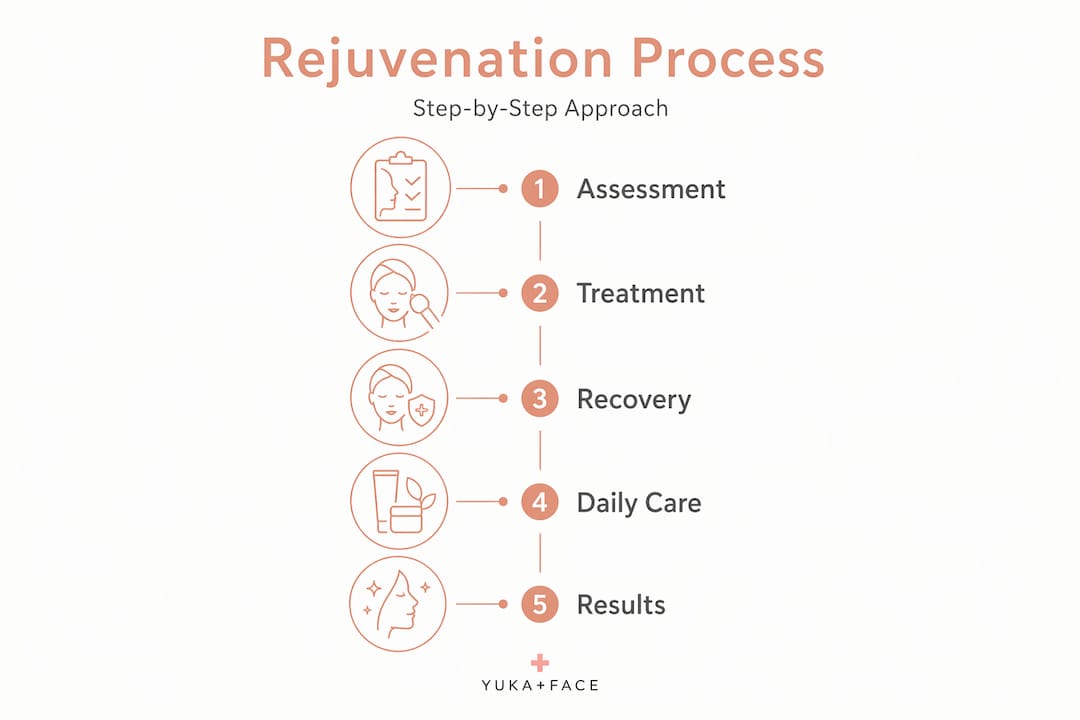
Combining clinical treatments with consistent medical-grade skincare and SPF 30 or higher use is the standard approach for sustaining results. Sun protection is not optional post-treatment. UV exposure after laser or peel work can trigger hyperpigmentation and directly undo collagen gains.
A solid maintenance approach includes the following habits:
Broad-spectrum SPF 30 or higher, applied every morning, year-round. This is the single most impactful daily habit for preserving rejuvenation results.
Hydration and barrier support. Post-treatment skin is more vulnerable to moisture loss. Ingredients that support skin barrier recovery such as ceramides, niacinamide, and plant-derived oils keep the skin resilient during recovery.
Active ingredients between sessions. Retinol and its natural alternative, bakuchiol vs retinol, are both used to support collagen turnover between clinical appointments. Bakuchiol is particularly relevant for sensitive or reactive skin types.
Nutrition and hydration from within. Antioxidant-rich foods, adequate water intake, and reduced sugar consumption support the skin’s biological repair capacity. This is not supplementary advice. It directly affects collagen quality.
Consistency over intensity. A moderate routine done daily outperforms an aggressive routine done sporadically.
One expectation to adjust immediately: collagen remodeling takes time. Visible improvements from most rejuvenation treatments emerge over three to six months as new collagen matures. Expecting results at two weeks leads to frustration and unnecessary repeat treatments.
Pro Tip: Build your post-treatment skincare routine before your appointment, not after. Having the right products ready on day one reduces the risk of using something irritating during the healing window.
My take on realistic expectations and long-term results
I have seen more frustration from skin rejuvenation than almost any other area of skincare. Not because the treatments fail. Because the expectations going in are wrong.
In my experience, the most common misconception is that a single session will deliver the result shown in before-and-after photos. What those photos rarely explain is that the “after” was taken six months post-procedure, after three to four sessions, with a consistent skincare routine running in the background. Skin rejuvenation is a multi-step process that combines clinical work with daily habits. Neither part works well without the other.
What I have also learned is that provider selection matters more than treatment selection. The best laser in the hands of an undertrained provider causes harm. A properly conducted microneedling session by a skilled clinician often outperforms a poorly executed laser treatment. Ask harder questions before you book.
The other thing I want to say directly: aging is not a problem to be fixed. The goal of rejuvenation should be healthy, functional, radiant skin. Not a freeze on time. Treatments work best when they support how your skin naturally wants to look, not when they fight against it. Keeping that perspective in mind makes the whole process calmer, more satisfying, and more sustainable long-term.
— Kelly
Start with the right skincare foundation

Before or between clinical treatments, your daily routine does more than maintain results. It prepares your skin to respond better to rejuvenation work and recover faster afterward. Yukaface offers plant-based, vegan skincare built around the same principles: support the skin’s natural repair capacity without unnecessary chemicals or fillers. A good place to start is the morning skin care routine guide, which covers SPF integration, barrier-supportive ingredients, and sequencing for all skin types. For a deeper look at the philosophy behind clean, skin-first formulation, the vegan skincare guide covers how botanical ingredients support long-term skin health.
FAQ
What is skin rejuvenation in simple terms?
Skin rejuvenation refers to clinical or professional treatments that improve skin quality by stimulating collagen and elastin production, targeting fine lines, pigmentation, texture, and firmness at a structural level.
How long does it take to see results from skin rejuvenation treatments?
Visible improvements typically take three to six months to fully appear, as collagen remodeling is a gradual biological process rather than an immediate surface change.
Are skin rejuvenation treatments safe for all skin types?
Not all treatments suit every skin type. Darker skin tones on the Fitzpatrick scale carry a higher risk of hyperpigmentation from certain lasers and peels, so treatment must be matched carefully to your skin classification by a qualified provider.
How much do skin rejuvenation treatments typically cost?
Non-ablative treatment sessions generally range from $300 to $1,000 per session, with most patients needing three to six sessions to achieve lasting results.
Can daily skincare replace clinical skin rejuvenation treatments?
No. Over-the-counter skincare works at the skin surface, while clinical treatments penetrate to the dermis where structural repair occurs. Both have a role, but daily skincare supports and maintains clinical results rather than replacing them.