
What Is Skin Radiance and How to Achieve It
TL;DR:
Skin radiance results from a smooth, hydrated skin surface that reflects light evenly. Achieving lasting radiance depends on consistent skincare routines focused on barrier repair, exfoliation, and sun protection. Instant glow products provide temporary effects, but true radiance builds over weeks through healthy habits.
Most people assume skin radiance is just about glowing after applying a highlighter or looking fresh after a good night’s sleep. The reality goes deeper. What is skin radiance, exactly? It’s the result of how well your skin reflects light, which depends directly on your skin’s surface texture, hydration levels, and overall health. Understanding this connection shifts radiance from a cosmetic wish to something you can actually build and maintain with the right habits and ingredients.
Table of Contents
What skin radiance actually means
Skin radiance refers to how much light the skin reflects, making it primarily an optical property rather than a fixed skin condition. When the surface is smooth and even, light bounces off in an organized, directional way. That’s what reads as a luminous, healthy glow. When the surface is rough, dry, or uneven, light scatters in multiple directions and the result looks dull.
Dermatologists can actually measure radiance using colorimetry on the L* axis, which tracks the total amount of light reflected from the skin. This gives researchers and formulators a way to evaluate whether a product actually improves luminosity or just claims to. Outside of clinical tools, there is no standardized medical definition for radiance. It remains cosmetic terminology, but the science behind it is very real.
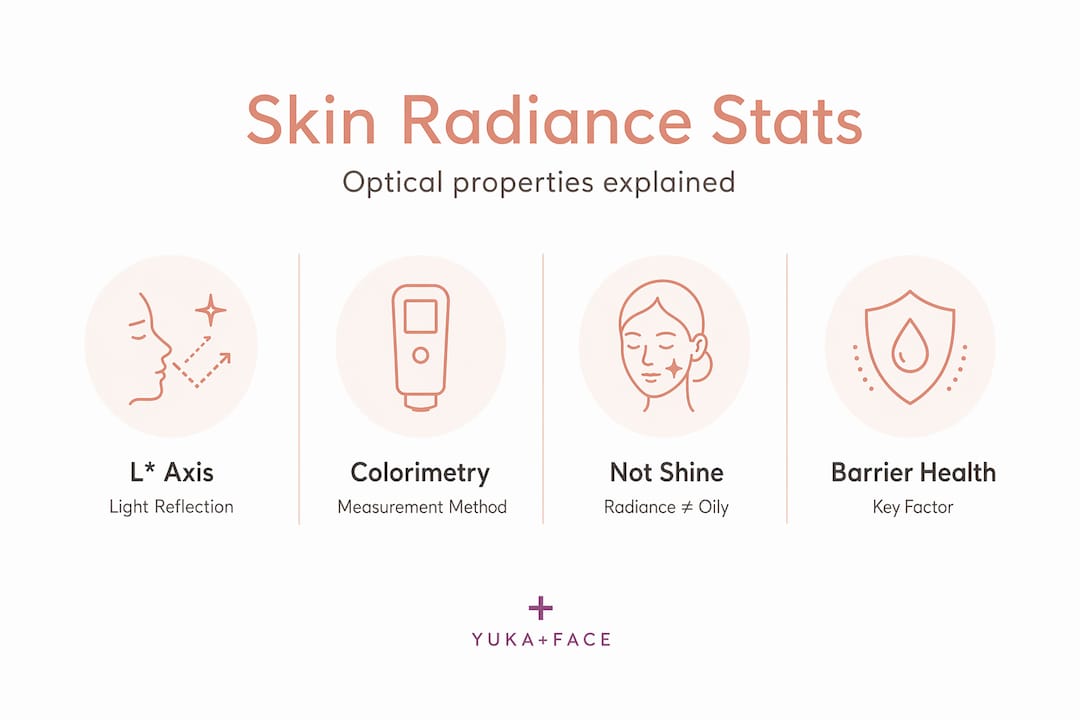
One thing worth separating early: radiance is not the same as shininess. Oily skin looks shiny because excess sebum creates a reflective film on the surface. Radiant skin reflects light from within the structure of the skin itself. The difference matters when choosing products and setting goals.
Pro Tip: If you’re trying to evaluate whether a product actually improves your radiance over time, take standardized photos in the same lighting every two weeks. Subtle changes in skin luminosity are easier to track visually than by feel.
Skin StateLight BehaviorVisual ResultSmooth, hydrated surfaceOrganized, directional reflectionLuminous, radiant appearanceRough, dry surfaceDiffuse light scatteringDull, flat appearanceExcess oil on surfaceGlossy film reflectionShiny but not radiantUneven pigmentationInterrupted light patternPatchy, uneven tone
What causes skin radiance to appear or fade
Skin radiance depends primarily on the optical properties of the skin surface, but several internal and external factors determine whether those optical conditions are met. Here are the main drivers:
Skin barrier health. The outermost layer of your skin, the stratum corneum, acts as a protective seal. When it’s intact, it retains moisture and keeps the surface smooth. A compromised barrier leads to water loss, roughness, and dullness.
Hydration levels. A well-hydrated stratum corneum reflects light more evenly. Dehydration causes micro-uneven surface texture that scatters light diffusely, which is the main cause of dullness.
Dead skin cell accumulation. Your skin sheds dead cells constantly, but when they pile up faster than they clear, they create a rough, uneven surface. That’s when dullness arises from micro-uneven skin surfaces scattering light in all directions.
Pigmentation evenness. Pigmentation irregularities interrupt light reflection and affect how radiant skin appears. Dark spots, post-inflammatory hyperpigmentation, and sun damage all break up the uniform surface needed for an even glow.
Sun exposure. Chronic UV exposure thickens the outer skin layer, degrades collagen, and contributes to pigmentation. All three reduce surface evenness over time.
Nutrition and hydration. Antioxidants, omega fatty acids, and adequate water intake support the skin’s ability to maintain its barrier. Vitamin C in particular supports collagen and helps reduce oxidative damage that contributes to uneven tone.
Stress and sleep. High cortisol levels reduce skin barrier function and slow cell turnover. Poor sleep reduces blood flow to the skin, which affects color and overall tone.
Pro Tip: Focus on your skin barrier before anything else. If your barrier is compromised, even the best brightening serum won’t deliver results. Check out barrier repair ingredients before adding actives to your routine.
How to improve skin radiance through routine and lifestyle
Lasting radiance is built, not bought in a bottle. Here’s a practical, step-by-step approach to getting there.
Cleanse gently, twice daily. Over-cleansing strips the skin barrier. Use a gentle, pH-balanced cleanser that removes dirt and excess oil without disrupting moisture. Aggressive cleansers are one of the fastest ways to create the dullness you’re trying to fix.
Moisturize with the right ingredients. Humectants like hyaluronic acid and glycerin pull moisture into the skin. Emollients like ceramides and squalane seal that moisture in and reinforce the barrier. An intact barrier and well-hydrated stratum corneum directly promote light reflection and reduce dullness.
Exfoliate regularly, but not aggressively. Two to three times per week is a reasonable starting point for most skin types. Chemical exfoliants like AHAs (glycolic acid, lactic acid) dissolve the bonds between dead skin cells and reveal a smoother surface underneath. Moisturizers and exfoliation improve surface smoothness, which directly improves how light reflects off your skin.
Apply SPF every morning. This is non-negotiable. UV damage creates pigmentation, degrades collagen, and thickens the outer skin layer over time. All of these reduce radiance. Daily SPF use protects everything else you’re doing to improve your glow.
Target pigmentation directly. If uneven tone is a major concern, adding a vitamin C serum or niacinamide to your routine helps fade dark spots over time. Addressing dark spots and pigmentation is one of the most effective long-term strategies for more uniform, radiant skin.
Support your skin from the inside. Eat foods rich in antioxidants, including berries, leafy greens, and nuts. Stay hydrated. Omega-3 fatty acids from fish or flaxseed support the lipid barrier. Consistent skincare routines that include nutrition and sun protection build lasting radiance.
Protect your skin while you sleep. A silk pillowcase reduces friction and moisture absorption compared to cotton, which helps maintain the hydration your skin works to retain overnight.
Understanding radiance claims on product labels
Walk into any pharmacy and you’ll find dozens of products promising to restore your glow, boost luminosity, or deliver instant radiance. What do those claims actually mean?
Skincare products claiming to improve radiance are classified as cosmetics unless they claim to treat or alter the structure or function of the skin. The FDA draws a clear line: a product that says it makes skin look more radiant is a cosmetic. A product that claims to change how skin actually functions is a drug and faces much stricter regulatory requirements.
This distinction matters for how you read labels.
Claim TypeWhat It MeansRealistic Expectation“Instantly radiant”Temporary luminosity from light-reflective particlesEffect lasts hours, washes off“Improves luminosity over time”Surface smoothness and hydration improvementsBuilds with consistent use“Brightening”Often refers to fading dark spots or improving toneTakes weeks to months of use“Glow-boosting”May be hydration-based or contain mica/shimmerDepends on formulation type
Cosmetic formulations often use light-reflective particles like mica to create immediate but temporary luminosity. Strobe creams and illuminating primers work this way. They’re not doing anything lasting for your skin health. That’s not necessarily a problem, but it’s worth knowing the difference between a product that creates the appearance of radiance and one that actually builds it over time.
When evaluating a product, look past the marketing language and check the ingredient list. Ceramides, hyaluronic acid, niacinamide, vitamin C, and AHAs are the ingredients with real evidence behind them.
My take on building real skin radiance
What I’ve found, after years of looking at this from every angle, is that most people start with the wrong question. They ask “what product will make my skin glow?” when they should be asking “why is my skin not reflecting light well right now?”
In my experience, the answer almost always points back to barrier compromise and dehydration. These two issues create the surface unevenness that causes dullness. And they’re both fixable with unglamorous, consistent care, not a $90 highlighter serum.
I’ve also noticed that people drastically underestimate how long real skin change takes. You’re not going to see meaningful improvements in texture and tone in a week. Realistic timelines look more like four to twelve weeks of consistent routine use. The skin surface you see today reflects weeks of past care, or neglect.
My honest advice: skip the products that promise instant glow and build a simple, barrier-focused routine instead. Gentle cleanser, ceramide moisturizer, SPF, and a chemical exfoliant two to three times per week. Add vitamin C if pigmentation is a concern. Give it sixty days before you judge the results.
The vegan skincare approach that prioritizes botanical actives and skin-compatible ingredients tends to work well for barrier health, which is ultimately the foundation of everything.
— Kelly
Start building your radiance with Yukaface

Yukaface creates 100% natural, vegan skincare designed to support your skin’s ability to glow on its own terms. No synthetic shortcuts. No temporary shimmer masking underlying dullness. The Yukaface approach centers on barrier health, hydration, and botanical actives that work with your skin’s natural renewal process.
If you’re ready to put this into practice, the morning skincare routine guide walks through a daily sequence built specifically for maintaining radiance. For those dealing with environmental damage, the summer skincare tips resource covers how to protect your skin from UV and heat that degrade the surface quality you’re building. Both are free resources on the Yukaface journal, worth reading alongside building your routine.
FAQ
What is skin radiance in simple terms?
Skin radiance is the result of light reflecting evenly off a smooth, hydrated skin surface. It’s an optical effect tied directly to skin health, not makeup or temporary products.
Can all skin types achieve radiance?
Yes. Radiance is a function of surface texture and hydration, not skin type. Every skin type can become more radiant with the right barrier support, hydration, and consistent exfoliation.
What causes skin to lose radiance?
Dullness is caused by dead cell buildup, dehydration, a compromised skin barrier, and uneven pigmentation. All of these disrupt the smooth surface that allows organized light reflection.
How long does it take to improve skin radiance?
Meaningful changes in surface texture and tone typically take four to twelve weeks of consistent skincare. Products that claim instant radiance usually rely on temporary light-reflective particles rather than actual skin improvement.
Are radiance claims on products regulated?
Radiance and luminosity are cosmetic claims under FDA guidelines. A product can legally claim to make skin look more radiant without clinical proof, as long as it does not claim to treat or alter skin function.