
What is skin nourishment? A health-conscious guide
TL;DR:
Skin nourishment involves replenishing lipids, vitamins, and antioxidants to rebuild the skin’s barrier and promote resilience. It differs from hydration, which increases water content, and moisturizing, which seals moisture on the surface; each targets different skin needs. Effective skin health relies on applying nourishing products promptly after cleansing and supporting internal nutrition through a balanced diet rich in essential nutrients.
Most people treat their skin with a moisturizer and call it done. But moisturizing, hydrating, and nourishing are three distinct actions, and confusing them is exactly why so many routines fall short. Skin nourishment, as defined by dermatological research, is the practice of supplying lipids, vitamins, and antioxidants to restore the skin’s protective barrier, improve suppleness, and prevent transepidermal water loss. It goes deeper than surface moisture. Done right, it rebuilds the foundation your skin needs to stay healthy, resilient, and visibly radiant.
Table of Contents
How skin nourishment differs from hydration and moisturizing
The science of ceramides and lipid replenishment for nourishing skin
Holistic nourishment: nutrition and lifestyle for radiant skin
Practical tips to incorporate skin nourishment into your skincare routine
Why nourishing your skin is the foundation health-conscious individuals often overlook
Explore vegan skincare solutions for natural skin nourishment
Understanding skin nourishment and its role in skin health
Skin nourishment is not a marketing term. It describes a specific biological process: replenishing the lipids, vitamins, and protective compounds that the skin barrier needs to function. When that barrier is intact, it keeps moisture in and irritants out. When it is compromised, skin becomes dry, reactive, and prone to inflammation.
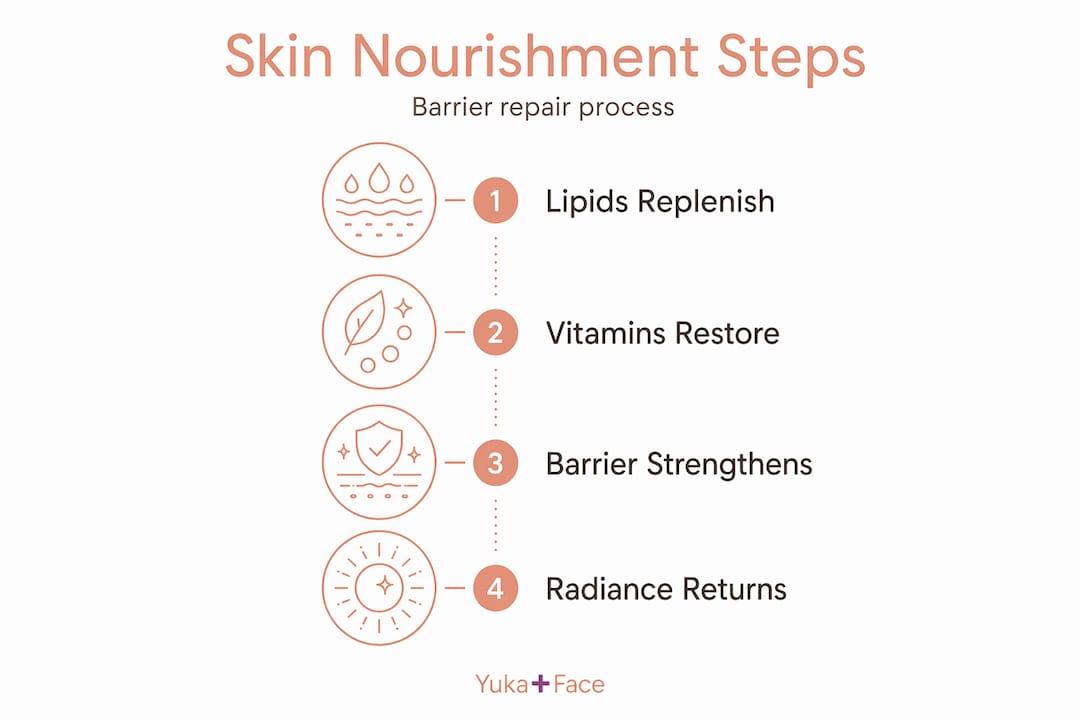
The barrier itself is located in the outermost layer of skin, the stratum corneum. Think of it as a wall: skin cells are the bricks, and lipids are the mortar filling the gaps. Without enough of the right lipids, that wall develops cracks. Skin barrier lipids are roughly 50% ceramides, 25% cholesterol, and 15% free fatty acids, and deficiencies in any one of them can increase transepidermal water loss by 30 to 50%.
Understanding skin barrier damage vs dehydration is critical here because the two are frequently mistaken for each other. A dehydrated skin lacks water. A damaged barrier lacks lipids. Nourishment addresses the second problem, not the first.
The 3:1:1 lipid ratio of ceramides, cholesterol, and fatty acids is the ratio at which the stratum corneum functions optimally. This is not a preference, it is a structural requirement backed by barrier function science.

Lipid typeProportion in barrierPrimary functionCeramides~50%Structural integrity, water retentionCholesterol~25%Barrier flexibility, repair signalingFree fatty acids~15%Antimicrobial defense, lipid matrix supportOther lipids~10%Supplementary barrier support
Knowing which ingredients repair skin barrier function helps you choose products that deliver real results instead of surface-level comfort.
How skin nourishment differs from hydration and moisturizing
These three terms are often used interchangeably, but they address completely different needs. Using the wrong product for the wrong skin concern is one of the most common mistakes in skincare.
Moisturizers, hydrators, and nourishing products each serve a distinct purpose: moisturizers seal the surface to prevent moisture evaporation, hydrating products draw water into skin cells, and nourishing products supply the nutrients and lipids needed for skin health and barrier repair.
ActionTargetKey ingredientsBest forMoisturizingSkin surfaceOcclusives (shea butter, beeswax)Dry, flaky surfaceHydratingSkin cellsHumectants (hyaluronic acid, glycerin)Tight, dehydrated skinNourishingSkin barrierCeramides, fatty acids, vitaminsDamaged, reactive, aging skin
Here is a quick breakdown of what each step actually does:
Moisturizing creates a physical seal over the skin surface to lock in existing moisture. It does not add water or repair the barrier.
Hydrating increases water content inside the cells using ingredients that attract and bind moisture, like hyaluronic acid.
Nourishing replenishes the lipids and nutrients the skin barrier is made of, improving its ability to function correctly over time.
Skin that feels tight after washing is dehydrated. Skin that is flaky and reactive likely has a damaged barrier. Skin that is dull and slow to recover needs nourishment. Often, a well-designed routine addresses all three needs in layered steps.
For a closer look at how two of these concepts overlap and differ, the guide on hydration vs moisturizing breaks it down in practical detail.
The science of ceramides and lipid replenishment for nourishing skin
Ceramides are the single most important lipid in the skin barrier. They account for roughly half of its lipid content and are the primary reason skin stays intact, calm, and well-hydrated. The problem is that they do not stay at youthful levels forever.
Natural ceramide levels decline by roughly 40% by age 30 and 60% by age 60. That decline is not caused by external damage alone. It is a natural biological process, which means topical replenishment becomes increasingly important as you age, regardless of how well you take care of your skin otherwise.
When replenishing ceramides topically, the ratio matters as much as the ingredient itself. Products formulated with the 3:1:1 ratio of ceramides alongside cholesterol and fatty acids can improve barrier function by 80 to 90% within four weeks of consistent use. A product with ceramides alone, without its companion lipids, produces weaker results.
Key facts about ceramide-based skin nourishment:
Ceramide levels decline with age, making external replenishment necessary after your mid-twenties.
The 3:1:1 ratio of ceramides, cholesterol, and fatty acids is the most effective approach for barrier repair.
Results from consistent barrier repair products typically become visible within four to eight weeks.
Applying ceramide products to damp skin directly after cleansing significantly improves lipid absorption.
Harsh cleansers, over-exfoliation, and prolonged hot water exposure all accelerate ceramide loss.
The full guide to skin barrier health covers the biological mechanics in more depth, and the article on repairing the skin barrier naturally focuses on plant-based options for those committed to clean formulations.
Pro Tip: Apply your ceramide-rich product immediately after patting skin dry, while it is still slightly damp. That residual moisture helps the lipids absorb more effectively and reduces the chance of the product just sitting on the surface.
Holistic nourishment: nutrition and lifestyle for radiant skin
Topical products handle the outside. What happens inside your body completes the picture. The skin is a living organ that depends on a steady supply of nutrients delivered through the bloodstream, not just ingredients applied from a jar.
Holistic skin nourishment requires adequate protein for collagen repair, omega-3 fatty acids for inflammation regulation, and micronutrients including vitamins A, C, D, E, zinc, and selenium for cellular defense and recovery. These are not optional extras. They are the raw materials your skin uses to rebuild itself.
Top nutrients that support skin barrier function and repair:
Protein provides amino acids essential for collagen and keratin production.
Omega-3 fatty acids found in flaxseed, chia seeds, and walnuts reduce skin inflammation and strengthen lipid layers.
Vitamin A supports cell turnover and surface repair.
Vitamin C is required for collagen synthesis and neutralizes oxidative damage.
Vitamin E works as a fat-soluble antioxidant protecting cell membranes.
Zinc regulates oil production and supports wound healing.
Selenium protects against UV-induced damage at the cellular level.
How to build internal nourishment into your daily habits:
Eat one source of omega-3 fats daily, whether through seeds, nuts, or plant-based oils.
Include a variety of colorful vegetables and fruits for a broad range of antioxidant vitamins.
Prioritize adequate protein intake from legumes, whole grains, and nuts if you follow a vegan diet.
Stay consistently hydrated through water and fluid-rich foods like cucumbers, berries, and leafy greens.
Support gut health through fermented foods and fiber, since digestion directly affects skin clarity and tone.
The connection between diet and skin is explored further in the article on nutrition for skin health, and for those interested in the mental and lifestyle side of the equation, the piece on mindfulness in skincare is worth reading.
Pro Tip: Gut health and skin health are closely connected. If skin is persistently reactive or congested despite a clean topical routine, it may be worth examining fiber intake and digestive consistency before adding more products.
Practical tips to incorporate skin nourishment into your skincare routine
Understanding what nourishment is becomes useful only when you apply it consistently. Here are the practices that actually move the needle.
Applying ceramide-rich products to damp skin within three minutes of cleansing significantly improves lipid uptake compared to application on dry skin. That small timing detail is one of the highest-impact changes most people never make.
Best practices for effective daily skin nourishment:
Cleanse gently. Harsh surfactants strip barrier lipids. Use a mild, low-pH cleanser that does not leave skin feeling tight.
Apply nourishing products fast. The three-minute window after cleansing is real. Do not skip it.
Choose the right ratio. Look for products that combine ceramides with cholesterol and fatty acids together, not ceramides alone.
Layer strategically. Apply a humectant serum first to add water, then follow with a lipid-rich product to seal and nourish.
Avoid over-exfoliating. More than two or three times per week removes lipids faster than the skin can replace them.
Protect the barrier. SPF is a nourishment practice too. UV exposure degrades ceramides and accelerates barrier aging.
Be consistent. Barrier repair takes weeks. Results do not appear overnight, but they are lasting when maintained.
If you follow a vegan routine, ingredient sourcing matters. Many ceramide products use animal-derived sphingolipids. Plant-based alternatives from wheat, rice bran, and konjac root are effective and ethically aligned.
The article on building a healthy morning skin care routine provides a practical sequence that integrates nourishment steps from the start of the day, and the guide to ingredients that repair skin barrier damage is a useful reference for reading labels with confidence.
Why nourishing your skin is the foundation health-conscious individuals often overlook
Most skincare conversations focus on what is trending. Retinol this season. Niacinamide the next. But underneath every ingredient trend is the same unchanging need: a functioning barrier. If the barrier is compromised, even the best active ingredients cannot do their job.
Ceramides are foundational, not trendy. They are the lipid structure that holds skin together, and their decline is biological and inevitable. No amount of antioxidant serum replaces a depleted lipid matrix. Prioritizing nourishment is not about ignoring innovation. It is about knowing what the foundation requires before adding everything else on top.
The other overlooked piece is internal nutrition. Many people build detailed topical routines but eat in ways that actively undermine barrier repair. Diets low in healthy fats, antioxidants, and protein produce skin that is slow to recover, dull, and reactive regardless of what is applied to the surface.
Routine timing is also consistently underestimated. Most people apply products when convenient rather than when the skin is most receptive. The damp-skin application window, consistent daily use, and allowing adequate time for visible results are all small habits with outsized impact.
The article on modern ageless beauty approaches this from a longer perspective, looking at what sustained skin health actually looks like over time rather than chasing short-term improvements.
Understanding skin biology does not require a science degree. It requires knowing that skin is a barrier organ that needs the right materials, applied at the right time, supported from within. That clarity makes every product decision more effective and every routine more purposeful.
Explore vegan skincare solutions for natural skin nourishment
Knowledge of skin nourishment is only useful when paired with products formulated to deliver it. Yuka+Face builds every product around this principle: botanical actives, essential lipids, and plant-derived antioxidants working together to restore and protect the skin barrier without compromise.

Start with the vegan skincare guide to understand how plant-based formulations address nourishment without animal-derived ingredients. From there, the guide on what and when to use vegan skincare provides a sequenced routine built around the principles covered in this article. For a morning routine that integrates nourishment from the first step, the healthy morning skin care routine guide is a practical place to begin. Every Yuka+Face formulation is 100% vegan, cruelty-free, and designed to work with your skin barrier rather than against it.
Frequently asked questions
What is the difference between skin nourishment and hydration?
Skin nourishment supplies essential lipids and nutrients to restore the skin’s barrier structure, while hydration increases water content inside skin cells. They address different needs and often work best together.
Why are ceramides important for skin nourishment?
Ceramides make up ~50% of skin barrier lipids and are essential for retaining moisture and blocking irritants. Their levels decline with age, making topical replenishment increasingly important.
How does nutrition affect skin nourishment?
Adequate intake of protein, omega-3 fatty acids, and key vitamins and minerals supports skin repair and barrier integrity from within, directly complementing what topical products can achieve.
How should I apply nourishing products for best results?
Apply to damp skin within 3 minutes of cleansing to maximize lipid absorption and improve barrier repair. Timing makes a measurable difference.
Can vegan skincare effectively nourish the skin?
Yes. Well-formulated vegan products using plant-derived ceramides, fatty acids, and antioxidants can fully support skin nourishment and barrier repair with no animal-derived ingredients required.
Recommended
Essential Guide to Skin Barrier Health: Restore and Protect Your Skin — Yuka+Face
Skin Barrier vs Dehydration: Understanding and Caring for Your Skin — Yuka+Face
Top Ingredients That Support Barrier Recovery for Healthier Skin — Yuka+Face
Discover the Unbothered Skin Philosophy for Radiant, Stress-Free Skin — Yuka+Face