
What Is Skin Aging? Causes, Signs, and Prevention
TL;DR:
Skin aging results from both internal biological processes and external environmental damage, making prevention essential. Consistent sun protection, gentle skincare, and lifestyle choices can significantly slow visible aging signs, while emerging therapies aim to target cellular mechanisms. Regular skin monitoring helps detect early changes, emphasizing that holistic care impacts long-term skin health.
Skin aging is one of the most visible biological processes you will ever experience, yet most people misunderstand what is actually driving it. Many assume wrinkles and sagging are purely the result of getting older. The truth is more useful than that. The skin aging process involves two distinct forces working simultaneously: the internal changes programmed into your biology, and the external damage you accumulate from sun, pollution, and daily habits. Understanding both is what separates reactive skin care from genuinely effective prevention.
Table of Contents
What is skin aging and why it happens
Skin aging is the gradual decline in your skin’s structural integrity and functional capacity over time. It is not a single event. It is a slow accumulation of cellular and molecular changes that alter how your skin looks, feels, and repairs itself.
At the cellular level, two processes drive this. Intrinsic aging is genetically regulated and tied to your biological clock. It affects everyone regardless of lifestyle. Extrinsic aging is caused by environmental exposure, primarily UV radiation, but also pollution, smoking, and poor nutrition.
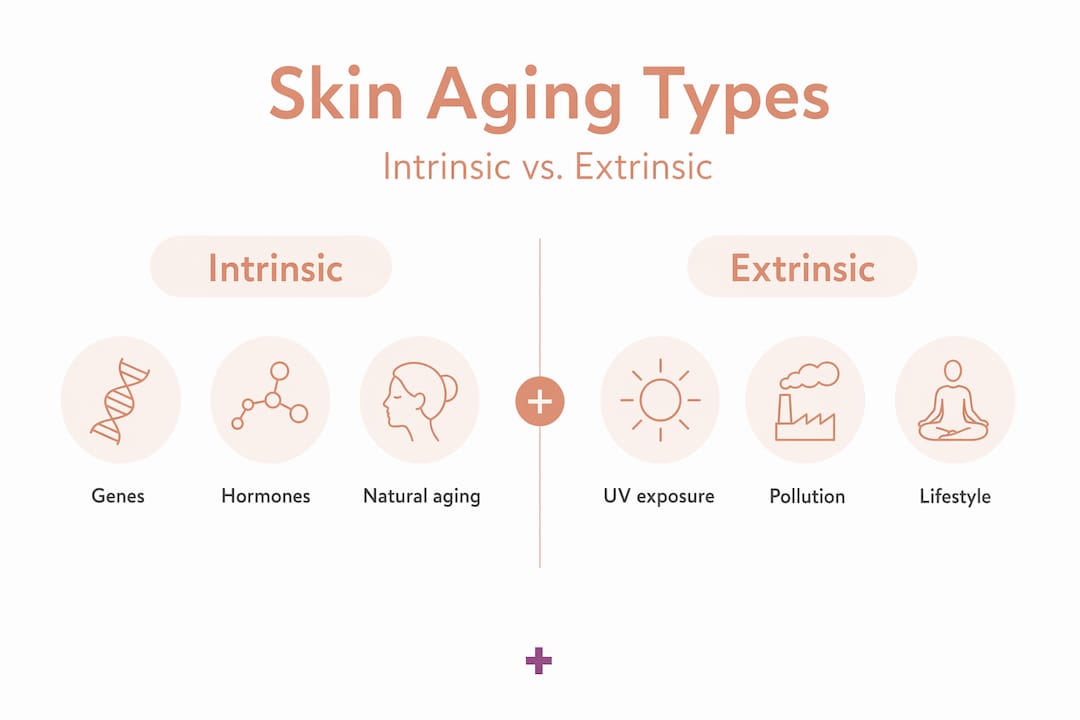
The critical insight most people miss: the majority of visible aging you see in the mirror is extrinsic, not intrinsic. That means it was largely preventable. That distinction changes how you approach skin care entirely.
Biological changes inside aging skin
The structural changes in aging skin begin deep in the tissue layers and work outward. Here is what changes at each level:
Epidermis (outer layer): The skin thins progressively, and cell turnover slows. Skin that once renewed itself in about 28 days takes significantly longer in older adults, leaving a duller complexion.
Collagen and elastin: Production drops steadily after your mid-twenties. Collagen provides structure; elastin allows skin to snap back. Losing both means thinner, less resilient skin that creases more easily.
Oil and sweat glands: Older skin produces less oil and sweat, leading directly to dryness, tightness, and increased fragility. This is not dehydration you can fix by drinking more water alone.
Blood vessels: The small vessels near the skin’s surface become more fragile over time, which is why bruising increases with age even from minor contact.
Skin barrier function: A weakened barrier struggles to retain moisture and defend against irritants, making reactive skin more common in older adults.
Hormonal shifts, particularly the drop in estrogen during menopause, accelerate many of these changes for women. Genetics determine your baseline rate, but genetics are not destiny when it comes to the extrinsic factors layered on top.
Pro Tip: If your skin feels tight and dry year-round despite drinking enough water, your oil gland activity may be declining. Switch from a gel cleanser to a cream or oil-based cleanser to avoid stripping what little natural oil your skin is still producing.
External factors that speed up aging
Extrinsic skin aging is where lifestyle decisions leave their most visible mark. Chronic UV exposure is the single most damaging external factor, causing a specific form of accelerated aging called photoaging. The effects go well beyond sunburn.
Photoaging produces wrinkles, uneven pigmentation, a leathery skin texture, and visible broken capillaries. These signs appear years or even decades before they would from intrinsic aging alone. UV-triggered oxidative stress activates inflammatory pathways that break down the extracellular matrix, destroying collagen faster than the body can replace it.
Beyond UV, several other external factors accelerate the skin aging process:
Smoking: Directly reduces blood flow to the skin and degrades collagen through chemical oxidants in tobacco smoke.
Air pollution: Fine particulate matter penetrates the skin barrier and triggers the same inflammatory cascade as UV exposure.
Poor sleep: During deep sleep, the body repairs cellular damage. Chronic sleep deprivation leaves that repair incomplete night after night.
Diet: High-sugar diets contribute to glycation, a process where sugar molecules attach to proteins like collagen, making them rigid and prone to damage.
The table below clarifies how intrinsic and extrinsic aging differ in their causes and characteristics.
FactorIntrinsic agingExtrinsic agingCauseGenetics, hormones, biological clockUV, pollution, smoking, lifestyleOnsetGradual, begins in mid-twentiesCan begin earlier with high sun exposureSkin signsFine lines, thinning, drynessDeep wrinkles, pigmentation, elastosisReversibilityNot reversiblePartially reversible with treatmentPreventionLimitedSignificant with sun protection and lifestyle
Visible signs and effects of skin aging
Knowing what to look for helps you respond appropriately. Most signs of aging skin develop gradually and fall into predictable categories.
Wrinkles and fine lines. Expression lines around the eyes and mouth appear first. Deeper furrows on the forehead and between the brows develop later, accelerated by sun exposure and repetitive muscle movement.
Age spots and uneven tone. Flat brown spots, also called solar lentigines, form where UV damage has accumulated over years. They are a direct indicator of cumulative photoaging.
Dryness and rough texture. Reduced oil production and a slower cell turnover rate both contribute. Skin that once felt smooth begins to feel rough to the touch.
Sagging and loss of volume. As collagen and fat diminish in the deeper layers, the skin loses its support structure. Jawlines soften, cheeks flatten, and skin around the neck loosens.
Increased bruising and slower healing. Fragile blood vessels and thinner skin make bruising more common. Cuts and abrasions also take longer to close.
Most of these effects of aging on skin are normal. However, new spots that change in size, shape, or color, persistent rashes that do not resolve, or any lesion that bleeds without cause deserve a dermatologist’s attention. Normal aging and skin disease can look similar on the surface.
Pro Tip: Photograph your skin in the same lighting every few months. It is far easier to spot gradual changes in photos than in your daily mirror check.

How to prevent and slow skin aging
The good news: visible aging signs can be slowed significantly with consistent, well-chosen habits. You do not need an elaborate or expensive routine. You need the right fundamentals done reliably.
Sun protection is non-negotiable. Apply a broad-spectrum SPF 15+ sunscreen 15 to 30 minutes before outdoor exposure and reapply every two hours. This single habit delivers more anti-aging benefit than any cream or serum on the market. Protective clothing and avoiding peak sun hours between 10 a.m. and 4 p.m. compound the effect.
Beyond sun protection, a practical daily approach looks like this:
Cleanse gently. Harsh surfactants strip the skin’s natural oils and damage the barrier. Use a gentle, low-pH cleanser morning and night. Building a consistent skincare routine around gentle products makes every other step more effective.
Moisturize daily. Aging skin loses moisture faster. A moisturizer with ceramides or hyaluronic acid helps restore barrier function and reduce the appearance of fine lines.
Use antioxidants. Vitamin C, vitamin E, and niacinamide neutralize the free radicals generated by UV and pollution exposure. Applied topically in the morning, they reinforce your sunscreen’s protection.
Consider retinol or bakuchiol. Both stimulate collagen production and speed cell turnover. Retinol is more studied; bakuchiol is the plant-based alternative with fewer side effects for sensitive skin.
Support skin from within. A diet rich in leafy greens, healthy fats, and antioxidant-dense foods like berries supports collagen production and reduces systemic inflammation. Quality sleep and quitting smoking deliver measurable improvements in skin appearance within weeks.
The morning skin care routine you build around these principles does not need to be complicated. Consistency outperforms complexity every time.
Emerging treatments and research
The science of skin aging has moved well beyond topical creams. Researchers now understand that skin aging involves cellular senescence, oxidative stress, and inflammatory signaling in ways that open up entirely new treatment categories.
Treatment areaCurrent statusKey mechanism targetedSenolytic therapiesEarly clinical researchClearing senescent cells to reduce chronic inflammationNanotechnology in skincareActive developmentDeeper ingredient delivery past the skin barrierPersonalized photoaging treatmentClinically appliedTailoring interventions to skin phototype and historyRegenerative medicine (PRP, stem cells)Established for some usesTissue repair and collagen stimulation
One of the most clinically relevant findings is that photoaging is largely preventable and partially reversible when treatment is personalized to a patient’s skin type and history. This means starting early matters, but starting late still delivers meaningful results. It is not an all-or-nothing situation. Skin, as research increasingly suggests, serves as a meaningful window into broader biological aging, which gives dermatologists and researchers useful data for understanding systemic health alongside cosmetic outcomes.
My take on skin aging and what actually moves the needle
I have spent years looking at the research on skin aging, and one thing keeps standing out. People over-invest in serums and under-invest in sunscreen. The ingredient that has the most scientific support for slowing visible aging is the one most people skip or apply incorrectly. If you apply SPF once in the morning and do nothing else to refresh it, you are leaving most of the day unprotected.
The second mistake I see constantly is chasing trends. Ingredients cycle in and out of fashion, but collagen support, barrier repair, and antioxidant defense are not trends. They are the biological mechanisms of aging. Any product that targets those mechanisms, whether through retinol, bakuchiol, vitamin C, or ceramides, has a legitimate role. Products that promise to “reverse” aging without targeting any known mechanism are noise.
The third thing worth saying plainly: lifestyle genuinely matters. I know it sounds like filler advice, but the research is clear. Chronic sleep deprivation, smoking, and a high-sugar diet accelerate the same molecular pathways that UV exposure does. Topical skin care cannot fully compensate for that. The skin reflects what is happening systemically. Treat the whole picture, not just the surface.
Checking your skin regularly and getting unusual changes evaluated promptly is also something I would push on. Normal aging and early skin cancer can look deceptively similar. The habit of monitoring your skin and acting on anything new or changing is one of the most useful things you can do for long-term skin health.
— Kelly
Skin care for healthy aging with Yukaface
Yukaface builds every product around the idea that aging skin deserves nourishment, not harsh interventions. The formulations are vegan, cruelty-free, and created with botanical research at their core.

For anyone building or refining a routine, the vegan skincare guide covers the principles behind clean formulations and why ingredient integrity matters for aging skin. The retinol vs. bakuchiol comparison breaks down exactly how these two collagen-supporting ingredients differ and which skin types benefit most from each. For daily structure, the morning skin care routine guide provides a clear, step-by-step framework built around sun protection, hydration, and antioxidant defense. Yukaface also covers hydration and barrier restoration, which is where most aging skin routines benefit the most from a focused refresh.
FAQ
What is skin aging?
Skin aging is the gradual structural and functional decline of the skin driven by both internal biology and external environmental exposure. It results in changes like thinning, reduced elasticity, dryness, wrinkles, and uneven pigmentation over time.
What are the main causes of skin aging?
The two main causes are intrinsic aging, which is genetically programmed, and extrinsic aging, primarily caused by chronic UV exposure, pollution, smoking, and poor sleep or diet.
What are the first signs of aging skin?
Fine lines around the eyes and mouth, subtle dryness, and a slower skin cell turnover rate that dulls the complexion are typically the earliest signs. Age spots may follow with cumulative sun exposure.
Can skin aging be slowed or reversed?
Visible aging signs can be slowed significantly with consistent sun protection, antioxidant use, and gentle hydrating routines. Some signs of photoaging are partially reversible with personalized treatment approaches.
When should you see a doctor about aging skin?
Consult a dermatologist if you notice any new spot that changes in size, shape, or color, or any persistent rash, lesion, or skin change that does not resolve on its own within a few weeks.