
What Is Gentle Skincare and Why Your Skin Needs It
TL;DR:
Gentle skincare emphasizes barrier protection, reducing irritation with low-irritant, science-backed ingredients. It involves a simple routine of cleanser, moisturizer, and SPF, avoiding known irritants like fragrance and sulfates. Prioritizing gentle formulations supports long-term skin health, especially for sensitive and reactive skin.
Gentle skincare is not a trend. It is not a compromise. Yet so many people assume that mild products mean weak results, settling for harsh formulas in search of faster fixes. What is gentle skincare, really? It is a science-backed approach that protects the skin barrier, reduces irritation, and delivers lasting skin health through carefully chosen, low-irritant ingredients. This article covers what gentle skincare products actually contain, the real benefits of gentle skincare for sensitive and reactive skin, how to build a simple routine, and what to look for when choosing products that work.
Table of Contents
What gentle skincare actually means
Gentle skincare is defined by what it does not contain as much as what it does. At its core, gentle skincare products are formulated to minimize the risk of irritation, sensitization, or barrier damage. That means avoiding common offenders and choosing ingredients that work with the skin rather than against it.
The ingredients most frequently found in gentle formulations include:
Glycerin: A humectant that draws moisture into the skin without clogging pores or causing reactions.
Ceramides: Lipids that naturally exist in the skin barrier and help repair and reinforce it. Ceramides and niacinamide calm inflammation and improve hydration in sensitive skin.
Niacinamide: A form of vitamin B3 that reduces redness, supports barrier function, and is well-tolerated by most skin types.
Aloe vera: A plant-based soother that reduces inflammation and provides light hydration.
Oat extract: Calming and anti-inflammatory, commonly used in formulas targeting reactive or eczema-prone skin.
What gentle skincare actively avoids is just as telling. Sulfates like sodium lauryl sulfate strip the skin’s natural oils. Synthetic fragrance is a leading cause of irritation and sensitivity. Physical scrubs with large, jagged particles create micro-tears. Alcohol-based toners dehydrate. High concentrations of chemical exfoliants like AHAs and BHAs, when used daily, erode the skin barrier over time.
You may also see the terms “fragrance-free” and “hypoallergenic” on product labels. Fragrance-free means no added scent compounds, which is meaningful. Hypoallergenic is less regulated and varies by brand, so it should not be the only factor you rely on when choosing products.
Pro Tip: Check the ingredient list for the word “parfum” or “fragrance” near the top of the list. The higher it appears, the more concentrated it is, and the greater the risk for sensitive skin.
Benefits of gentle skincare for sensitive skin
The skin barrier is a thin but critical layer made up of skin cells and lipids that sits on the outermost surface of your skin. It keeps moisture in and environmental stressors out. When it is damaged, skin becomes dry, reactive, red, and prone to flare-ups. Gentle skincare exists specifically to protect and rebuild this barrier.
Harsh products do damage that compounds over time. A strong foaming cleanser used twice daily strips oils and disrupts the pH of the skin. Add a high-percentage retinol, a physical scrub, and a fragrance-heavy toner, and the barrier takes sustained damage. The result is skin that stings, flushes, and breaks out, not because of a skin condition, but because of the routine itself.

The benefits of gentle skincare go beyond short-term comfort. The table below shows how switching to gentler formulations changes the skin experience over time:
ConcernHarsh routine resultGentle routine resultRedness and flushingFrequent flare-upsReduced, stabilized skin toneDryness and tightnessChronic moisture lossImproved hydration retentionStinging after applicationCommon with activesRare with barrier-safe ingredientsBreakouts from irritationProduct-triggered reactionsFewer inflammation-driven blemishesLong-term barrier healthChronic disruptionProgressive repair and resilience
People with sensitive or immune-driven skin conditions must prioritize routines that reduce friction and irritation rather than attempting to treat every concern with an active ingredient.
Pro Tip: If your skin regularly stings, flushes, or flakes after applying products, that is your barrier signaling distress. Stripping back to a two-step routine for two weeks often reveals significant improvement.
Learn more about what supports recovery in the Yukaface guide to skin barrier health.
Building a simple gentle skin routine
The best gentle skin routine is the one you actually follow, and it does not need more than three core steps. Here is how to build one that works for sensitive skin without overloading it.
Cleanse with a low-foam formula. Non-foaming cleansers help maintain hydration and avoid stripping the skin’s natural oils. Look for cream or gel textures without sulfates. Apply with your fingertips, not a cloth or brush, using lukewarm water. Hot water disrupts lipid barriers. Cold water does not rinse effectively. Lukewarm is the right call every time.
Moisturize immediately after cleansing. Applying moisturizer to slightly damp skin locks in water that would otherwise evaporate. Choose a formula with ceramides, glycerin, or shea butter. For daytime use, a lighter texture works. For nighttime, a richer cream supports overnight repair. Sensitive skin tends to do well with fragrance-free, minimal-ingredient formulas rather than those packed with plant extracts, some of which can cause reactions despite being natural.
Apply SPF every morning. Sun damage is one of the most significant accelerators of skin aging and barrier breakdown. Mineral sunscreens containing zinc oxide or titanium dioxide sit on the surface of the skin rather than being absorbed, which makes them less likely to irritate sensitive skin than chemical UV filters.
That is the foundation. Many people stop there and find their skin is calmer, clearer, and more comfortable than it ever was during a ten-step routine. Excessive layering of products can overload skin and worsen barrier function, so resist the urge to add more until you have assessed how your skin responds to the basics.
If you want guidance on sequencing products for a morning routine, the starter skincare routine guide from Yukaface breaks it down step by step.
How to choose gentle skincare products
Choosing the right products means understanding what labels actually tell you and what they do not. The skincare industry is not tightly regulated in the United States, which means terms like “natural,” “clean,” and even “gentle” have no universal legal definition. A product can say “natural” on the front and still contain synthetic fragrance, preservatives known to cause contact dermatitis, or irritating essential oils.
Here is a quick comparison of marketing terms and what they actually mean for sensitive skin:
Label termRegulated?What it signalsFragrance-freeLooselyNo added fragrance compounds. Safer for sensitivity.UnscentedNoMay still contain masking fragrances. Check the full list.NaturalNoNo standard definition. Read the ingredient list fully.HypoallergenicNoSelf-defined by brand. Not a guarantee.Dermatologist-testedNoDoes not mean approved. Just tested by at least one.
Reading the ingredient list is the only reliable method for identifying potential irritants. Choosing gentle skincare requires understanding ingredient function, potential irritants, and how to read product labels carefully.
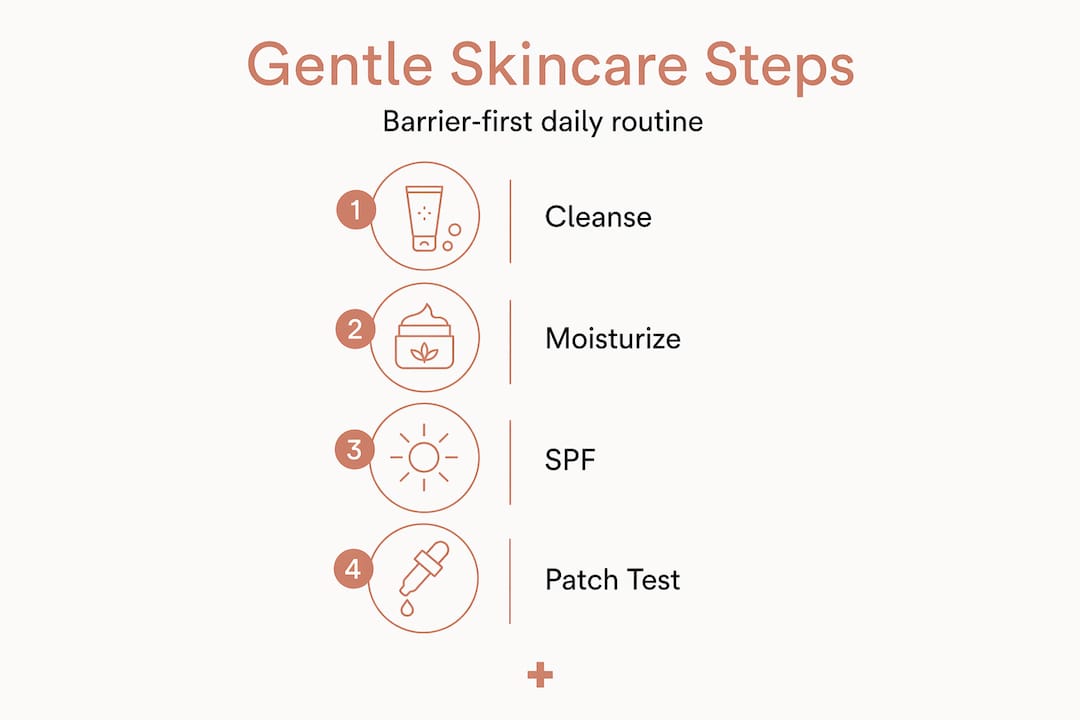
Patch testing is non-negotiable when trying a new product. Apply a small amount to the inside of your arm or behind your ear for 48 hours before applying it to your face. This is especially true for serums, exfoliants, and products with concentrated plant extracts.
Avoid building a routine around too many actives at once. Retinol, vitamin C, and exfoliating acids each have their place, but layering all three into a single routine increases the risk of chronic barrier disruption. Introduce one new product at a time, at least two weeks apart.
Natural and fragrance-free skincare
Natural ingredients and fragrance-free formulations are two of the most meaningful characteristics in gentle skincare for sensitive skin. They are also widely misunderstood.
Fragrance-free does not mean the product has no scent at all. Some fragrance-free products still carry a faint smell from their base ingredients. What it does mean is that no synthetic fragrance compounds or masking agents were added, which matters because fragrance can cause redness, dryness, and sensitivity even in very small concentrations. Fragrance-free is not less luxurious. It is a smarter formulation choice for long-term skin health.
Natural emollients and plant-based actives offer genuine skin benefits without the risk profile of synthetic additives:
Aloe vera: Soothes inflammation, cools reactive skin, and provides light hydration. A well-documented option for post-sun or post-procedure skin.
Oat milk (colloidal oatmeal): Natural emollients like aloe and oat reduce inflammation without adding irritation risk. Colloidal oatmeal in particular is FDA-recognized for eczema relief.
Rosehip seed oil: Rich in fatty acids that support barrier repair, gentle enough for daily use on most skin types.
Green tea extract: Antioxidant-rich and anti-inflammatory, effective at neutralizing environmental stressors.
Chamomile extract: Calming on red and reactive skin, commonly found in gentle toners and moisturizers.
One important caveat: not all natural ingredients are automatically gentle. Citrus oils, certain essential oils, and high-concentration plant extracts can all cause reactions in sensitive skin. The source of an ingredient matters, but so does its concentration and formulation context.
My take on gentle skincare
I have spent years observing how people approach their skin, and the most common pattern I see is this: skin gets reactive, someone adds a new product to fix it, the skin gets more reactive, and the cycle continues. The instinct to add more is understandable. But more is rarely the answer.
What I have found, consistently, is that gentle cleansing and hydration are the foundation for long-term skin health, not the bonus steps you add after the actives. The dermatology community is shifting in this direction too. The focus has moved away from aggressive anti-aging treatments toward skin resilience through daily, gentle habits. That shift is long overdue.
I also think the idea that you need a complex routine to look after your skin is one of the most damaging myths in the beauty industry. It sells products. It does not serve skin. Three well-chosen products, used consistently, beat ten mediocre ones every time. Patience matters more than potency. And for anyone with reactive or sensitive skin, that is not a limitation. It is freedom.
If you want to understand how the industry is rethinking aging and skin health, the Yukaface perspective on skin longevity is worth reading.
— Kelly
Gentle skincare starts here: Yukaface
Yukaface builds every product around the principles covered in this article. Natural. Vegan. Fragrance-free formulations. No harsh synthetic additives. Ingredients chosen for function, not marketing appeal.

Whether you are building a gentle routine from scratch or refining what you already use, Yukaface resources cover both the products and the reasoning behind them. The vegan skincare guide explains how plant-based formulations align with gentle skincare principles. The morning skincare routine guide walks through a practical, simple daily sequence built for sensitive and normal skin alike. Explore both and find the starting point that fits your skin.
FAQ
What is gentle skincare, exactly?
Gentle skincare refers to products and routines formulated to minimize irritation, protect the skin barrier, and avoid harsh ingredients like synthetic fragrance, sulfates, and high-concentration exfoliants. The focus is on barrier support and long-term skin health.
What ingredients should I look for in gentle skincare products?
Look for ceramides, glycerin, niacinamide, aloe vera, and oat extract. These ingredients support barrier repair, reduce inflammation, and improve hydration without causing irritation in sensitive skin types.
Is a gentle skin routine effective, or does it produce slow results?
Yes. A simple routine of cleanser, moisturizer, and SPF produces visible improvements in skin comfort, tone, and texture for most skin types. Dermatologists recommend this restrained approach specifically because it protects the barrier rather than compromising it.
Why should I avoid fragrance in skincare?
Fragrance is one of the most common causes of skin sensitivity and contact reactions. Even small amounts can trigger redness and dryness. Fragrance-free formulations reduce this risk without sacrificing product effectiveness.
How do I patch test a new gentle skincare product?
Apply a small amount to the inside of your arm or behind your ear and wait 48 hours. If no redness, itching, or irritation appears, the product is likely safe to use on your face.