
Vegan skincare for all skin types: A holistic guide
The phrase “all skin types” appears on countless product labels, but it rarely tells the full story. Skin is complex. It shifts with age, hormones, seasons, and stress. A product that works well for one person can trigger breakouts or dryness in another. This guide breaks down what “all skin types” actually means, which vegan and holistic ingredients deliver broad compatibility, and how to build a routine that works for your skin specifically, not just skin in general.
Decoding ‘all skin types’ skincare: What does it actually mean?
The term “all skin types” is partly a marketing tool. It signals broad appeal and low risk of irritation. But it does not mean a product will perform equally well across every skin condition. Skin types include oily, dry, combination, sensitive, and normal. Each has distinct needs.
Oily skin needs mattifying yet hydrating ingredients like niacinamide and hyaluronic acid (HA). Dry skin needs rich emollients. Sensitive skin requires fragrance-free formulas. Combination skin has zones with different needs. Skin also changes with age, hormones, and seasons, which means a product that suits you today may not suit you in six months.
One of the most common points of confusion is the difference between dry and dehydrated skin. Dry skin lacks oil (sebum). Dehydrated skin lacks water. They look similar but need different solutions. Understanding hydration vs moisturizing is a practical first step before choosing any product labeled “all skin types.”
Here is a quick comparison of the main skin types and what they actually need:
Skin typePrimary concernKey ingredient needsOilyExcess sebum, enlarged poresNiacinamide, lightweight HA, clayDryFlakiness, tightnessRich emollients, ceramides, squalaneCombinationMixed oily/dry zonesBalancing, zone-specific careSensitiveRedness, reactivityFragrance-free, minimal activesDehydratedDullness, tightness (any type)HA, water-binding humectants
Key risks of one-size-fits-all products include:
Overloading oily skin with heavy emollients
Under-nourishing dry skin with lightweight gels
Triggering sensitivity with added fragrance or alcohol
Missing the dehydration signal because it mimics oiliness
“All skin types” is a starting point, not a guarantee. Use it as a filter for low-irritation formulas, not as a substitute for knowing your own skin.
Recognizing skin barrier damage is also important. When the skin barrier is compromised, even gentle products can cause reactions. Products labeled “all skin types” should ideally support barrier repair, not just avoid causing harm.
Now that we have exposed the misconceptions around universal products, let us explore which ingredients and certifications actually make a skincare routine inclusive and safe for everyone.
Ingredients and certifications: The vegan holistic approach
Vegan skincare avoids all animal-derived ingredients. This includes beeswax, lanolin, collagen, and carmine. But being vegan does not automatically make a product gentle or effective. The ingredient list matters just as much as the certification.

For broad skin compatibility, seek Leaping Bunny certified products with jojoba oil, HA, plant-sourced ceramides, and niacinamide. These are non-irritating, barrier-boosting, and suitable for most skin types. They are also eco-conscious when sourced responsibly.
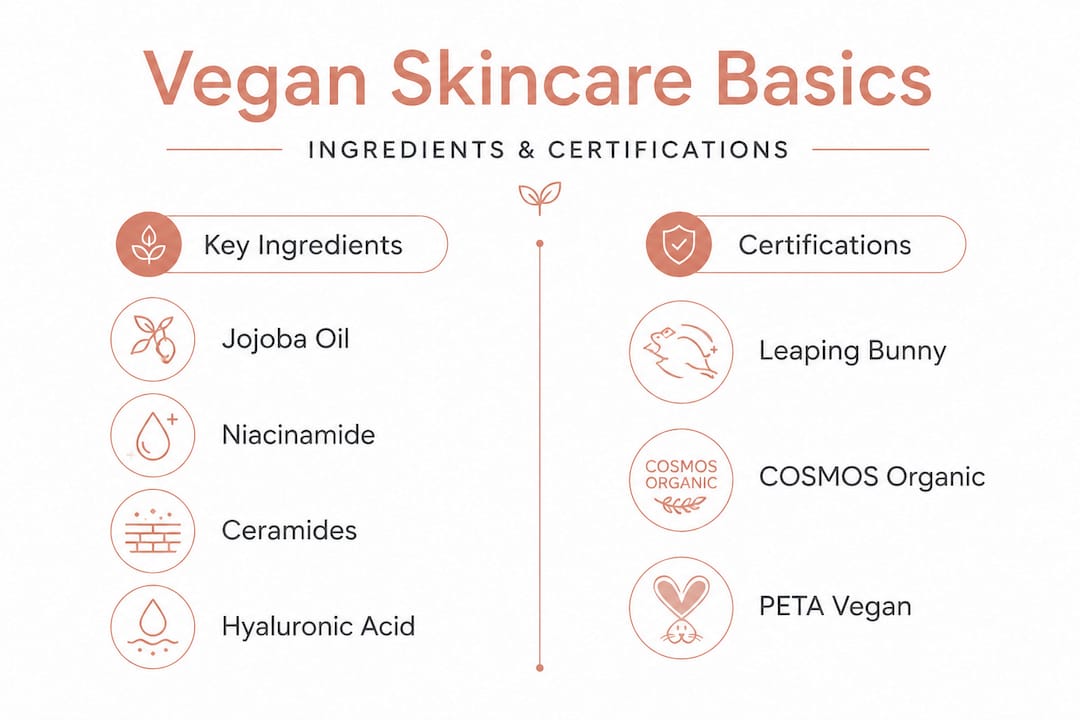
Here is a breakdown of key vegan ingredients and their benefits:
IngredientSourceBenefitJojoba oilJojoba plantBalances sebum, non-comedogenicHyaluronic acidFermentation (vegan)Deep hydration, plumpingNiacinamideVitamin B3Pore minimizing, brightening, barrier supportPlant ceramidesWheat, rice, sweet potatoBarrier repair, moisture retentionSqualaneSugarcane or oliveLightweight moisture, anti-oxidant
How to read labels for all-skin suitability:
Check the first five ingredients. These make up the bulk of the formula. Water, aloe vera, or jojoba oil near the top signals a gentle base.
Look for fragrance-free or “unscented” labeling. Fragrance is a leading cause of contact dermatitis.
Avoid high concentrations of alcohol (ethanol) in leave-on products. It can disrupt the skin barrier over time.
Confirm plant-sourced ceramides. Animal-derived ceramides are not vegan.
Scan for known irritants: essential oils in high concentrations, synthetic dyes, and sulfates in cleansers.
Certifications to look for include Leaping Bunny (cruelty-free), COSMOS Organic (certified organic formulation), and PETA’s Beauty Without Bunnies. These provide third-party verification of both ethical sourcing and ingredient standards.
A solid vegan skincare guide will also explain how plant-based actives compare to synthetic ones. Many vegan formulas now use science-backed botanicals that perform on par with conventional ingredients. Peptides in organic skincare, for example, can deliver visible anti-aging results without animal-derived components.
Pro Tip: Before adding any new product to your routine, do a patch test. Apply a small amount to the inner forearm or behind the ear. Wait 24 to 48 hours. This applies even to products labeled “all skin types” or “gentle.”
Even with ingredient transparency and certification, “all types” skincare needs practical routines. Let us look at how you can personalize and monitor your approach.
Best practices: Building your all skin types routine
A minimalist routine is the most reliable starting point for any skin type. It reduces the risk of ingredient interactions and makes it easier to identify what is and is not working.
The core three-step vegan routine:
Cleanse. Use a gentle, sulfate-free cleanser. Look for aloe vera, oat extract, or jojoba as base ingredients. Cleanse morning and evening. Avoid hot water, which strips natural oils.
Hydrate. Apply a HA serum or a lightweight water-based moisturizer. This step suits all skin types. Oily skin still needs hydration. Skipping it can trigger excess sebum production.
Protect. Apply SPF 30 or higher every morning. UV damage is the leading cause of premature aging and hyperpigmentation. Mineral SPF with zinc oxide is well-tolerated by sensitive skin.
No universal “all types” perfection exists. Start minimal, then monitor for 4 to 12 weeks. Actives need time to work. Vegan formulations match efficacy through science-backed plants, making them a strong choice for ethical skincare seekers.
How to monitor your skin:
Take weekly photos in consistent lighting to track changes
Note texture, oiliness, and any reactions in a simple log
Adjust one product at a time to isolate variables
Check in with your routine every season
Your skin changes. Morning skincare steps that work in winter may feel too heavy in summer. Summer skincare tips often involve switching to lighter textures and increasing SPF. Conversely, a fall skincare transition may call for richer moisturizers as humidity drops.
Checklist for ongoing skin health:
Cleanse twice daily with a gentle formula
Apply HA serum before moisturizer on damp skin
Use SPF every morning, year-round
Introduce new actives one at a time
Reassess your routine every 8 to 12 weeks
Drink adequate water and maintain a balanced diet
Pro Tip: Keep a simple skin diary. Note what products you use, when you introduce something new, and how your skin responds. Even a few lines per week builds a useful reference over months. This practice is especially helpful during hormonal shifts or seasonal changes.
Understanding the theory and best practices, let us address the common mistakes and how to avoid them for optimal results.
Common mistakes and how to avoid them
Even well-intentioned routines go wrong. These are the most common errors in all-skin-type approaches, particularly within vegan and natural skincare.
Mislabeling dry vs. dehydrated skin. This is the most frequent mistake. Dry skin needs oil-based nourishment: plant ceramides, squalane, and jojoba. Dehydrated skin needs water-binding humectants like HA and glycerin. Using the wrong type of product can worsen the condition. Skin changes with age, hormones, and seasons, so what worked last year may not apply now.
Ignoring seasonal and hormonal shifts. Skin is not static. Hormonal changes during menstruation, pregnancy, or menopause alter sebum production and sensitivity. Seasonal shifts change humidity levels and UV exposure. A routine built for one condition needs regular review.
Overusing actives. Retinol, AHAs, BHAs, and vitamin C are effective, but stacking them causes irritation, barrier disruption, and sensitivity. In vegan routines, plant-derived actives like bakuchiol (a retinol alternative) and willow bark extract (a natural BHA) are gentler but still require pacing.
Relying on fragrance-heavy “natural” products. Natural does not mean non-irritating. Essential oils like lavender, citrus, and eucalyptus are common sensitizers. A product can be 100% plant-based and still trigger reactions. Always check the full ingredient list, not just the front label claims.
Common mistakes to avoid:
Assuming “natural” equals safe for all skin types
Skipping SPF because a moisturizer contains antioxidants
Using physical exfoliants daily on sensitive or reactive skin
Layering multiple fragrant products without patch testing each
Switching entire routines at once when troubleshooting issues
Simplicity is protective. The fewer products in a routine, the easier it is to identify what is causing a reaction and what is delivering results.
For those focused on ageless beauty insights, it is worth noting that aging skin is not a problem to solve. It is a condition to support. Mature skin tends to produce less sebum and loses moisture faster, which means richer vegan emollients and consistent barrier support become more important over time.
Pro Tip: Always patch test new products before full application. This is non-negotiable, even with certified vegan and gentle formulas. Reactions can occur from any ingredient, natural or synthetic.
With these mistakes in mind, let us zoom out and share a fresh perspective based on real experience within the vegan skincare movement.
Why true all-skin skincare is about personalizing, not universalizing
The skincare industry has a habit of selling simplicity. “Works for everyone” is a compelling message. But the reality is that skin is one of the most variable organs in the body. No single formula can account for every combination of genetics, environment, lifestyle, and age.
The honest truth: identify your personal skin type before reaching for any “all types” product. A simple wash test works. Cleanse your face, wait one hour without applying anything, then observe. Tight and flaky indicates dry. Shiny all over indicates oily. Shiny in the T-zone only indicates combination. Comfortable and balanced indicates normal.
The real value of vegan and holistic skincare is not that it works for everyone automatically. It is that it provides a cleaner foundation for personalization. Shorter ingredient lists, transparent sourcing, and plant-based actives make it easier to identify what your skin responds to. That clarity is the actual advantage.
Trends in skincare move fast. New actives, new formats, new claims appear every season. But the fundamentals do not change: a healthy skin barrier, consistent hydration, and daily sun protection are the baseline for every skin type. Everything else is customization.
A thoughtful vegan skincare approach starts with self-knowledge, not product accumulation. The most effective routine is the one built around your skin’s actual needs, not the one with the most certifications or the longest ingredient list.
Ingredient literacy is a practical skill. Reading a label, recognizing irritants, and understanding what a humectant does versus what an emollient does, these are tools that serve you better than any trending product. Invest time in learning them.
Explore trusted vegan skincare routines for all skin types
YukaFace products are formulated with 100% natural, vegan ingredients and designed to work across all skin types and ages. Each formula is built on botanical research and scientific expertise, prioritizing barrier support, hydration, and gentle efficacy.

Start with the vegan skincare guide for a full breakdown of ingredients, certifications, and how to assess your skin type. For step-by-step application guidance, the morning routine resource covers cleanse, hydrate, and protect in practical detail. Both resources support a mindful, informed approach to holistic skincare, built around your skin’s real needs.
Frequently asked questions
Can a product labeled ‘all skin types’ really work for everyone?
Most “all skin types” products work decently for many, but individual differences in oiliness, sensitivity, and hydration mean personalization is essential for consistent results.
How can I tell if my vegan skincare routine fits my skin type?
Patch test and monitor for 4 to 12 weeks, adjusting for changes in season, age, or hormones. Vegan formulas deliver results best when matched to your specific skin needs.
What certifications should I look for in vegan products for all skin types?
Look for Leaping Bunny or cruelty-free certifications, plus plant-based actives like jojoba, niacinamide, and ceramides to ensure broad suitability and ethical sourcing.
What’s the difference between dry and dehydrated skin?
Dry skin lacks oil, while dehydrated skin lacks water. Each requires different ingredients: emollients for dry skin and humectants like hyaluronic acid for dehydrated skin.