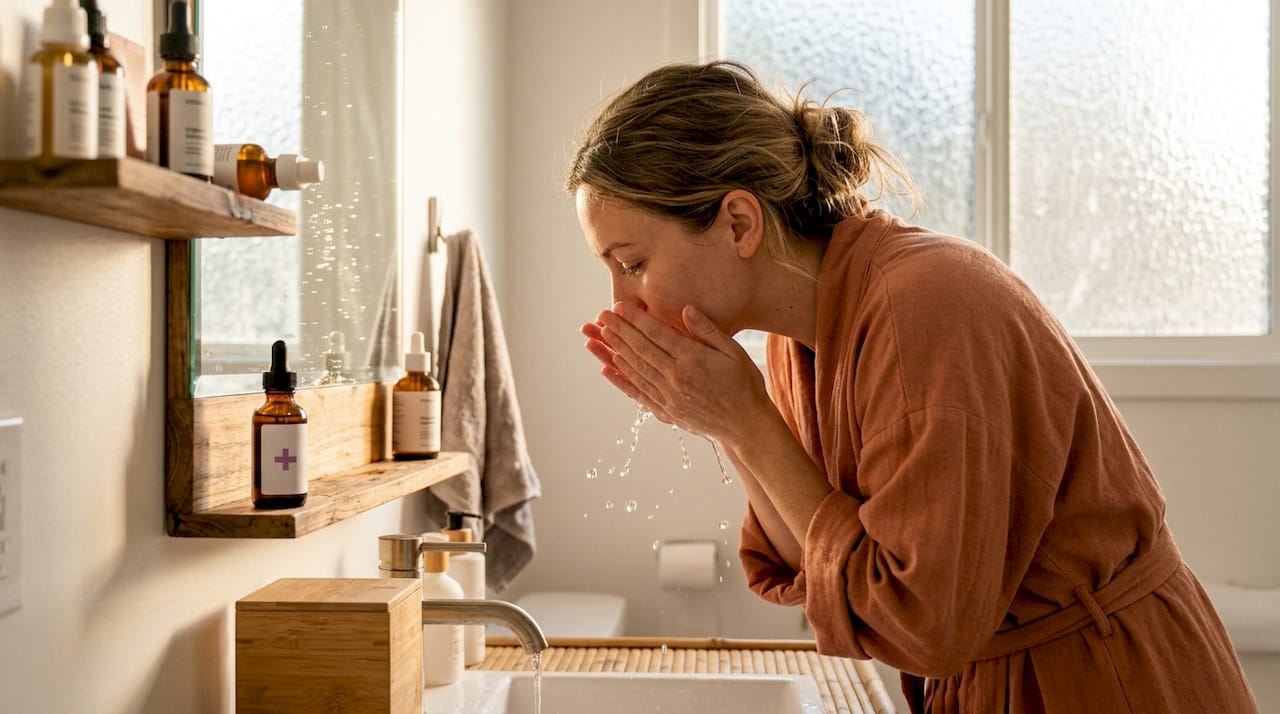
Skin hydration: Your guide to healthier, radiant skin
TL;DR:
True skin hydration occurs at a cellular level within the stratum corneum, measurable through specific devices.
Effective hydration depends on the skin’s lipid barrier and natural moisturizing factor, which retain water and protect against loss.
Most routines neglect barrier support and rely solely on sensation, risking short-term comfort over lasting skin health.
Your skin might feel soft and comfortable after applying moisturizer, but that sensation alone does not confirm it is actually well-hydrated. True skin hydration operates at a cellular level, inside the outermost layer of the skin, and it is measurable. Understanding the gap between perceived comfort and real hydration can fundamentally change how you build and evaluate your skincare routine.
Table of Contents
What is skin hydration? The science explained
Skin hydration refers to how much water is present and retained at the skin surface, specifically within the stratum corneum, which is the outermost layer of the epidermis. This layer acts as the primary interface between the body and the environment. When it holds an adequate amount of water, skin stays flexible, smooth, and functions as an effective protective barrier.
Hydration is not just a cosmetic concern. The water content in the stratum corneum directly influences how skin looks, how it responds to environmental stress, and how efficiently it performs its protective role. Low hydration levels lead to visible flaking, tightness, and a compromised barrier that is more vulnerable to irritants and allergens.
How hydration is measured
Scientists and clinicians measure skin hydration using devices called corneometers. These devices assess the electrical capacitance of the skin surface, which correlates directly with water content in the stratum corneum. A higher reading indicates better hydration. Measuring TEWL and hydration (transepidermal water loss) alongside corneometer readings gives a fuller picture: one tells you how much water is present, the other tells you how fast it is escaping.
MetricTool usedWhat it measuresNormal rangeStratum corneum hydrationCorneometerWater content at skin surface30 to 50 arbitrary unitsTEWLTewameterRate of water evaporation from skin5 to 10 g/m²/h (healthy barrier)Sebum levelSebumeterOil content on skin surfaceVaries by skin typeSkin pHpH meterAcidity/alkalinity of skin surface4.5 to 5.5
The key takeaway: a reading on a corneometer is not the same as how your skin feels after applying a rich cream. Understanding the difference between hydration and moisturizing helps clarify what each product in your routine is actually doing. These two terms are often used interchangeably, but they address different skin needs.
Skin stat: Studies show that stratum corneum water content below 10% is associated with clinical signs of dryness, flaking, and impaired barrier function.
The role of your skin barrier and natural moisturizing factor
Skin hydration does not happen in isolation. It depends on two interconnected systems: the skin’s lipid barrier and its natural moisturizing factor (NMF). Both work together to keep water inside the skin where it belongs.
What is the natural moisturizing factor?
NMF is a collection of water-soluble compounds naturally found inside the cells of the stratum corneum. It includes amino acids, urocanic acid, pyrrolidone carboxylic acid (PCA), and minerals. NMF binds water and makes up about a third of the stratum corneum’s total water-binding capacity. Without adequate NMF, skin loses its ability to hold onto moisture even when water is applied externally.
NMF levels can decline with age, harsh cleansing habits, and exposure to low-humidity environments. When NMF is depleted, the stratum corneum becomes brittle and less able to retain water, which leads to measurable drops in hydration even if topical moisturizers are applied regularly.
How the lipid barrier supports hydration
The lipid barrier, made up of ceramides, cholesterol, and fatty acids, surrounds the skin cells in the stratum corneum and acts like a sealant. It slows water evaporation and blocks external irritants. Barrier impairment increases transepidermal water loss (TEWL), which means water escapes faster than the skin can retain it.
Key factors that compromise the lipid barrier include:
Over-cleansing or using harsh, high-pH cleansers
Prolonged exposure to hot water
Cold, dry weather and low indoor humidity
Excessive exfoliation without barrier support
Certain medications and skin conditions like eczema or psoriasis
When the barrier is compromised, the skin enters a cycle where it loses water rapidly, becomes more sensitive, and struggles to benefit from products applied to it. Addressing skin barrier and dehydration as related but distinct issues is a critical step in building an effective routine.
“Barrier impairment is not just a cosmetic problem. It is a functional deficit that changes how every product you apply to your skin performs.” Consistent barrier support, guided by dermatologist barrier support advice, is the most reliable strategy for sustained hydration.
Pro Tip: If your moisturizer stops working as well as it used to, your barrier may need repair before hydration strategies can be effective. Look for skin barrier repair ingredients such as ceramides, fatty acids, and panthenol before layering hydrating serums.
Improving barrier function creates a foundation. Without it, even the best hydrating products deliver short-term comfort rather than lasting results. Targeted dry skin solutions begin with barrier support, not just moisture replenishment.
Skin dryness vs dehydration: What’s the difference?
These two terms are used interchangeably in everyday conversation, but they describe completely different skin conditions with different causes and different treatment needs. Getting this distinction right changes which products you reach for.
Clinical sources define dehydrated skin as lacking water and dry skin as lacking oil. Both can coexist in the same person at the same time, which is why many people feel confused about what their skin actually needs.
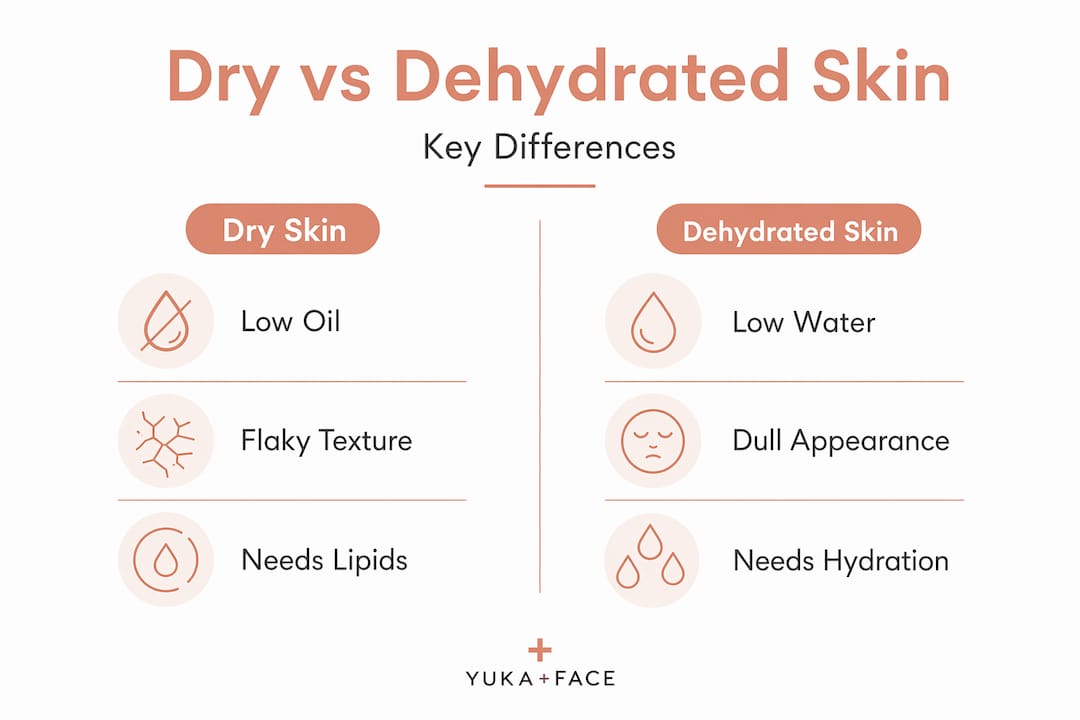
Comparison: dry skin vs dehydrated skin
FeatureDry skinDehydrated skinRoot causeInsufficient oil/lipid productionInsufficient water contentSkin type or condition?Skin type (often genetic)Skin condition (temporary, changeable)Who gets it?People with naturally low sebumAny skin type, including oilyKey signsFlaking, rough texture, dull toneTightness, fine lines when pinched, dull appearanceBest treatmentOcclusives, emollients, lipid-rich creamsHumectants, water-based serums, barrier repairCan oily skin have it?RarelyYes, very commonly
The pinch test is a simple home method to check for dehydration. Gently pinch a small area of skin on your cheek or forearm and release. If the skin snaps back quickly, hydration levels are likely fine. If it holds the pinch shape for a moment before returning to normal, dehydration may be a factor.
How to identify what your skin needs
Assess your skin before applying any products in the morning, when it is at its baseline state.
Note whether you see flaking (dry) or tightness and fine surface lines (dehydrated).
Check whether your skin produces visible oil by midday. Oily skin that still feels tight is almost always dehydrated, not dry.
Review your recent habits: Did you travel, spend time in air conditioning, or increase exfoliation? These are dehydration triggers, not dryness triggers.
Match your product approach: water-binding humectants for dehydration, lipid-replenishing emollients and occlusives for dryness.
Understanding your actual skin need avoids the common mistake of layering heavy creams on oily but dehydrated skin, which can clog pores without solving the underlying water deficit. Targeted hydration for oily skin follows a different approach than hydration for genuinely dry skin types.
How humectants and occlusives support skin hydration
Two categories of ingredients do the heavy lifting in any effective hydration strategy: humectants and occlusives. Understanding what each does, and how to use them together, makes a measurable difference in skin water content.
Humectants: attracting water
Humectants attract and hold water, while occlusives reduce evaporation from the skin surface. Humectants work by drawing water from deeper layers of the skin upward, and in high-humidity environments, also from the surrounding air into the skin. Key humectants found in effective skincare formulas include:
Glycerin: One of the most studied and effective humectants. Readily tolerated by all skin types.
Hyaluronic acid: Can hold up to 1,000 times its weight in water. Most effective when applied to damp skin.
Urea: Dual-action: humectant at low concentrations and mild exfoliant at higher concentrations. Supports NMF restoration.
Sodium PCA: A component of NMF. Highly effective water-binder, gentle on sensitive skin.
Aloe vera: Natural humectant with additional soothing and anti-inflammatory properties.
Panthenol (pro-vitamin B5): Humectant with barrier-supporting properties.
Occlusives: sealing in moisture
Occlusives sit on top of the skin and physically slow water evaporation. Common occlusives range from petrolatum (highly effective) to plant-based options like shea butter, squalane, and jojoba oil. Occlusives are most effective when applied over a humectant, locking in the water that was just drawn to the surface.
Without an occlusive, humectants applied in a dry environment can actually pull water from deeper skin layers and allow it to evaporate, which makes dehydration worse, not better.
Pro Tip: Apply a water-based humectant serum to slightly damp skin, then follow immediately with an occlusive-rich moisturizer or facial oil. This two-step layering technique maximizes water retention and gives you the best of both ingredient types. It is the foundation of any solid basic skincare routine and supports building a full routine that addresses both water and barrier needs together.
Why most skincare routines overlook true hydration
Most routines are built around how skin feels rather than how it actually functions. That is a meaningful distinction, and it explains why so many people cycle through product after product without seeing lasting improvements in their skin’s condition.
Feeling hydrated is not always the same as measurable hydration. Barrier disruption changes both corneometer readings and perceived skin comfort at the same time, but not always in the same direction. Some products create a temporary film that makes skin feel soft while doing nothing for actual water content in the stratum corneum. Others improve measurable hydration without producing the sensory softness consumers associate with a “good” moisturizer.
This is not a small issue. It means that relying entirely on skin feel as feedback leads to routines that are optimized for sensation rather than function. Real hydration improvement requires barrier support, consistent humectant use, and reduction of factors that drive water loss, like over-cleansing and skipping occlusives.
The holistic approach, one that combines water-binding ingredients, barrier repair, and protection from environmental stressors, is consistently more effective than chasing any single “hero” ingredient. Natural formulas that include ceramide-equivalent plant lipids, botanical humectants like aloe and panthenol, and protective plant oils address all three layers of the hydration equation at once.
Vegan skincare routines built on botanical science are well-positioned to deliver this kind of layered support. Plant-derived ingredients like squalane, rosehip oil, and green tea extract bring antioxidant protection alongside hydration and barrier function, something synthetic single-ingredient formulas rarely achieve.
The uncomfortable truth in skincare is this: comfort is not the same as health. Routines that prioritize how skin feels over what it actually needs will always fall short of delivering lasting, visible improvement. Measuring progress, paying attention to conditions like tightness or flaking rather than just softness, and choosing products that address both NMF and the lipid barrier will consistently outperform sensory-based product selection.
Transform your hydration journey with Yuka+Face
Knowing the science is the first step. Applying it through the right products and resources is what produces results.
Yuka+Face provides detailed, expert guides for every stage of a holistic hydration approach. Whether the goal is to understand modern ageless beauty through nourishing routines, follow a structured hydration and restoration guide, or build a complete vegan skincare routine grounded in botanical research, these resources connect the science covered here to practical, natural solutions. Yuka+Face products are vegan, cruelty-free, and formulated for all skin types and ages, designed to support barrier health, NMF, and lasting hydration with every use.
Frequently asked questions
How is skin hydration measured?
Corneometers quantify stratum corneum hydration by measuring electrical capacitance at the skin surface, giving a direct, objective reading of water content rather than relying on how skin feels.
What ingredients naturally boost skin hydration?
Key humectants and occlusives for hydration include glycerin, hyaluronic acid, and urea to attract water, paired with occlusives like squalane or shea butter to seal it in.
Can dry skin and dehydration happen together?
Yes. Dry skin and dehydration distinctions are clear: dry skin lacks oil and dehydrated skin lacks water, but both conditions can be present at the same time and require separate treatment approaches.
Does a damaged barrier always mean less hydration?
Barrier impairment increases TEWL and reduces the skin’s ability to retain water, though some targeted products may address these factors differently depending on their formulation.
What is the best way to maintain holistic skin hydration?
The expert approach to holistic hydration combines humectant-rich serums applied to damp skin with barrier-supporting ingredients like ceramides and fatty acids in a daily moisturizer, addressing both water content and lipid integrity together.