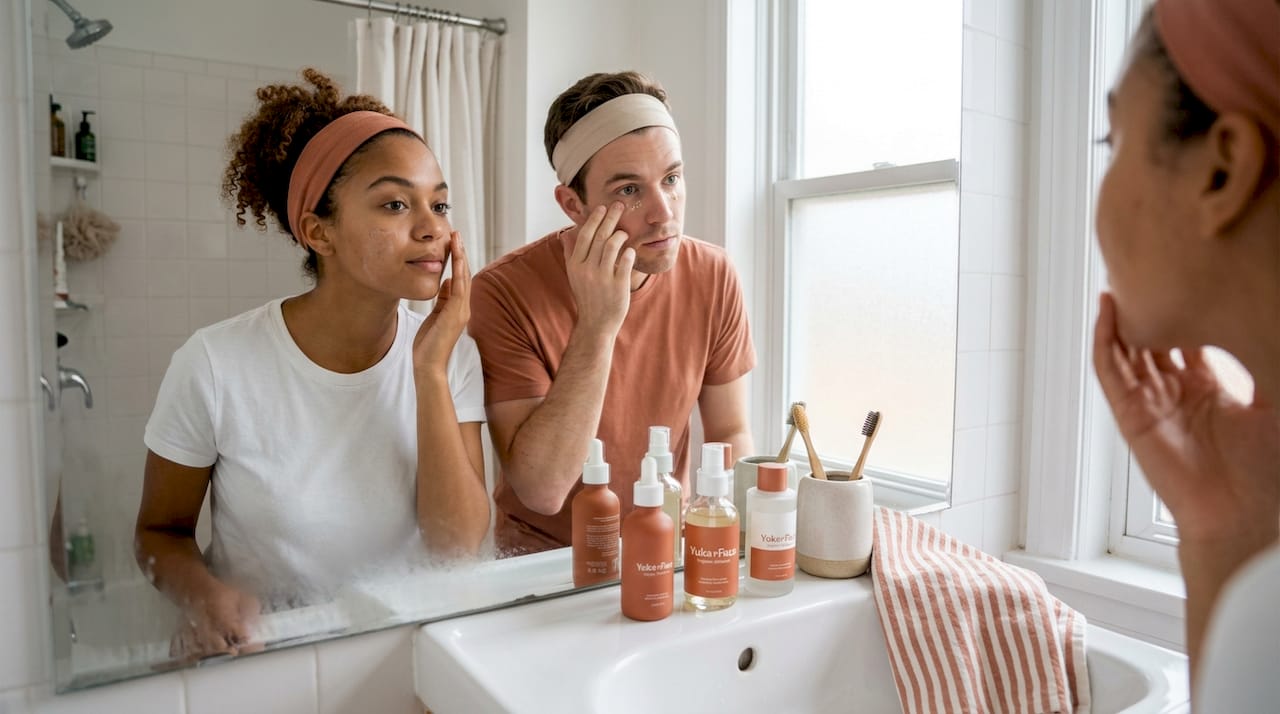
7 proven examples of inclusive skincare for every type
Finding vegan, natural skincare that genuinely works for every skin type is harder than it looks. Most products carry the “for all skin types” label, yet few are clinically tested on the full range of human skin tones. Sensitive skin, melanin-rich complexions, and reactive skin types each have distinct needs that a single generic formula rarely addresses. This article lays out clear criteria for true inclusivity, highlights evidence-backed vegan actives, and walks through real-world examples so you can make confident, informed choices.
What makes skincare truly inclusive?
True inclusivity in skincare goes well beyond a label. It requires clinical evidence, thoughtful formulation, and a genuine commitment to every skin tone and type.
The Fitzpatrick scale is the standard tool dermatologists use to classify skin tones from Type I (very fair, burns easily) to Type VI (very deep, rarely burns). When a brand claims a product is safe for all skin types, that claim only holds weight if testing covered the full Fitzpatrick I through VI range. Products tested only on lighter skin tones may trigger post-inflammatory hyperpigmentation (PIH, meaning dark spots that appear after irritation) in deeper complexions. PIH is a significant concern for melanin-rich skin and is often overlooked in standard clinical trials.
Inclusive skincare methodologies require clinical testing across Fitzpatrick I-VI scales, barrier-first formulations with pigment-safe actives like azelaic acid, and avoiding irritation triggers for melanin-rich skin. This is the foundation. Without it, “inclusive” is just a marketing word.
Barrier-first formulation means prioritizing ingredients that strengthen the skin’s natural protective layer before layering on active treatments. Ceramides, fatty acids, and humectants like hyaluronic acid all support barrier health. A compromised barrier is the root cause of most sensitivity reactions, regardless of skin tone.
Pigment-safe actives are ingredients that deliver results without triggering melanin overproduction. Azelaic acid is a standout example. It addresses uneven tone, acne, and redness without the irritation risk that comes with stronger acids. Niacinamide (vitamin B3) is another well-tolerated option.
Ingredients to approach with caution for sensitive or melanin-rich skin include:
High-concentration glycolic acid (above 10%)
Alcohol-heavy toners
Synthetic fragrance and artificial dyes
Harsh physical exfoliants with jagged particles
Benzoyl peroxide at high percentages
When you build a skincare routine, use this checklist to evaluate each product:
Tested on Fitzpatrick I-VI skin tones
Contains barrier-supporting ingredients
Uses pigment-safe actives
Free from common irritation triggers
Transparent about ingredient sourcing and testing methods
Pro Tip: Look for brands that publish their clinical study summaries or dermatologist testing data. Transparency here is a strong signal of genuine inclusivity.
Vegan and natural actives: Safer for all skins
Vegan skincare is not just an ethical choice. The science increasingly supports plant-based formulations as gentler and more effective for a wide range of skin types.
Biomimetic plant-based actives in vegan skincare reduce irritation by 73%, and plant-derived materials show no irritation in clinical tests on 50 samples, supporting safety for all skin types. Biomimetic means the ingredient mimics something the skin naturally produces, so the skin recognizes and responds to it without triggering a defensive reaction. This is a key reason vegan actives tend to outperform synthetic alternatives in tolerance testing.
Here are the most effective and inclusive vegan actives currently supported by research:
Azelaic acid (derived from grains): Addresses PIH, redness, and acne without irritating melanin-rich skin
Bakuchiol (from the babchi plant): A plant-based alternative to retinol with comparable anti-aging results and far better tolerance for sensitive skin
Biomimetic peptides: Short chains of amino acids that signal skin to produce collagen; gentle and effective across all skin types
Green tea extract (EGCG): A powerful antioxidant that calms inflammation and protects against environmental damage
Niacinamide: Regulates sebum, reduces PIH, and strengthens the barrier without irritation
Rosehip seed oil: Rich in essential fatty acids and vitamin A; supports barrier repair and even tone
Vegan natural formulas often match or exceed traditional efficacy via concentrated antioxidants, with better tolerance for sensitive skin, though stability can be lower without synthetics. This is an honest limitation. Without synthetic preservatives, some natural formulas degrade faster or require refrigeration. Inclusive brands address this through airless packaging, natural preservative systems like vitamin E and rosemary extract, and smaller batch production.
Learning about peptides in vegan skincare is worthwhile if anti-aging is a priority. Peptides work across all skin tones and types without the irritation risk of traditional retinoids. For those weighing their options, the bakuchiol vs retinol comparison is a useful starting point.
Pro Tip: Even gentle vegan formulas can cause reactions in extremely reactive skin. Patch test any new product on the inner arm for 48 hours before applying it to your face.
Examples of inclusive skincare brands and formulas
The best way to assess inclusivity is to look at real products and the policies behind them. Here are key examples of what genuine inclusivity looks like in practice.
1. Brands with full Fitzpatrick testing Some brands commission independent dermatological studies covering all six Fitzpatrick skin tones. These studies measure irritation rates, PIH risk, and barrier disruption across diverse populations. Products that pass this standard can legitimately claim safety for all skin types. Look for published study data, not just “dermatologist tested” badges.

2. Plant-based antioxidant and peptide specialists A growing number of vegan brands build their entire formulation philosophy around concentrated botanical antioxidants and biomimetic peptides. These formulas are designed to deliver results without the aggressive actives that carry higher irritation risk. Green tea, resveratrol (from grape skin), and vitamin C derivatives are common anchors in these ranges. Paired with peptides, they address aging, dullness, and uneven tone effectively across skin types.
3. Personalization and barrier-first brands Some brands take inclusivity further by offering personalized formulations based on skin type, concern, and tone. They combine holistic sourcing (ethically harvested botanicals, minimal processing) with barrier-first design. The logic is straightforward: a healthy barrier is the prerequisite for any active ingredient to work safely.
“For all skin types” claims are often myths. Ethnic-specific needs, such as higher PIH risk in darker tones, require tailored approaches, challenging universal vegan inclusivity. This is an uncomfortable truth the industry is slowly acknowledging.
The phrase “for all skin types” is sometimes a shortcut. Brands that genuinely address ethnic-specific needs go further. They formulate with PIH prevention in mind, avoid known irritants for reactive skin, and test on diverse populations. Checking summer skincare tips for diverse skin tones or a morning routine for all skin types can reveal whether a brand’s inclusivity extends to practical guidance, not just product claims.
For a broader overview of what to look for, the vegan skincare guide covers ingredient standards, certification types, and how to read labels effectively.
Key criteria when evaluating any brand:
Independent clinical testing data (not just internal)
Diverse testing population (Fitzpatrick I-VI)
Clear irritation and PIH rate reporting
Barrier-supporting base formulation
Transparent ingredient sourcing
Pro Tip: Always check for clinical evidence on a diverse population and real irritation data. A brand willing to publish these numbers is a brand you can trust.
Head-to-head comparison: Are all “inclusive” products equal?
Not all products that claim inclusivity deliver it equally. This comparison breaks down four product types by the criteria that matter most.
Product typeVegan certifiedClinical testing standardKey activesBarrier-friendlinessIrritation safetyAzelaic acid serumYesFitzpatrick I-VIAzelaic acid, niacinamideHighHighBakuchiol facial oilYesFitzpatrick I-IV (varies)Bakuchiol, rosehip, vitamin EHighHighPeptide moisturizerYesFitzpatrick I-VIBiomimetic peptides, ceramidesVery highVery highBotanical brightening tonerYesFitzpatrick I-III (common gap)Vitamin C derivative, green teaMediumMedium
Key takeaways from this comparison:
Biomimetic peptide formulas consistently score highest for barrier-friendliness and irritation safety across all skin tones
Brightening toners with vitamin C derivatives often have gaps in testing for deeper skin tones, which is a real risk for PIH
Azelaic acid serums remain one of the most reliably inclusive active treatments available
Bakuchiol oils vary by brand; testing range is inconsistent, so checking individual brand data matters
Inclusive skincare formulations that prioritize barrier support alongside actives deliver the most consistent results across Fitzpatrick types
Your priorityBest choiceAnti-aging, all tonesPeptide moisturizerUneven tone, PIH preventionAzelaic acid serumRetinol alternative, sensitive skinBakuchiol facial oilAntioxidant protectionBotanical toner (check testing range)
When building or refining a routine, starting with basic skincare products that score well on barrier support and irritation safety gives you the strongest foundation before adding targeted treatments.
Why “for all skin types” isn’t enough: A nuanced look at inclusivity
The skincare industry has made real progress on vegan and natural formulations. But the phrase “for all skin types” has been stretched to the point where it means very little on its own.
Here is the core problem. Most clinical trials in cosmetic testing historically used predominantly lighter skin tones. A product can pass standard safety testing and still cause significant PIH in a person with a Type V or VI complexion. That is not a minor issue. PIH can persist for months and is one of the most common skin concerns among people with deeper skin tones globally.
Universal “for all skin types” claims are often myths. Ethnic-specific needs, including higher PIH risk in darker tones, require tailored approaches that challenge the assumption of universal vegan inclusivity. This is not an argument against vegan skincare. It is an argument for higher standards within it.
What does genuine inclusivity require? It requires diversity in clinical testing populations, not just ingredient safety data. It requires formulations designed with PIH risk in mind, not just general irritation scores. It requires brands to publish their testing methodology, not just claim results.
The good news is that vegan and natural formulations are well-positioned to lead here. Plant-based actives like azelaic acid and bakuchiol are inherently gentler than many synthetic alternatives. Barrier-first formulation philosophy aligns naturally with the needs of sensitive and melanin-rich skin. The tools exist. The question is whether brands choose to use them rigorously.
Seek out proof. Ask for diversity in testing populations. Look for irritation rates broken down by skin tone, not just averaged across a small sample. Check whether a brand’s vegan skincare guide or educational content addresses skin tone diversity directly. That kind of transparency is the clearest signal that a brand’s inclusivity commitment is real, not just a label.
Inclusive beauty: Take the next step on your journey
Yuka+Face is built on the principle that natural, vegan skincare should work for every skin type and every skin tone. Every formula is developed using botanical research and scientific expertise, with barrier support and pigment-safe actives at the core.
Explore the guide to vegan skincare for a full breakdown of ingredients, certifications, and what to look for in a genuinely inclusive formula. Build a consistent practice with the morning skincare routine guide, designed for all skin types. As seasons change, the fall skincare tips guide covers barrier protection and ingredient adjustments for cooler months. Natural. Vegan. Inclusive. Every product, every skin type.
Frequently asked questions
What ingredients are safest for all skin types?
Pigment-safe actives like azelaic acid, bakuchiol, and biomimetic peptides are generally safe and effective for all skin types, including sensitive and melanin-rich skin. These ingredients deliver results without triggering irritation or PIH.
Are vegan skincare formulas really better for sensitive skin?
Research shows vegan biomimetic actives reduce irritation by up to 73% and are well-tolerated by all skin types. Plant-derived ingredients that mimic the skin’s own compounds tend to cause fewer adverse reactions than synthetic alternatives.
What does clinical testing on Fitzpatrick I-VI mean?
It means a product has been tested on all skin tones, ensuring it is safe and effective for every shade from very fair to very deep. Testing across Fitzpatrick I-VI is the standard for genuinely inclusive clinical evidence.
Is “for all skin types” just marketing, or is it real?
“For all skin types” is often used as a marketing term but doesn’t always reflect true clinical inclusivity. Ethnic-specific needs like higher PIH risk in darker skin tones require tailored approaches that a generic label rarely captures. Always look for independent test data.